Israel Pounds Tehran With Airstrikes
Key Takeaways
- Israeli airstrikes are pounding the Iranian capital
- Gulf states are repelling a massive wave of Iranian drone attacks
- United States and Israel entered a direct war with Iran two weeks earlier
Escalation and context
The Middle East teetered on the edge of a far larger war on Friday, March 13, as Israeli airstrikes pounded Tehran and the broader conflict marked exactly two weeks since the United States and Israel entered into a direct war with Iran.
“Audio By Carbonatix The Middle East is on the edge of a much bigger war this Friday, March 13”
MyJoyOnline reported that escalation has pushed the region to a volatile new level and highlighted the closure of the Strait of Hormuz and global energy consequences.
The outlet described Israeli strikes hitting the Iranian capital and noted that this phase of the war has already provoked major disruptions to global oil flows.
Targets in Tehran
Israeli jets struck scores of sites inside Iran, with the report saying fighter jets hit more than 200 targets across western and central Iran, focusing on ballistic missile launchers and defence systems.
Residents in Tehran reported intense explosions that shook residential buildings, while Israeli officials publicly framed some strikes as aimed at Basij checkpoints.
MyJoyOnline quoted Yechiel Leiter, Israel's Ambassador to the United States, saying the strikes targeted Basij forces and roadblocks that were 'restricting the movement of locals.'
Regional spillover
The violence spread beyond Iran, with incidents across the Gulf and into Israel.
“Audio By Carbonatix The Middle East is on the edge of a much bigger war this Friday, March 13”
MyJoyOnline detailed a drone crash in Oman that killed two foreigners, smoke over Dubai’s financial district after authorities described a 'successful interception' of a projectile, and Saudi Arabia reporting the interception of dozens of drones including one aimed at Riyadh’s diplomatic quarter.
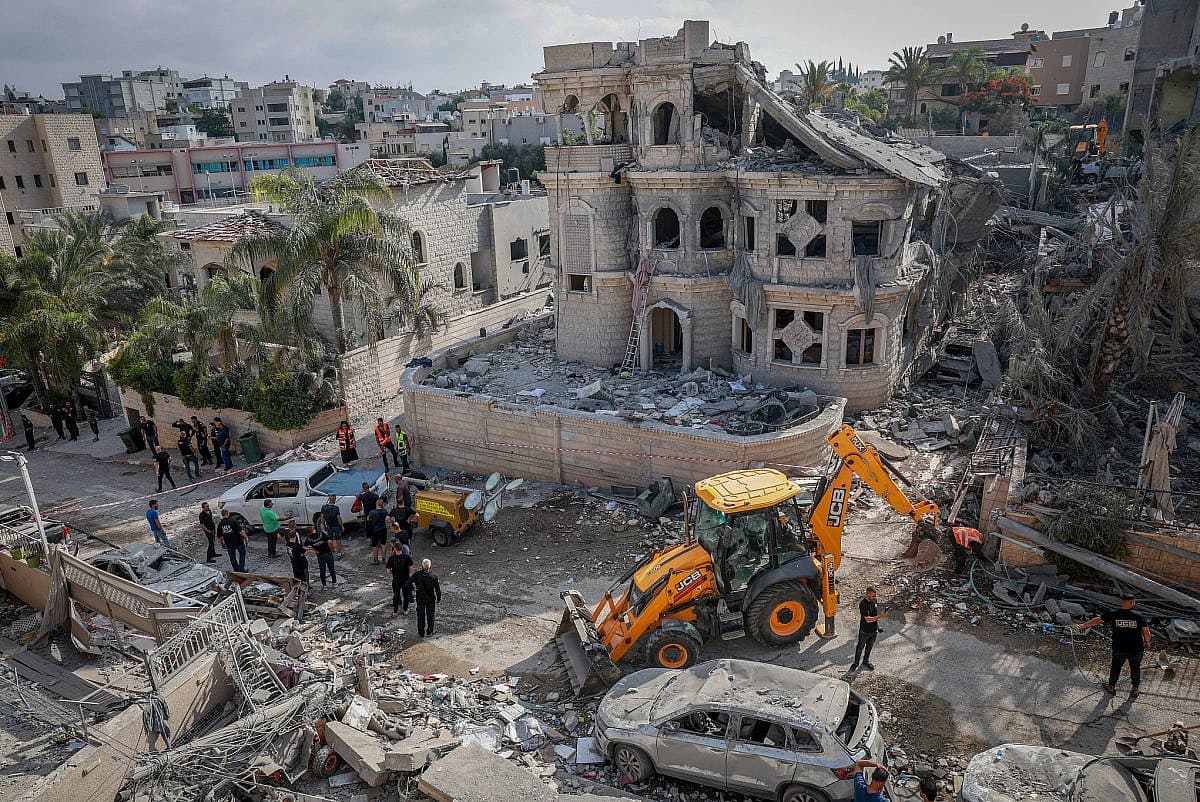
The outlet also recorded damage inside northern Israel after a missile strike in Zarzir caused 'extensive destruction' to a residential complex and wounded civilians.
Leadership and Hormuz
Iranian leadership and the strategic choke-point of Hormuz were central to the rhetoric and risk calculations.
MyJoyOnline reported that Mojtaba Khamenei, in his first public statement since assuming power on March 8, vowed to continue the blockade of the Strait of Hormuz and called it an area where "the enemy is highly vulnerable," while state reports said he reportedly sustained 'light injuries' in initial strikes and warned neighbours to close US bases 'as soon as possible' and vowed to 'avenge the blood' of Iranians.
International agencies and outside leaders were cited on economic and security repercussions: the IEA warned of the "largest supply disruption in history," and the article quoted President Donald Trump urging tanker crews to 'show some guts' and claiming 'we sunk all their ships.'
Casualties and fallout
The campaign carried immediate military and humanitarian costs and strained coalition operations.
“Audio By Carbonatix The Middle East is on the edge of a much bigger war this Friday, March 13”
MyJoyOnline reported a US Air Force KC-135 Stratotanker went down in western Iraq with at least five crew aboard while a second aircraft involved landed safely.
The outlet also noted a drone strike in Erbil that killed a French soldier and prompted strong condemnation from President Emmanuel Macron, and linked the blockade and attacks to oil-market moves, saying the Strait of Hormuz closure has pushed Brent crude above $100 per barrel.
More on Lebanon

Hezbollah Fires 200 Rockets at Israel From Lebanon
17 sources compared
Israel Pounds Tehran With Airstrikes
12 sources compared

Israel Bombs Central Beirut, Targeting Hezbollah Infrastructure
14 sources compared

Unidentified Attacker Plants Explosive at U.S. Embassy Entrance in Oslo; Oslo Police Investigate Possible Terrorism
12 sources compared