Full Analysis Summary
Planned Rafah camp
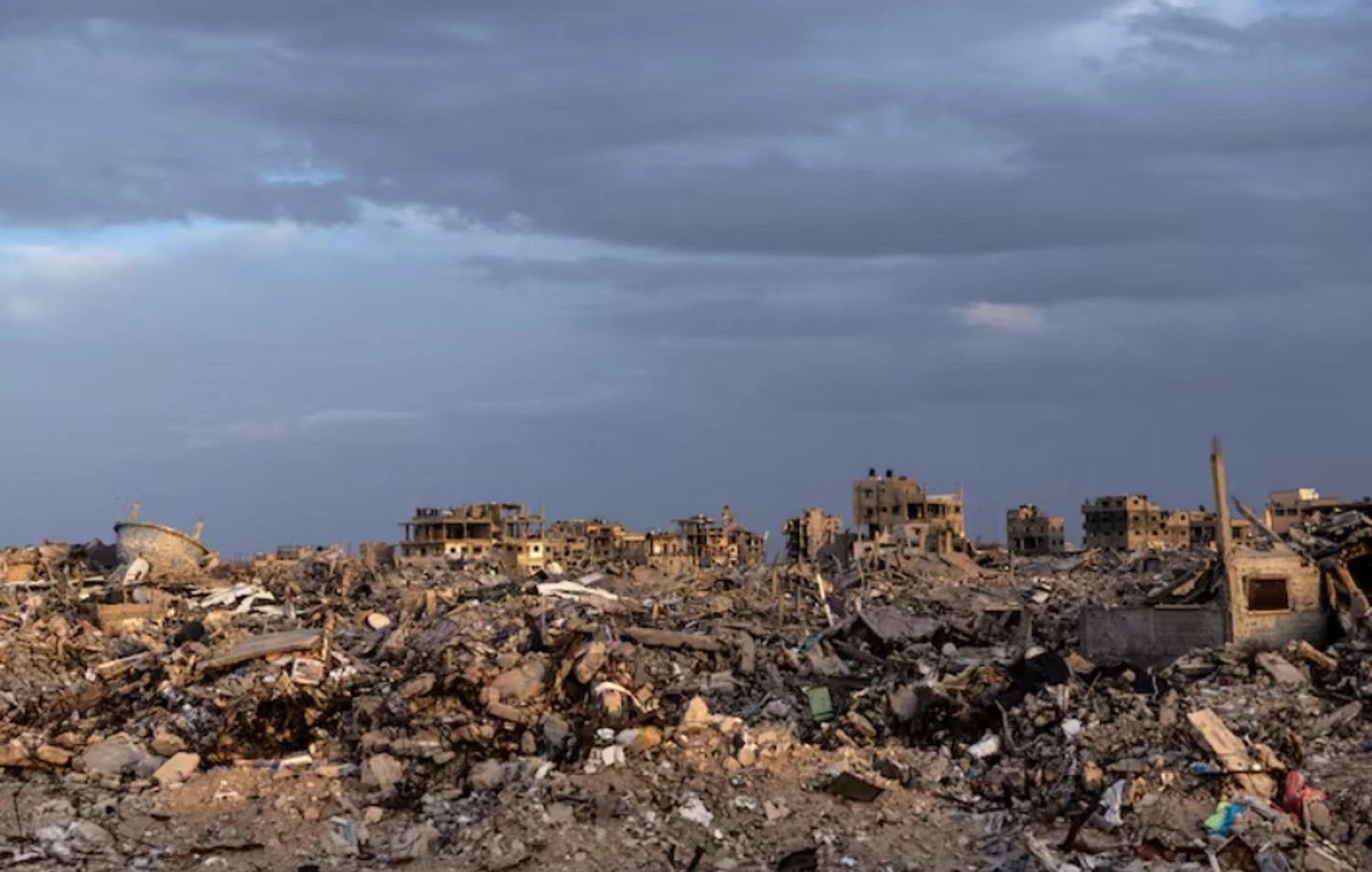
Israel has prepared a large site in Rafah, southern Gaza, to build a camp that Israeli and foreign reports say could hold 'hundreds of thousands' of Palestinians.
The site is said to include modern surveillance such as facial-recognition at its entrances and strict entry and exit controls enforced by Israeli military personnel.
Retired General Amir Avivi told Reuters that the land — in an area where tunnels were destroyed and which Israeli forces have largely cleared — would serve as both a checkpoint and temporary accommodation for Palestinians before possible departure toward Egypt or for those who remain inside the Strip.
Jerusalem has not officially commented on the plans despite the proposal being reported in multiple outlets.
Coverage Differences
Narrative focus / detail emphasis
Al-Jazeera (West Asian) and УНН (Other) both report Avivi’s description of the site, its capacity as 'hundreds of thousands', and the use of surveillance and facial-recognition technology, directly quoting the retired general and Reuters reporting. Haaretz (Israeli) does not report these Rafah camp details in its snippet; instead Haaretz’s coverage in the provided excerpt focuses on broader Israeli wartime costs and domestic issues, creating an omission of the camp story in that source.
Camp surveillance and control
Reports specify the camp will be under direct Israeli supervision, with checkpoints and identification procedures at entrances, and with surveillance systems to register and monitor residents.
Al-Jazeera reports that entrances will use facial-recognition technology and that the site will be used both by Palestinians who want to leave toward Egypt and by those choosing to remain; UNN likewise notes full identification of residents and Israeli military control of entry and exit.
The description points to a heavily policed, state-managed facility rather than a neutral humanitarian reception center.
Coverage Differences
Tone and implication
Al-Jazeera (West Asian) and УНН (Other) present the facility as a supervised, tightly controlled site emphasizing security measures (facial recognition, ID checks). Haaretz (Israeli) does not present these Rafah camp details in the provided excerpt and instead focuses on military operations and domestic policy, so Haaretz’s tone in the snippet does not engage with the surveillance or displacement implications raised by the other outlets.
Gaza camp displacement concerns
Palestinian officials and humanitarian groups warn the planned camp could be used to facilitate forced displacement of Palestinians from Gaza and reject Israeli framing of any movement as 'voluntary' emigration.
UNN reports those warnings explicitly, and Al-Jazeera notes that Israel is seeking to encourage more departures than returns.
Available reporting frames the camp as potentially enabling a shift in Gaza's civilian population, a claim Israeli authorities have not officially answered in the cited pieces.
Coverage Differences
Contradiction / contested framing
UNN (Other) reports Palestinian officials and humanitarian groups warning the camp could enable forced displacement and notes Israeli statements describing emigration as 'voluntary' — creating a direct contest over intent and outcome. Al-Jazeera (West Asian) reports Avivi’s comments that the camp would facilitate departures to Egypt and that 'reports say Israel is seeking a larger number to depart than to return' — echoing the departure emphasis. Haaretz (Israeli) in the provided excerpt does not present these displacement warnings or Avivi’s descriptions, focusing instead on other wartime and domestic issues, which represents an omission in the Haaretz snippet.
Rafah plan and diplomacy
Reports say the Rafah camp plan coincides with diplomatic moves around the Rafah crossing.
These moves include a US-supported plan to partially reopen the crossing and limited pedestrian movement arrangements following the return of a hostage's body.
Observers suggest Israel is linking border management and population movement to the camp proposal.
Al-Jazeera and UNN connect the cleared area and its timing to ceasefire developments.
Haaretz's reporting highlights that Israeli military operations continue across the region.
International complaints over Israeli actions, such as Italy summoning Israel's ambassador after an incident, form part of the wider diplomatic fallout.
Coverage Differences
Contextual framing / scope
UNN (Other) explicitly ties the camp plan to steps to partially reopen the Rafah crossing under a US-backed plan and to an Israeli agreement on limited pedestrian movement after returning a hostage body. Al-Jazeera (West Asian) stresses the clearing of tunnels and taking control after a ceasefire as context for the site’s preparation. Haaretz (Israeli) provides different regional and diplomatic details in the excerpt — such as an IDF strike in Lebanon and Italy summoning Israel’s ambassador — focusing on military and diplomatic incidents rather than the camp or crossing details.
Diverging media coverage
Reporting across outlets diverges in emphasis.
Al-Jazeera and UNN emphasize the Rafah camp's scale, surveillance, and displacement risks, as reported via Avivi and Reuters.
Haaretz's excerpt does not cover the camp and instead highlights Israeli military actions, domestic legal fights over media contracts, and diplomatic rows, illustrating how source type shapes what is foregrounded.
UNN's note of no official Israeli comment combined with Haaretz's reporting on legal and political disputes points to both a contested domestic debate in Israel and international concern about the plan's implications for Palestinian civilians.
Coverage Differences
Omission and source-type influence
Al-Jazeera (West Asian) and УНН (Other) foreground the Rafah camp’s surveillance, size, and displacement risk by citing Avivi and Reuters. Haaretz (Israeli) in the excerpted material omits the camp details and instead reports on Israeli wartime costs, IDF operations, and domestic legal challenges, showing how an Israeli source may prioritize internal and military narratives while other source types emphasize humanitarian and displacement concerns.