Gaza Genocide11 February, 20262 min read
Israel Readies New Offensive to Disarm Hamas in Gaza
This article is an automated aggregation of coverage from news outlets. Our editorials offer in-depth analysis curated by the NewsCord team.
U.S. draft mandates phased Hamas disarmament, immediate decommissioning of heavy weapons U.S. proposal permits Hamas to retain some small arms

8 outlets told this the same way.
Outlets did split on Israel Marks Oct. 7 Anniversary With Strikes on Gaza, Netanyahu Faces Election After Nova Tribute →
The Jerusalem Post was read line by line by the Watchdog: 7.6. See the score →
Draft Gaza disarmament plan
U.S. planners and the Trump team are circulating a draft "second phase" Gaza plan that would require Hamas to surrender weapons capable of striking Israel while initially allowing some light or "personal" arms to be retained or registered. Reporting says an American-led team including Jared Kushner, Steve Witkoff and Nikolay Mladenov is expected to present the draft to Hamas within weeks.
“The New York Times reported on a U.S. draft plan for gradual disarmament of Hamas. The plan would demand surrender of heavy weapons (rockets, RPGs) while permitting retention of some small arms initially. An American-led team including Jared Kushner, Steve Witkoff and Nickolay Mladenov is said to intend to present the plan to Hamas within weeks.”
Kushner has proposed a compressed window — about 100 days — to collect heavy weapons. The draft is presented as part of Donald Trump's wider 20-point Gaza plan and as a link between disarmament and reconstruction under an international stabilization presence.

International Stabilization Force plan
A central element of the scheme is an International Stabilization Force (ISF). Media and reporting tied to the Trump 20-point plan suggest the ISF could be sizable, with some reports putting an upper figure near 20,000 troops.
Indonesia has publicly offered a much larger contribution than typical: its military commander says an expanded brigade, up to about 8,000 troops, is being prepared for Gaza. Proponents argue that Indonesian peacekeepers arriving months after the ceasefire would create a visible security change on the ground and could be used by the U.S. to justify blocking a renewed Israeli ground invasion.
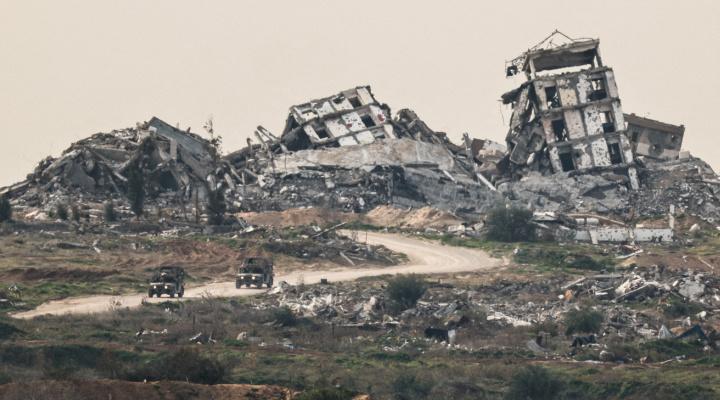
Disarmament and security dispute
Practical disarmament questions remain acute. Reporting cites roughly 60,000 Kalashnikov rifles in Hamas's arsenal and says the draft does not clearly state which weapons must be surrendered or how tunnels would be handled. Israel wants comprehensive, immediate demilitarization and Israeli leaders warn they will achieve that "the easy way or the hard way."
“The draft does not clearly state which weapons Hamas would have to surrender or how to deal with its tunnel network; Israeli estimates cited in reporting put Hamas’s arsenal at about 60,000 Kalashnikovs and roughly half its tunnels still operational.”
Washington's draft favors a gradual approach that ties collection of arms to reconstruction and a phased handover of security responsibilities. Hamas leaders reject wholesale disarmament. One senior Hamas figure said the movement would not give up weapons and defended armed capability as necessary under occupation.
Israeli readiness to act
Israeli officials continue to signal willingness to resume or intensify military operations to forcibly disarm Hamas if the group violates ceasefire terms or if disarmament stalls. Israeli Defense Minister Israel Katz and other officials have warned Israel will dismantle Hamas by force if needed. Reporting notes the IDF has continued targeted strikes, and the IDF said it killed Basel Himouni in a recent airstrike, underscoring that Israeli forces remain prepared to act if the phased plan does not deliver demilitarization.
Plan uncertainties and timing
Major uncertainties make the plan fragile: the draft omits who would take custody of surrendered weapons, how collection would be enforced, and whether small-arms collection will ever occur. Some sources say parts of the NYT account were rejected as groundless.
“Politically, the timing matters: Israeli elections must occur by October 2026, so the Israeli campaign season could begin by early summer. The article suggests the Trump team may try to use Indonesian peacekeepers plus visible collection of heavy weapons by May to justify blocking an Israeli return to major ground operations before the elections.”
Political timing complicates matters: Israeli elections must occur by October 2026, and the Trump team may seek visible signs (Indonesian troops, collection of heavy weapons) by May to justify pressuring Israel not to relaunch a major ground offensive. Whether the proposal holds depends on Hamas’s response, the credibility of mediators, and whether international troops can realistically disarm militants — a question many sources flag as unresolved.
