
Israel Renews Assault on Southern Lebanon, Targets Quds Force Commanders After Netanyahu Promises 'Many Surprises'
Key Takeaways
- Israel renewed its assault on southern Lebanon early Sunday
- Israeli forces targeted commanders of Lebanon's Quds Force branch
- Benjamin Netanyahu promised "many surprises" in the conflict's next phase
Assault targets Quds commanders
Israel renewed its assault on southern Lebanon early Sunday, with the operation explicitly including strikes that targeted commanders of the Lebanese branch of Iran’s Revolutionary Guards’ Quds Force, according to an AP dispatch carried by the Atlanta Journal-Constitution.
“DUBAI, United Arab Emirates (AP) — Israel renewed its assault on southern Lebanon early Sunday, including targeting commanders of the Lebanese branch of Iran’s Revolutionary Guards’ Quds Force, after Israeli Prime Minister Benjamin Netanyahu promised “many surprises” for the next phase of the conflict”
The report says the escalation followed Israeli Prime Minister Benjamin Netanyahu’s pledge of “many surprises” for the next phase of the conflict, framing the strikes as part of a new operational stage.
The Israeli military justified the operations by saying it would “not allow Iranian terrorist elements to establish themselves in Lebanese territory,” linking the Quds Force targets to broader Israeli security claims.
Regional reporting and timing
The dispatch was filed from Dubai and carried AP datelines, indicating regional reporting on cross-border strikes and military messaging; the Atlanta Journal-Constitution reproduced this AP coverage.
The article emphasizes timing (“early Sunday”) and situates the news within the broader regional dynamics by noting references to Iran-linked forces and Israeli military statements.
Those elements together underline how the story was presented as both a tactical escalation and a political message tied to Netanyahu’s announced next phase.
Garbled additional lines
The text of the snippet includes other, less-clear lines that suggest additional regional statements and reactions — for example, fragments reading “Iranian president apologizes for attacks” and “Iranian leaders have limited power over Revolutionary Guard”.
“DUBAI, United Arab Emirates (AP) — Israel renewed its assault on southern Lebanon early Sunday, including targeting commanders of the Lebanese branch of Iran’s Revolutionary Guards’ Quds Force, after Israeli Prime Minister Benjamin Netanyahu promised “many surprises” for the next phase of the conflict”
Those lines appear in truncated or garbled form in the supplied excerpt.
Because the excerpt is partial and partly corrupted, the precise context, speakers, timing and intent of those phrases are unclear from the material provided and cannot be reliably reconstructed without additional sources.
Fragmentary international lines
The excerpt also includes disconnected lines referencing U.S. and other international actors in fragmentary fashion — for instance, short quotes such as “Trump says the Kurds won't be involved” and partial references to diplomatic or security discussions.
These are presented without clear attribution or explanation in the supplied text.
Given the incomplete nature of the snippet, it is not possible to determine whether the original AP story attributed statements to U.S. officials, regional governments, or other actors without consulting the full article.
Summary and caveats
In sum, the provided Atlanta Journal-Constitution excerpt (AP) reports a renewed Israeli assault on southern Lebanon focused on commanders tied to Iran’s Quds Force and frames the action as following Netanyahu’s warning of “many surprises.”
“DUBAI, United Arab Emirates (AP) — Israel renewed its assault on southern Lebanon early Sunday, including targeting commanders of the Lebanese branch of Iran’s Revolutionary Guards’ Quds Force, after Israeli Prime Minister Benjamin Netanyahu promised “many surprises” for the next phase of the conflict”
The piece includes the Israeli military’s stated aim of preventing Iranian elements from establishing a presence in Lebanon, but the excerpted material is partially garbled and lacks corroborating perspectives.
Therefore, further verification from the full AP piece or additional outlets is needed to provide fuller context, casualty figures, Lebanese reactions, or regional diplomatic fallout.
More on Iran
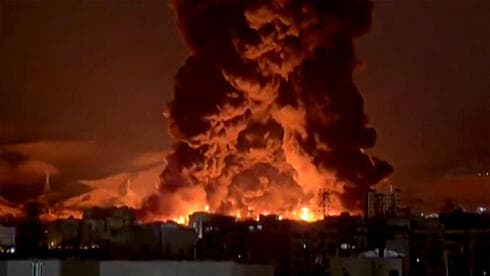
US obliterates military targets on Iran’s Kharg Island, Trump warns
13 sources compared

US Deploys About 2,500 Marines to Middle East After Iran Attacks Gulf Shipping
33 sources compared
FBI Warns of Iranian Drone Plot Based on Unverified Tip; California Says No Credible Threat
10 sources compared

White House Demands ABC Retract Report Claiming Iran Sought To Launch Drone Attacks On California
11 sources compared