Gaza Genocide12 December, 20252 min read
Israel Restricts Aid Deliveries as Winter Storm Drenches Gaza's Displaced
Storm Byron flooded thousands of tents, collapsed bomb-damaged buildings, killing at least 14 Palestinians Israeli restrictions impeded deliveries of shelter, tents and other humanitarian aid
36 outlets told this the same way.
Outlets did split on Israel Marks Oct. 7 Anniversary With Strikes on Gaza, Netanyahu Faces Election After Nova Tribute →
Storm Byron damage report
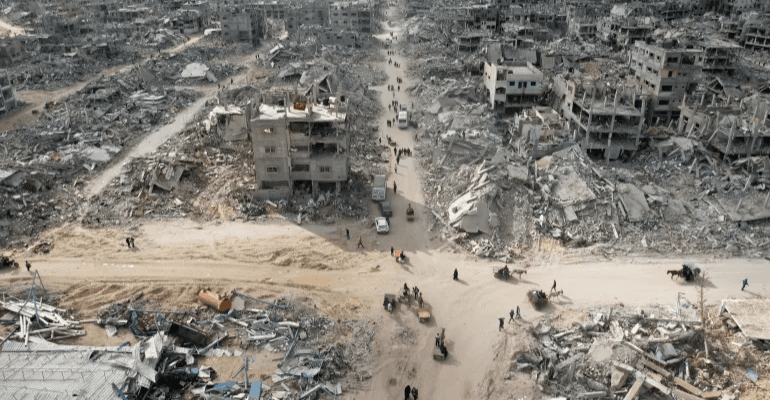
Storm Byron battered the Gaza Strip, inundating tent camps and low-lying displacement sites. Floodwaters mixed with sewage, collapsed shelters, and destroyed emergency supplies. Multiple outlets report widespread destruction, with one estimating about 850,000 people in 761 sites had shelters ruined.
“About 850,000 people in 761 sites have had shelters ruined, with large sections of the shoreline eroded and many families lacking tarpaulins, tents and winter supplies.”
Other reports say at least 14 people were killed, including several children and an 8-month-old infant, and that more than 27,000 tents were ripped up. Local outlets and charities corroborated accounts of flooded camps, soaked belongings, and emergency rescues. One local report said rescue teams found a baby who died after her family was trapped in a flooded tent.

Aid access and restrictions
Humanitarian deliveries have been severely constrained by Israeli access restrictions even during the ceasefire. Aid agencies say this is worsening the emergency as winter supplies and shelter materials remain blocked or delayed. UsMuslims reports that Israel is enforcing strict limits on aid-truck entry that are said to breach the agreement's humanitarian protocol.
Maktoob Media and other outlets say Palestinian authorities and aid agencies blame Israeli restrictions and closed borders for obstructing relief. NationofChange and Daijiworld warn the blockage may amount to a breach of international law or represent a large shortfall compared with needs.

Urgent shelter and winter needs
Aid agencies and UN officials list urgent unmet needs: hundreds of thousands of tents and prefabricated units, timber, sandbags, pumps, heavy machinery for rubble clearance, and winter supplies. Maktoob Media says about 300,000 tents, plus winter supplies such as timber, pumps, and sandbags, are urgently needed. Countercurrents and Al-Jazeera Net catalogue identical shelter and winterization needs.
“Agencies list urgent needs: heavy machinery, shelter materials (tent poles, timber), winter supplies, medical support and sanitation repairs.”
Daijiworld documents that only 15,600 tents have been allowed into Gaza since the ceasefire. These shortfalls mean teams cannot reinforce or replace soaked, torn, or collapsed shelters before temperatures drop further.
Ceasefire, hostages, and aid
Political stalemate is intensifying the humanitarian crisis by freezing negotiations over ceasefire extensions, hostages, and reconstruction and blocking timely large-scale relief and rebuilding. The Independent reports Israel says it will only agree to further progress if militants return the body of the last hostage, while Hamas demands open crossings and an end to strikes.
Firstpost reiterates Israel’s public stance that it will not move forward until all hostages are returned, and the BBC says long-term reconstruction is stalled because key ceasefire and security disputes remain unresolved. Meanwhile the UN pushed for unconditional humanitarian access through a General Assembly resolution, underscoring international frustration with the slow pace of relief.

Gaza flood health risks
The storm and limits on access create immediate public-health risks: standing, sewage-contaminated water, ruined sanitation, and overcrowded shelters raise the danger of outbreaks and cold-related deaths. The WHO and IOM warnings and NGO reporting are stark. CBC noted the WHO's warning about 'pollution-related health threats from debris and standing water,' while lnginnorthernbc.ca and Al-Jazeera Net cite IOM and UN figures that roughly 795,000 displaced people face flood risk.
“The WHO said more than 4,000 people are living in high‑risk coastal areas (about 1,000 were directly hit by high waves) and warned of pollution‑related health threats from debris and standing water.”
Xinhua quotes local health authorities saying Gaza 'is heading toward catastrophe.' Countercurrents records sharp public condemnation of an Israeli forecaster who said he had 'no problem if people don't survive either,' a statement that intensified calls for unimpeded aid.
