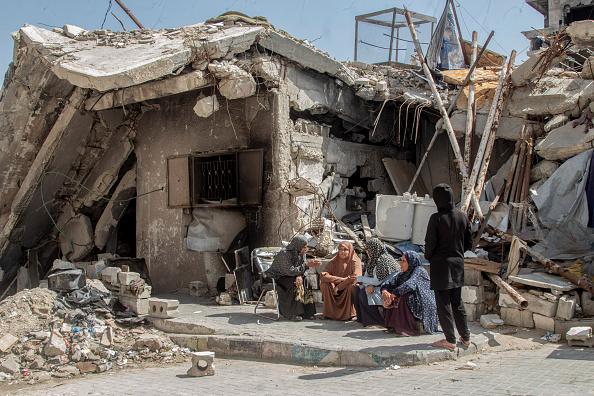
Israel Security Cabinet Discusses Renewed Gaza Operations After Hamas Rejects Disarmament Proposal
Key Takeaways
- Israel's Security Cabinet plans a meeting to discuss resuming Gaza operations.
- Hamas rejected disarmament proposal, prompting Israeli debate over resuming war.
- Prime Minister Benjamin Netanyahu says military operations will continue; ongoing strikes in Gaza.
Escalation and war aims
Israel’s security cabinet is set to discuss the possibility of renewed military operations in Gaza after Hamas responded to the Board of Peace (BoP) disarmament proposal, according to Crypto Briefing.
“Israeli media reported that the Security Cabinet (the small ministerial committee for political and security affairs) plans to hold a meeting tomorrow evening, Sunday, to discuss the possibility of resuming military operations in the Gaza Strip”
The meeting is expected to focus on “the disarmament of Hamas and the establishment of a technocratic government in Gaza,” while Hamas has resisted the plan “without prioritizing reconstruction efforts,” the outlet said.

Crypto Briefing frames the discussion as taking place “amid a fragile ceasefire that has seen multiple violations,” and it says the security cabinet’s decision could carry “significant political ramifications for Prime Minister Netanyahu.”
In parallel, Le Parisien reports that Israel continued strikes and issued a “last warning” to residents of the Palestinian territory if Hamas does not release the hostages.
Le Parisien says that “the day after Israel announced an intensification of its military operations,” Israel bombed Gaza Strip early Thursday morning, and it quotes Mahmoud Bassal, the territory’s Civil Defense spokesman, saying “At least 10 civilians were killed and dozens of others injured in Israeli airstrikes that hit six houses east of Khan Younis.”
The same report adds that Israeli forces launched a “limited ground operation” to retake the Netzarim corridor, described as a road “divides Gaza” and “considered essential for controlling the Palestinian territory.”
France 24 similarly reports that Israel warned it would continue, quoting “We will continue the military operation in the coming days,” and it says Netanyahu told Israelis that strikes carried out overnight were “only the beginning.”
Ceasefire, hostages, and deadlines
The reporting ties Israel’s renewed pressure to the hostage framework and to the question of disarmament, with multiple outlets describing how the ceasefire’s phases are being contested.
Le Parisien says the “first phase of the ceasefire” expired on March 1 and that it “allowed the return to Israel of 33 hostages, including eight who were killed, and the release of about 1,800 Palestinian detainees,” while Hamas wants to move to a “second phase” that would include “a permanent ceasefire,” “the Israeli withdrawal from Gaza,” “the reopening of crossings for humanitarian aid,” and “the release of the remaining hostages.”
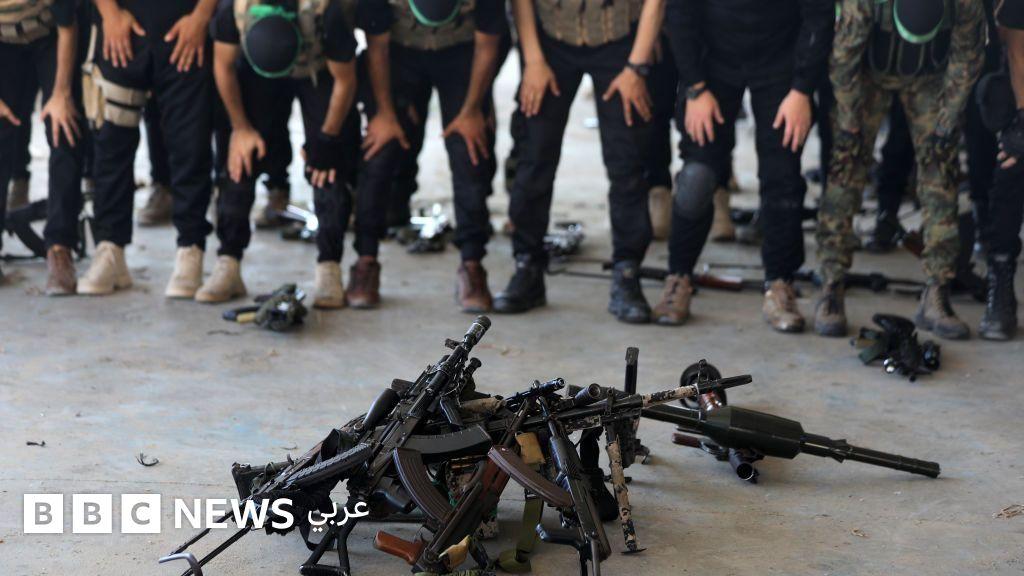
It adds that Israel wants to extend the first phase “until mid-April” and demands that, to move to the second phase, Gaza be “demilitarization” and Hamas “departure,” with Israel also “blocked the entry of humanitarian aid to Gaza and cut electricity.”
France 24 reports that Netanyahu said the strikes were “only the beginning,” and it quotes him warning that “From now on,” negotiations on the release of hostages held in Gaza “will only take place under fire,” adding that military pressure was “essential.”
Le Parisien also says Netanyahu warned that negotiations would now take place “under fire,” and it gives a hostage count: “Of the 251 people abducted during the October 7 attack, 58 remain held in Gaza, of whom 34 have been declared dead by the Israeli army.”
In parallel, BBC reports that Hamas rejected a disarmament plan, quoting Abu Obaida, spokesman for Hamas’s military wing, saying the movement “rejected the disarmament plan” and described the idea of handling the file through mediators as “a dangerous Israeli attempt to impose what it could not achieve militarily.”
BBC adds that a Hamas delegation spent “several days in Cairo with mediators” discussing how to move to the second phase, while Israeli media reports described an “Israeli deadline” for Hamas and other factions to surrender weapons.
Voices from Gaza and Hamas
Inside Gaza, BBC presents residents and Hamas officials framing the disarmament debate as inseparable from displacement and fear of renewed war.
“The foreign ministries of 22 countries, including France, Germany, the United Kingdom, Canada, Japan and Australia, on Monday, May 19, demanded that Israel immediately resume full aid to Gaza, insisting that it be organized by the United Nations and NGOs”
Tariq Abu Diya, known as Abu Talal, a resident of the al-Rimal neighborhood west of Gaza City, tells BBC News Arabic that he supports what he calls the resistance but says “the horrors of war in the enclave push him to think of the greater good and to hand over the weapons.”
Abu Talal argues that any decision to surrender weapons must be concluded “within a broad national consensus,” and he says “wars will continue to haunt Palestinians as long as the word is scattered,” while adding that “the strength of the people lies not in weapons alone but in their national unity and their unified resolve.”
BBC contrasts that with Shimaa Abu Ajwa, displaced from the Shujaiya neighborhood, who says “what occupies them is not political wrangling but ending the displacement and returning to their homes,” even “if they are destroyed,” and she says “what we fear is the return of war again and that we are forced to be displaced.”
In the same BBC report, Hazem Qassem, a Hamas spokesperson, says the movement “remains committed to the ceasefire in the Gaza Strip despite ongoing what it calls Israeli violations,” and he stresses “the rejection of discussing the obligations of the second phase, foremost among them the so-called weapons of the resistance.”
Qassem outlines conditions that include “delivering urgent relief, portable homes, and tents for the displaced,” “starting actual reconstruction,” “completing the agreed Israeli withdrawals,” “opening the Rafah border crossing,” and “handing the administration of Gaza to the National Committee.”
He also warns of continuing Israeli violations, including “ongoing killings and moving the yellow line westward,” and he insists “it is not logical to ignore these transgressions and to jump straight to discussing the second phase.”
Aid, famine claims, and tactics
A separate thread in the reporting focuses on humanitarian access and how Israel’s aid delivery methods are being contested, with France 24 and Le Monde describing tactical pauses, air drops, and the role of UN and NGOs.
BFM reports that “The foreign ministries of 22 countries, including France, Germany, the United Kingdom, Canada, Japan and Australia, on Monday, May 19, demanded that Israel immediately resume full aid to Gaza,” insisting it be “organized by the United Nations and NGOs,” and it says the statement was released by the German Foreign Ministry.

BFM quotes the joint statement saying “The UN and humanitarian organizations cannot support the new model for delivering aid to this Palestinian territory decided by the Israeli government,” and it adds that “Gaza faces famine,” while UN humanitarian operations described “Nine United Nations humanitarian aid trucks” authorized to enter Gaza on Monday as “a drop in the ocean after 11 weeks of blockade.”
Le Monde reports that Israel announced a “tactical pause” every day from “10 a.m. to 8 p.m.” in areas where the Israeli army does not operate: “Al-Mawasi, Deir al-Balah, and the city of Gaza,” and it says Israel stated “this decision was taken in coordination with the UN and NGOs.”
Le Monde adds that “Secure routes will also be put in place from 6 a.m. to 11 p.m. to allow the passage of United Nations convoys and humanitarian organizations,” and it describes AFP images of “large trucks loaded with white sacks crossing” on the Egyptian side toward Rafah, with trucks then traveling to “Kerem Shalom” for inspection.
L’Express describes Israel’s earlier “tactical pause” of its military operations in three cities and says it must be accompanied by “a resumption of foreign humanitarian aid, notably through air drops,” after “five months of blockade.”
L’Express also says the distribution system via the Gaza Humanitarian Foundation (GHF) has caused “more than 1,000 deaths,” and it reports that “The UN accused Israel of having killed more than 1,000 people trying to obtain aid, since the end of May,” while the New York Times is cited as saying humanitarian operations led by the United Nations “demonstrated great effectiveness.”
Competing narratives and future risk
Across the sources, the reporting shows competing narratives about whether Israel is seeking to end the war or to prolong it, and about what comes next if disarmament and ceasefire terms fail.
“Lebanon Israeli Defense Minister Yisrael Katz hinted at the possibility of a new military escalation, stating that Israel "may be forced to act again" against Iran”
The Arabic-language outlet الوطَن (Al-Watan) says the director of the Jerusalem Center for Studies, Dr. Ahmed Rafiq Awwad, argues that Israel’s consultations “reflect a clear trend toward resuming military operations,” and it says he notes “even in the absence of an official Security Cabinet meeting.”

Al-Watan quotes Awwad saying “Disarming Hamas remains a sticking point,” and it adds that he argues Israel “may rely on a pattern of limited military operations to maintain ongoing pressure inside Gaza,” aiming “to prolong the duration of the conflict and disrupt any potential path to peace.”
Crypto Briefing similarly frames the security cabinet discussion as increasing political pressure on Netanyahu and says the “Netanyahu Out” market probability “stands at 4.5% YES,” while it also says the developments could lead to “military escalation in Gaza.”
Le Devoir reports that Israel is expanding its ground operation in the southern Gaza Strip “after Hamas rocket fire on Tel Aviv was launched in retaliation,” and it says the Israeli army announced it was expanding operations in the Chaboura area in Rafah and would “also continue its operations in the north and center of Gaza.”
Le Devoir also quotes Philippe Lazzarini, head of the UN agency for Palestinian refugees, saying “We are besieged, subjected to death and suffering. We are exhausted. Every day we move from one place to another, from one tent to another, from one house to another,” and it includes Mohammed Hussein’s plea: “We want a ceasefire!” and “We are a defenseless people.”
Meanwhile, Le Parisien and France 24 both stress that Netanyahu’s warnings tie future negotiations to continued military pressure, with Le Parisien quoting Katz’s “last warning” that “If all Israeli hostages are not released and if Hamas has not completely left Gaza, Israel will take measures of a scale never seen before,” and France 24 quoting Netanyahu that “this is only the beginning.”
More on Gaza Genocide
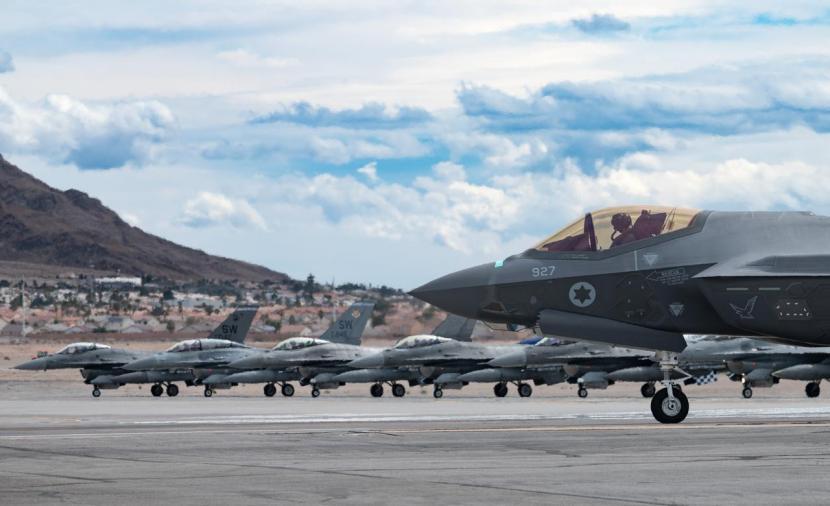
Israel’s Defense Ministry Approves F-35 And F-15I Deal With The United States
15 sources compared
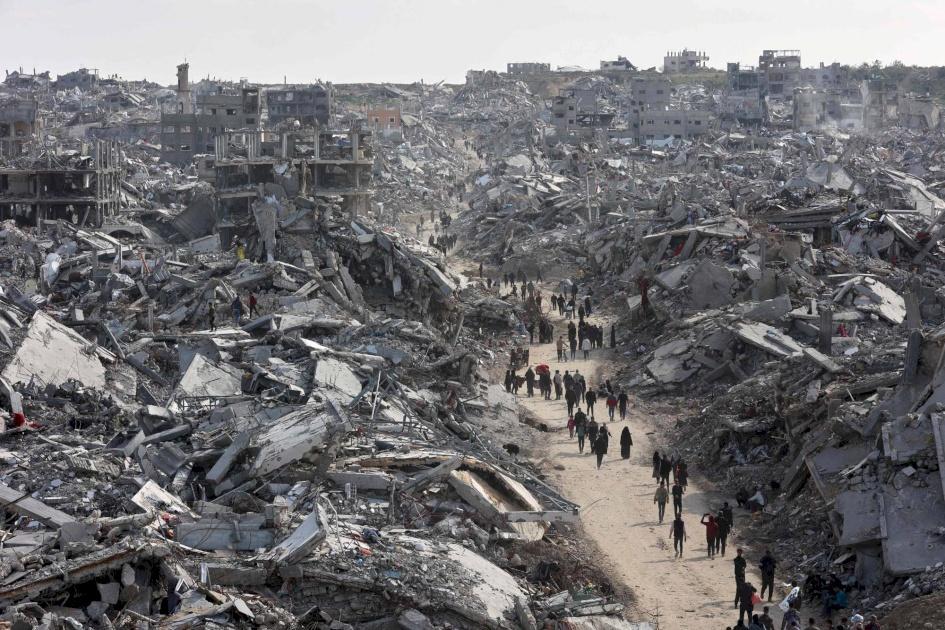
Israel’s War On Gaza Leaves Thousands With Untreated Fractures As Healthcare System Collapses
16 sources compared

Middle East War Triggers Canceled Flights and Tourism Collapse in Jordan, Dubai, and Egypt
13 sources compared

Israeli Police Arrest 36-Year-Old Man After French Nun Attacked Near Jerusalem’s Old City
26 sources compared