Full story
Abu al-Duhur strike
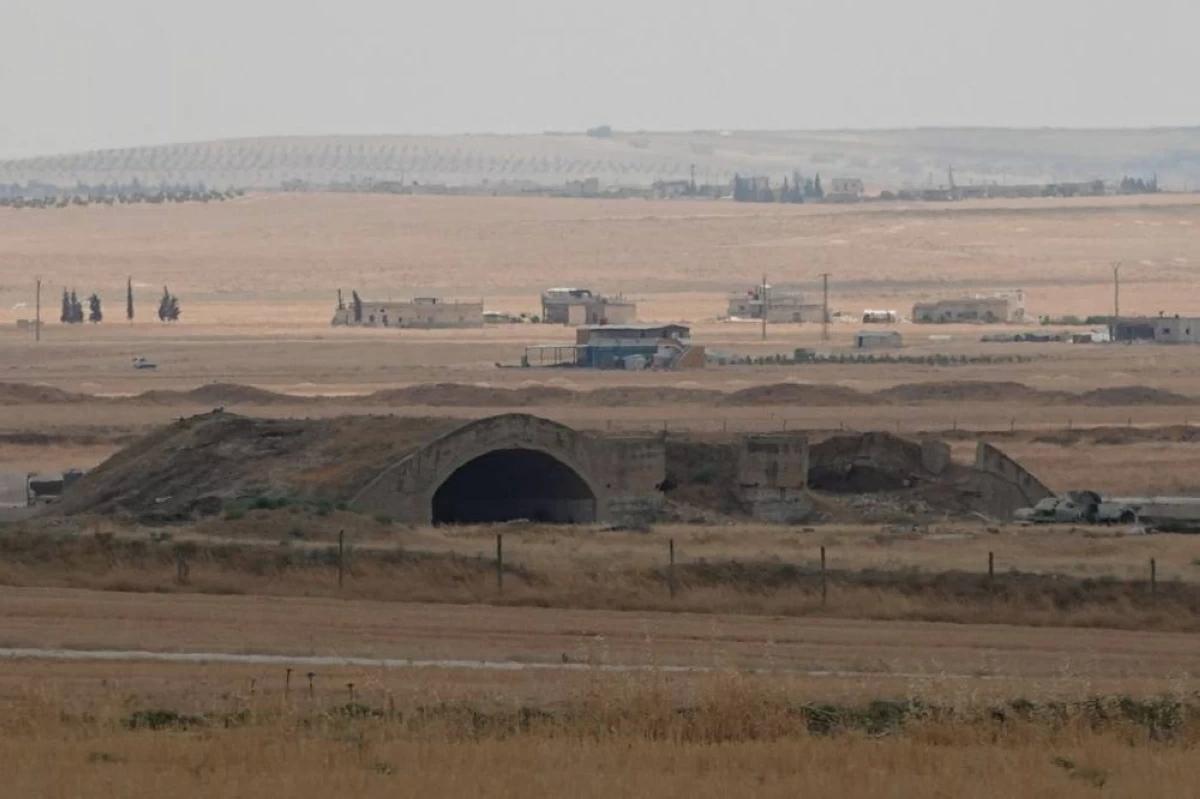
Israel carried out airstrikes on the Abu al-Duhur Airbase in northwestern Syria early Tuesday, with Axios reporting that at least eight bombs hit the runways and several hangars and that there were no casualties.
“At least eight bombs hit the runways and several hangars at the Abu al-Duhur Airbase”
Axios said the strike occurred about 45 miles from the Turkish border and damaged runways that had recently been rebuilt, while the Israeli military initially did not take responsibility and an Israeli military censor put a gag order on reporting that confirmed Israel Defense Forces conducted the strike.

Reuters reported that the United States was working to establish a deconfliction mechanism among Israel, Turkey and Syria after Israel struck a Syrian airbase near the Turkish border, and that Syria’s state-run Ekhbariya television said Israel carried out eight airstrikes on the base’s runway and storage facilities.
Reuters also said the airbase was about 70 km (43.5 miles) east of the Turkish border and had been out of service as a dedicated military airfield since 2013, while a separate military source and a civilian living near the base said there were no casualties.
In the same Reuters account, U.S. special envoy Tom Barrack said Turkey had not been warned about the Israeli strikes and therefore could have reasonably prepared its own response, referring to possible Turkish military reaction.
Barrack and Netanyahu
U.S. Ambassador to Turkey Tom Barrack told Reuters that “Thankfully, calm heads were able to prevent the situation from deteriorating further,” after Israel’s strike on the Abu al-Dahur airbase.
Barrack also said the incident underscored the need for “a deconfliction mechanism involving Israel, Syria and Türkiye,” adding that the priority now was to lower tensions and allow space for a more measured approach.
The Israeli prime minister’s office, as quoted by ynetglobal, said Israel and Syria agreed on a status quo in security matters, warning that Syria “almost violated” it by allowing Turkish soldiers to deploy at the air force base near Aleppo.
In the same ynetglobal account, Netanyahu’s office said Israel “will not tolerate threats to its security,” and would “welcome a return to the status quo,” framing the strike as a response to Syria’s decision to ignore repeated warnings.
Syrian Foreign Minister Asaad al-Shibani, in India Today’s report, condemned what he called the “Israeli aggression” and described the strikes as “an unjustified provocation, a violation of Syria’s sovereignty, and a direct threat to regional and global stability.”
Deconfliction and risk
Reuters said Barrack described the U.S. effort as building a “more robust architecture with greater resources committed to it,” warning that relying on “kinetic means of communication” could run into the hundreds of millions of dollars.
“Investing in such mechanisms is far less costly than relying on kinetic means of communication”
Axios reported that the strike exacerbated tensions between three close U.S. partners—Israel, Turkey and Syria—just as the Trump administration tried to prevent further escalation, while also noting that Israel initially did not take responsibility and that the gag order prevented confirmation.
India Today said Syrian state television reported no casualties after the strike damaged the runway, while Turkey’s Foreign Ministry condemned the attack and called for the international community to take a more decisive stance to end Israel’s escalating aggression against Syria.
In Al-Quds Al-‘Arabi’s account, Syria’s Foreign Ministry urged the United Nations Security Council to intervene and said the ministry’s statement showed that “the continued Israeli attacks since December 8, 2024” revealed attempts to push the region toward greater tension and instability.
Across the Reuters reporting, Barrack said the U.S. had already facilitated an information-sharing and dialogue mechanism among the parties, but that the incident demonstrated the need to intensify those efforts and expand the process to prevent future miscommunication.