
Israel Strikes Tehran and Beirut After Trump Demands Iran's 'Unconditional Surrender'
Key Takeaways
- Israel launched a broad wave of strikes on Tehran, targeting regime infrastructure
- Israel struck Beirut's southern suburbs
- Iran retaliated early Friday with strikes against Israel
Israel strikes Tehran, Beirut
Israel announced a "broad wave" of strikes on Iran’s capital, Tehran, and also carried out attacks in the southern suburbs of Beirut after U.S. President Trump demanded Iran’s "unconditional surrender," according to reporting in NPR.
“Israel strikes Beirut and Tehran as Trump demands Iran's 'unconditional surrender' Israel's military said it launched a "broad wave" of strikes on Iran's capital of Tehran targeting regime infrastructure, with additional strikes in Beirut's southern suburbs”
The chain of attacks followed strikes that began Feb. 28 and, NPR reports, the fighting has produced large civilian displacement and casualties in Iran and beyond.
The story has been framed by NPR as an escalation with direct strikes on regime infrastructure in Tehran and cross-border strikes reaching Lebanon’s capital suburbs.
Iran's retaliation and Gulf attacks
NPR reports that Iran responded with counterstrikes against Israel and broader regional targets, launching missiles and drones at Israel and at countries hosting U.S. military bases across the Gulf.
The U.S. Central Command told NPR that Iran fired seven attack drones toward residential neighborhoods in Bahrain.
The report notes other Gulf states and U.S. partners engaged in air defenses and interceptions during the exchanges.
Gulf interceptions, wider spillover
Multiple Gulf states and U.S. allies reported interceptions and heightened defenses as NPR documents significant regional spillover.
“Israel strikes Beirut and Tehran as Trump demands Iran's 'unconditional surrender' Israel's military said it launched a "broad wave" of strikes on Iran's capital of Tehran targeting regime infrastructure, with additional strikes in Beirut's southern suburbs”
The United Arab Emirates said it intercepted 109 drones and nine ballistic missiles on one day alone.
Qatar said it intercepted a drone targeting Al-Udeid Air Base, and Britain signaled increased patrols after its ambassador in Bahrain described the situation in public remarks.
NPR frames these events as part of a widening set of military engagements beyond Iran and Israel.
Humanitarian and economic impact
NPR cites humanitarian figures and economic effects tied to the strikes and counterstrikes: the Iranian Red Crescent told NPR the death toll in Iran topped 1,300, including claims of exceptionally high-profile casualties.
The U.N. refugee agency reported mass displacement from Tehran.
The fighting has also affected global markets, with NPR noting that oil prices jumped to levels not seen since September 2023.
More on Iran
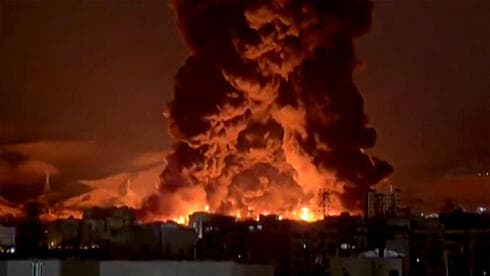
US obliterates military targets on Iran’s Kharg Island, Trump warns
13 sources compared
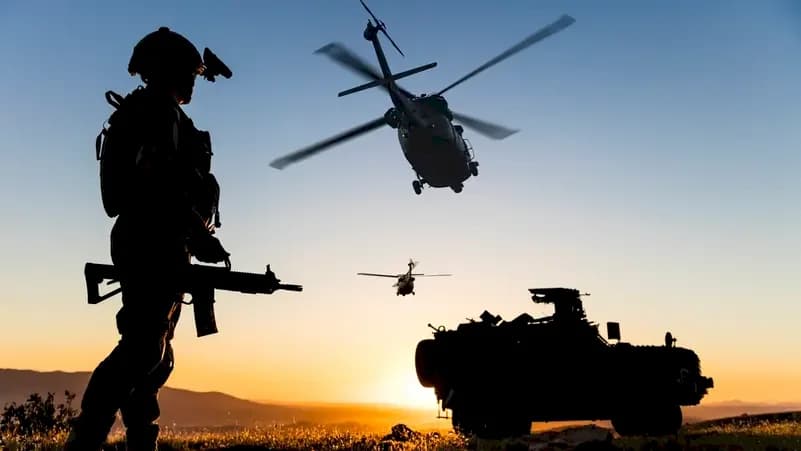
US Deploys About 2,500 Marines to Middle East After Iran Attacks Gulf Shipping
33 sources compared
FBI Warns of Iranian Drone Plot Based on Unverified Tip; California Says No Credible Threat
10 sources compared

White House Demands ABC Retract Report Claiming Iran Sought To Launch Drone Attacks On California
11 sources compared