Lebanon08 June, 20263 min read
Israel Takes Control Of Shaqif Fortress Near Nabatieh To Dismantle Hezbollah Infrastructure
This article is an automated aggregation of coverage from news outlets. Our editorials offer in-depth analysis curated by the NewsCord team.
Israel controls Shaqif Fortress near Nabatieh, flag raised. Netanyahu calls seizure a turning point in Hezbollah offensive in southern Lebanon.
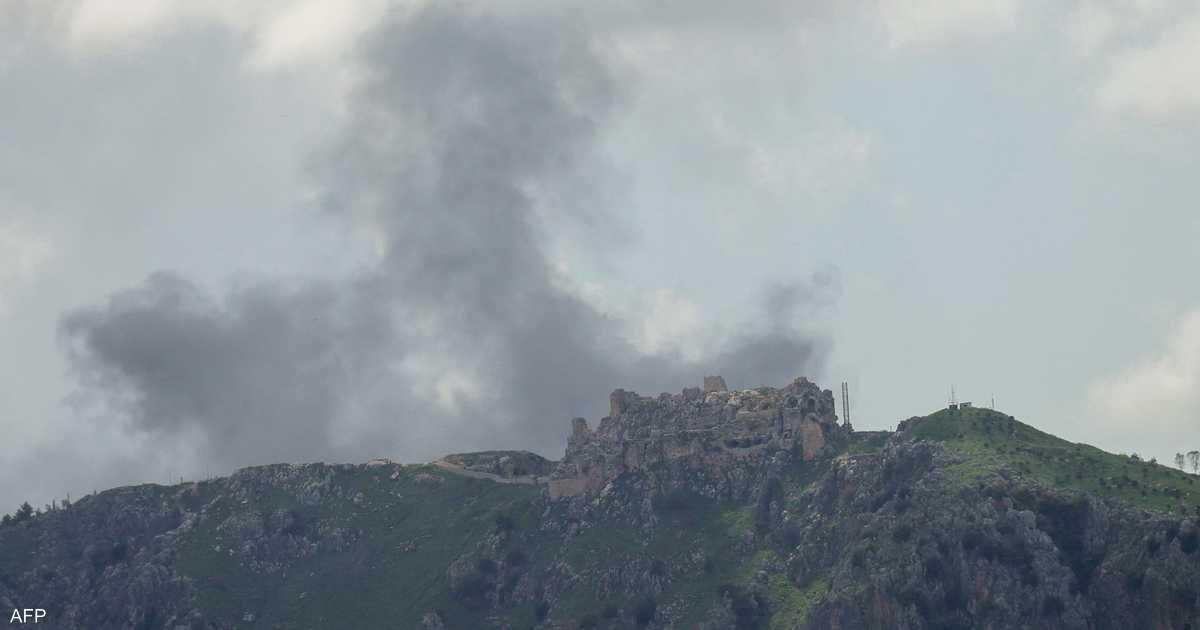
Shaqif Fortress Seized
Israel announced it had taken control of the historic Shaqif Fortress (Boufor) in southern Lebanon as part of expanding its military operations inside Lebanese territory, with the seizure coming near Nabatieh and about 14.5 kilometers from the Israeli border. CNN Arabic said the Israeli army stated that the operation focuses on imposing operational control over the Shaqif heights and the Salouqi Valley area, with the aim of dismantling Hezbollah's infrastructure in the two regions. The CNN Arabic report said the fortress was built by the Crusaders about 900 years ago on a rocky ledge overlooking the Litani River, and that Lebanon's National News Agency reported Israeli airstrikes and 'heavy shelling' in the fortress vicinity.
CNN Arabic also reported that Hezbollah announced it had destroyed an Israeli tank near the site, while the Israeli army said the operation began several days ago with a large number of ground forces launching offensives aimed at expanding the forward defense line. The BBC framed Netanyahu's view of the seizure of Shuqayf Castle in southern Lebanon as a 'turning point' in the offensive against Hezbollah in Lebanon, while Hezbollah announced it had targeted Israeli army positions and infrastructure in Shlomi and Nahariya in northern Israel as sirens blared in the Acre region.

Hezbollah, Netanyahu, and Evacuation
In a video statement on Sunday, Netanyahu said, 'Today we have returned to Shuqayf Castle in a different way; we are united, determined, and stronger than ever,' adding that control of Shuqayf Castle is a 'turning point.' The BBC reported that Hezbollah, backed by Iran, announced it had targeted Israeli army positions and infrastructure in Shlomi and Nahariya in northern Israel, while an explosion was seen in the sky over Safed in northern Israel as rockets from Lebanon were intercepted. DW reported that Israeli Defense Minister Yisrael Katz wrote on Sunday on his Telegram channel that 'After forty-four years of the heroic battle (..) on the day of remembrance for the soldiers who fell in the Lebanon War of 1982, the soldiers returned to the summit of Qal'at al-Shqif and raised the Israeli flag once again over it.'
DW said the Israeli army issued evacuation orders for residents of the area south of the Zahrani River in Lebanon, about 40 kilometers from the border with Israel, in preparation for further military operations despite an announced ceasefire in April that was not observed. DW also said Lebanese Culture Minister Ghassan Salamé warned in an interview with AFP that several important archaeological sites in Lebanon are at risk of a 'serious danger' due to Israeli raids, especially Qal'at al-Shqif.
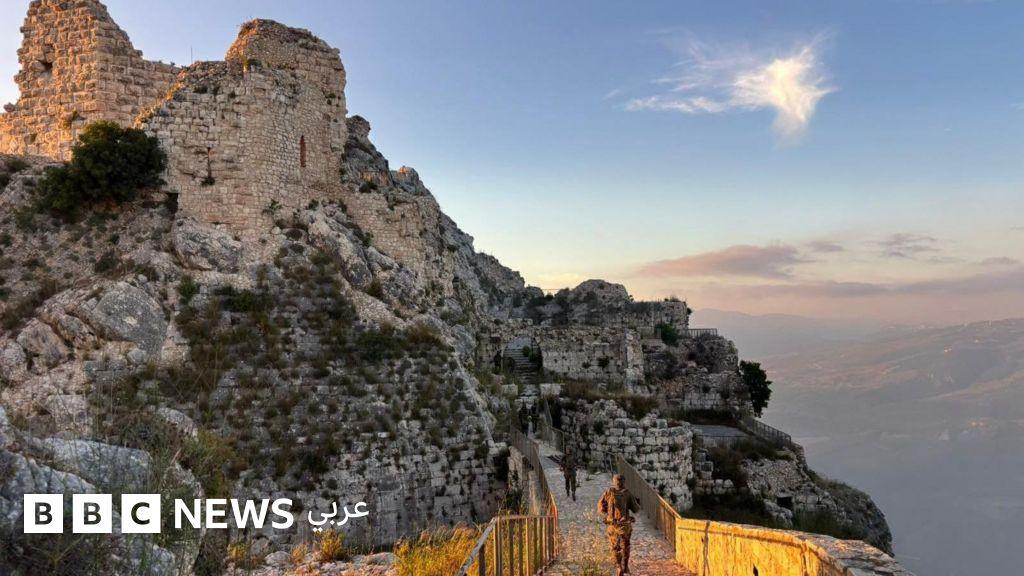
Tunnels, Death Toll, and Risk
The الشرق الأوسط report said the Israeli army announced it found beneath the Al-Shqif Fortress in southern Lebanon a network of tunnels belonging to Hezbollah, built to give the group the capacity to target Israeli forces and the State of Israel. The Israeli statement cited by الشرق الأوسط said the tunnels 'were planned and financed by the Iranian regime' and were designed to accommodate hundreds of fighters, and it described one tunnel about a kilometer long with six underground openings and a platform for launching anti-armor missiles. DW reported that Israeli raids on Lebanon since the war began on March 2 have killed 3,371 people, while the Israeli army announced on Sunday the death of a soldier in a drone launched by Hezbollah, bringing the death toll to 25 since the start of the war, including 24 soldiers and one civilian contractor.
CNN Arabic said UNESCO describes the fortress as 'one of the best-preserved medieval fortress models in the Near East,' and it noted the site was among 34 Lebanese cultural sites that UNESCO granted temporary enhanced protection in late 2024. DW said the fortress has enjoyed enhanced protection by UNESCO since 2024 and that Ghassan Salamé warned it is at 'serious danger' due to Israeli raids, especially Qal'at al-Shqif.