
Israel to occupy southern Lebanon up to the Litani River, defence minister says.
Key Takeaways
- Israel plans to occupy southern Lebanon up to the Litani River.
- Defence Minister Israel Katz announced the plan at a meeting with the chief of staff.
- The security zone would cover nearly a tenth of Lebanon.
Israeli Occupation Announcement
Israel's Defence Minister Israel Katz announced on March 24, 2026, that Israeli forces would occupy southern Lebanon up to the Litani River.
“Israel's military to occupy swathe of southern Lebanon, defence chief says By Alexander Cornwell and Maya Gebeily TEL AVIV/BEIRUT, March 24 (Reuters) - Israel's military will occupy southern Lebanon up to the Litani River, defence minister Israel Katz said on Tuesday, the first time Israel has clearly spelled out its intent to seize swathes of territory that make up nearly a tenth of Lebanon”
Katz established what he termed a 'defensive buffer' or 'security zone' that would encompass nearly a tenth of Lebanon's territory.
The announcement came during a meeting with Israel's military chief of staff, specifying that Israeli forces would 'control the remaining bridges and the security zone up to the Litani.'
The Litani River is located approximately 30 kilometers north of Israel's border.
Katz framed this move as a necessary security measure, comparing it directly to Israel's military tactics in Gaza.
He explained that buildings near the border were cleared and demolished 'to create a defensive buffer and push the threat away from communities.'
This marked the first time Israel had explicitly spelled out its territorial ambitions in Lebanon.
Influential Finance Minister Bezalel Smotrich had previously called for Israel to annex southern Lebanon up to the river.
Hezbollah's Response
The announcement immediately drew a fierce response from Hezbollah, Lebanon's Iran-backed militant group.
Hezbollah labeled Israel's intended occupation 'an existential threat' to the Lebanese state.

Senior Hezbollah lawmaker Hassan Fadlallah vowed that any Israeli occupation south of the Litani would be met with resistance.
Fadlallah declared: 'We have no choice but to confront this aggression and cling to the land.'
Hezbollah fighters have continued launching daily rocket and drone attacks into Israel.
They have been engaging in ground battles with Israeli troops in southern Lebanese villages.
Anadolu Ajansí reported that Hezbollah has been targeting Israeli troops at dozens of locations using rockets and artillery shells.
Operations extended beyond the border line to hit military positions and fixed barracks.
The ongoing confrontation since March 2 has revealed a gap between Israeli rhetoric and action.
Israeli forces rely heavily on air strikes to flush out Hezbollah fighters positioned inside villages and surrounding terrain.
International Concerns
Israel's military actions in Lebanon have drawn widespread international condemnation.
“Israel will occupy southern Lebanon up to the Litani River to create a "defensive buffer," Defence Minister Israel Katz said on Tuesday, spelling out for the first time Israel's intent to seize territory amounting to nearly a tenth of Lebanon”
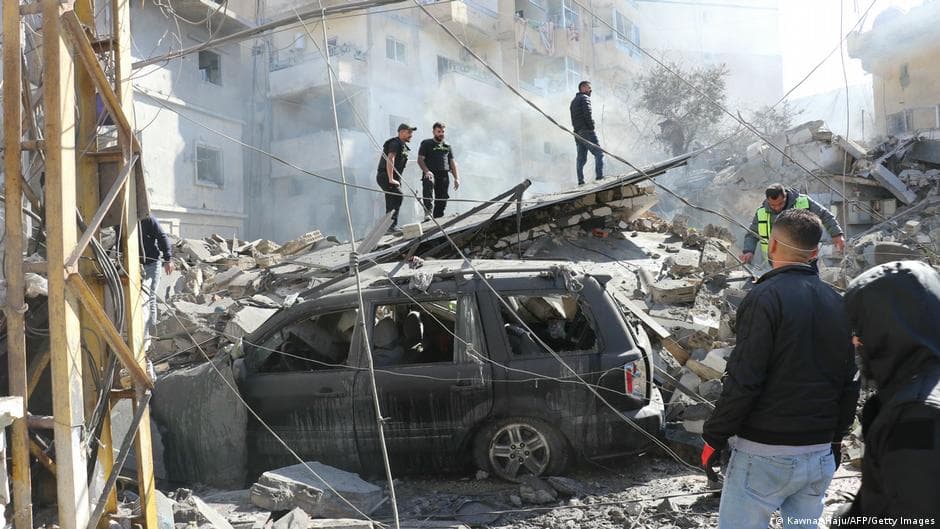
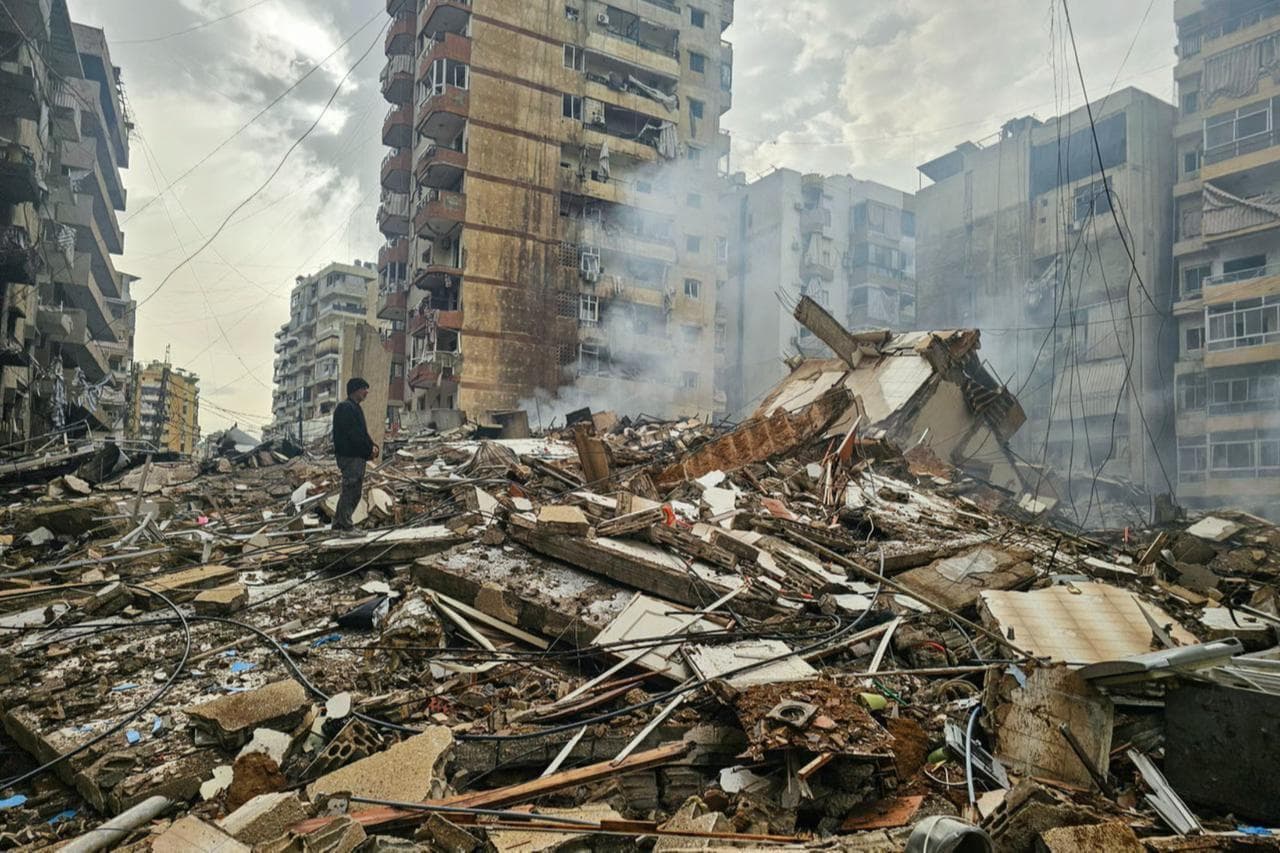
Particular concern has been raised regarding the destruction of civilian infrastructure.
The United Nations expressed serious concerns about Israel's rhetoric and actions.
UN spokesperson Stephane Dujarric stated: 'This is the last thing we would want to see.'
France also issued warnings against a ground offensive.
Foreign Minister Jean-Noël Barrot urged Israel 'to refrain from such ground operations which would have major humanitarian consequences.'
Under international law, attacks on civilian infrastructure, including homes and bridges, are generally prohibited.
Yet Israel has destroyed five bridges over the Litani River since March 13.
Israel has also accelerated the demolition of homes in Lebanese villages near the border.
Katz had previously warned Lebanon's government it would lose territory if it failed to disarm Hezbollah.
He asserted that 'there could be no homes or residents in areas of southern Lebanon where there was 'terror.'
Humanitarian Impact
The Israeli military campaign in Lebanon has resulted in severe humanitarian consequences.
Lebanese authorities report that Israel's strikes across the country have killed more than 1,070 people.

This includes more than 120 children, 80 women and 40 medics.
The health ministry does not otherwise distinguish between civilians and militants in its casualty figures.
Over one million people have been displaced by Israeli strikes and evacuation orders.
Thousands remain in parts of the south despite the danger.
An overnight strike on an apartment southeast of Beirut killed three people, including a three-year-old girl.
The blast tore open walls and scorched furniture in a neighbouring apartment.
A 15-year-old boy was killed when Israeli troops carried out an incursion into the southeastern town of Halta.
Israeli troops also abducted a man during the incursion.
Residents who have fled the south decried the silence of their government.
One fleeing resident asked: 'If our government isn't standing with us, what is it we can do?'
Historical Context
The current Israeli move into southern Lebanon has significant historical parallels.
“Tensions Escalate: Israel's Strategic Move into Southern Lebanon Israel intends to occupy a security zone in southern Lebanon up to the Litani River, drawing strong opposition from Hezbollah”
Israel has previously maintained a buffer zone in southern Lebanon for 15 years between 1985 and 2000.
According to Anadolu Ajansí, buffer zones as a military solution were tested during this period.
In the 2006 Lebanon War, Israel avoided re-occupying Lebanon entirely.
Instead, Israel relied on air power and UN peacekeepers in 2006.
The analysis suggests that Israel is now 'returning to buffer zone thinking' after having distanced itself from this doctrine.
Current discussions of a 10-15 km buffer zone show that Israel is prioritizing distance from its enemy.
NBC News reported that Lebanon is facing an 'existential crisis' amid fears of a long-term occupation.
A senior Lebanese politician described the situation as more 'desperate' than it has been in decades.
The politician referenced the Lebanese Civil War as a previous benchmark for crisis.
The politician also accused Israel of 'psychological terrorism' over Katz's Gaza comparisons.
Diplomatic Response
The Lebanese government's response to Israel's territorial declaration has been notably muted.
There has been no official comment from the government itself on Katz's statement.
This silence has been deeply troubling to Lebanese citizens.
Particularly those who have fled the conflict are affected by the government's reticence.
Despite the government's silence, Lebanon did take diplomatic action.
Lebanon declared Iran's ambassador 'persona non grata' and gave him until Sunday to leave.
This followed the departure of dozens of other Iranian nationals, including diplomats, earlier in the month.
The Lebanese government specified that this move did not represent a severing of diplomatic ties with Iran.
Israeli foreign minister Gideon Saar praised the decision on social media.
Broader regional implications have emerged from the crisis.
Saudi Arabia's Crown Prince Mohammed Bin Salman expressed concerns to President Trump about leaving Iran angry and still a threat.
The crown prince also conveyed that Israel should stop attacking civilian infrastructure in Iran.
More on Lebanon
Finance Minister Bezalel Smotrich Calls for Annexation of Southern Lebanon
26 sources compared

Israel's Military to Occupy Southern Lebanon Up to Litani River, Defence Minister Says
37 sources compared

Israel Destroys Bridges Over Litani River, Steps Up Border Demolitions Near Lebanon
19 sources compared
Israel Strikes Hezbollah Targets in Beirut After Evacuation Warnings
13 sources compared