Full Analysis Summary
Protests over crime wave
Arab citizens of Israel and Jewish allies staged widespread roadblocks and demonstrations described as a 'Day of Disruption' to pressure authorities over what protesters say is police failure or complicity in an organized-crime wave that has devastated Arab towns and neighborhoods.
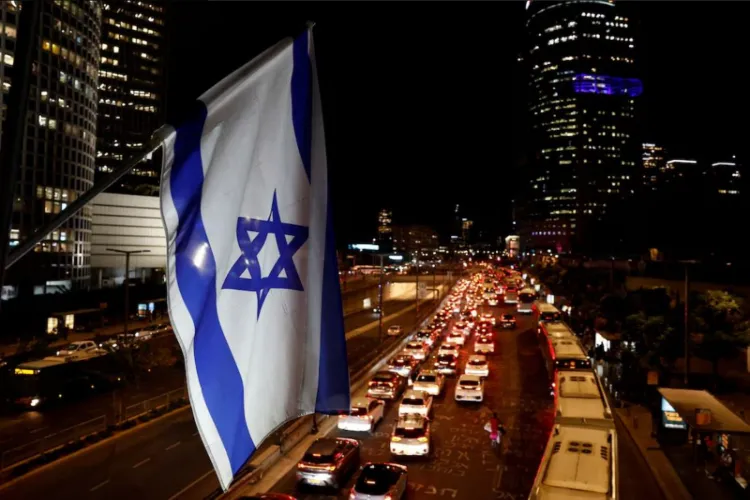
Al Jazeera reported that demonstrators, many dressed in black and carrying photos of victims, blocked major arteries including the Ayalon highway in central Tel Aviv and Highway 1 at the entrance to Jerusalem.
The report said the protests spread from Jaffa's Clock Square to Lod, Jisr al-Zarqa, Tamra and other localities.
Local reporting adds that police made arrests during the demonstrations and organizers say dozens have been killed this year amid a surge in criminal violence.
Sources: Al Jazeera Net; Awaz The Voice.
Coverage Differences
Tone
Al‑Jazeera Net (West Asian) emphasizes the protest actions, visual imagery and the locations of the roadblocks — describing demonstrators dressed in black and naming specific highways and squares — and quotes organizers and leaders. Awaz The Voice (Other) highlights enforcement responses (it reports police made seven arrests) and foregrounds casualty and homicide figures, producing a more statistics‑driven and accusatory tone toward authorities. This contrast reflects Al‑Jazeera’s emphasis on on‑the‑ground protest reporting versus Awaz’s focus on crime figures and police response.
Narrative Framing
Awaz The Voice frames the events within a continuing crime surge and directly attributes responsibility to government failure to curb illegal weapons and organized‑crime networks, citing record homicide totals in 2025. Al‑Jazeera Net reports protesters’ claims about police failure or complicity but focuses more on the protests’ geography and participants’ slogans and imagery, quoting figures like Follow‑Up Committee head Jamal Zahalka rather than presenting the homicide record as its central framing.
Protests and police response
Protest tactics included targeted blockades of key highways and demonstrations at symbolic sites, with organizers planning a culminating march in Haifa.
Al-Jazeera records roadblocks on the Ayalon and Highway 1, lists a broad geographic spread of demonstrations from central Tel Aviv to the north, and says the day was intended to culminate at UNESCO Square in Haifa at 19:00.
Awaz The Voice corroborates a string of protests, adds that police responded with arrests as unrest continued, and situates the protests amid a larger, escalating pattern of lethal violence in Arab communities.
Coverage Differences
Detail Emphasis
Al‑Jazeera Net (West Asian) gives detailed movement and timing of protests (specific highways, Clock Square, a planned 19:00 culmination at UNESCO Square in Haifa), supplying granular event reporting. Awaz The Voice (Other) provides corroboration and additional law‑enforcement details such as the number of arrests, and ties those details into the wider crime data; this demonstrates Awaz’s emphasis on consequences and statistics rather than minute by minute protest choreography.
Missed Information
Awaz The Voice includes the arrest count and broader homicide totals for 2025 (252 Israeli‑Arab homicides), which Al‑Jazeera’s snippet does not mention; conversely, Al‑Jazeera provides a roster of exact protest sites and scheduling detail (e.g., planned Haifa culmination) that is absent from Awaz’s brief summary.
Protests over policing failures
Protest leaders and organizers framed the demonstrations as a response to a catastrophic failure of policing and government neglect.
They demanded action on illegal weapons, organized‑crime networks, and resources for Arab communities.
Al‑Jazeera quotes Follow‑Up Committee head and former MP Jamal Zahalka stating, "Today we protest on the roads because our lives themselves are penetrated by violence."
Awaz The Voice reports organizers’ claims about government failure and documents casualty counts as central grievances driving the mobilization.
Coverage Differences
Quotation vs. Data
Al‑Jazeera Net (West Asian) foregrounds participant testimony and leadership quotes like Jamal Zahalka’s to convey the human and moral urgency of the protests. Awaz The Voice (Other) foregrounds numerical claims — ‘‘Organizers say 38 people have been killed so far this year’’ and references a record 252 homicides in 2025 — giving a data‑driven frame to the same grievance. Each source therefore emphasizes different evidentiary forms (quotes vs. statistics) to support the protesters’ claims.
Protests and reporting gaps
Reports indicate immediate pressure on police, including arrests during demonstrations, and broader political fallout as communities call for systemic change.
However, the available snippets are limited and leave gaps about police statements, government responses, casualty verification, and how Jewish allies are organized within the protests.
The two source excerpts offer overlapping but incomplete views: Al Jazeera focuses on actions, locations, and participant voices, while Awaz provides arrest counts and crime-statistics context.
Because only these two excerpts were supplied, other perspectives such as official police comments, Israeli mainstream outlets, or on-the-ground visuals beyond the listed cities are not available and therefore cannot be asserted.
Coverage Differences
Missed Information
Both snippets omit official statements from police or government, independent casualty verification, and detailed descriptions of Jewish allies’ participation; Awaz adds arrest counts and wider homicide totals but does not supply protest choreography that Al‑Jazeera does. This leaves important factual gaps that the reader should note.