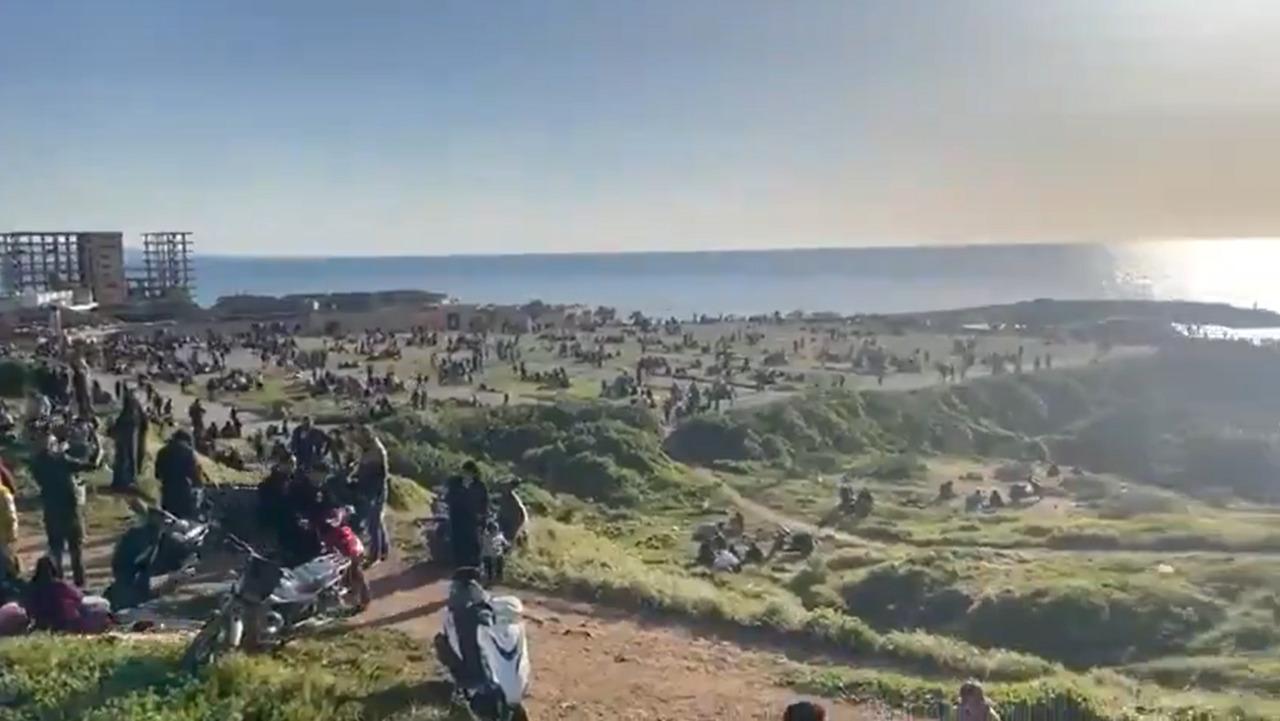
Israeli Army Orders Evacuation Of Southern Lebanon Toward North Of Litani River
Key Takeaways
- Israeli army orders immediate evacuation of residents in southern Lebanon.
- Displacement numbers range from hundreds of thousands to over a million.
- Israeli airstrikes continue in the south and Beqaa alongside evacuation orders.
Evacuation orders and displacement
On March 2, Hezbollah launched a drone and rocket attack against Israel, and Israel responded with massive strikes on southern Lebanon, the Beqaa plain, and the southern suburbs of Beirut, prompting the Israeli army to order inhabitants of the south to evacuate toward the north of the Litani River.
“The car is the only solution: in Lebanon, displaced people facing exorbitant rents”
France 24 reported that as the number of internally displaced people continued to rise since the start of the Israeli strikes, exceeding 800,000 by March 13, shelters set up by the Lebanese government proved insufficient and many displaced people were forced to sleep in the street or in their cars.
Human Rights Watch said the Israeli army’s orders for the immediate evacuation of the entire population of Lebanon living south of the Litani River are highly likely to violate the laws of war, and it cited a March 4, 2026 social media message calling residents to "evacuate immediately your home to reach the north bank of the Litani".
Human Rights Watch also said that on March 2 the Israeli army initially called for the evacuation of more than fifty villages and towns in southern Lebanon, and a few hours later a spokesperson urged residents who had left their homes not to return.
The Human Rights Watch report added that as of March 3 the Israeli army had called for the evacuation of more than one hundred villages and towns in southern Lebanon and in the Bekaa Valley, according to Tom Fletcher.
Rents, housing refusals, and voices
France 24 described displaced people facing a surge in rents since the start of the war, saying rents have risen by 100% to 200% and that "There is nothing under $1,500."
In the same report, Jana, a resident of Dahieh, told Observateurs that when they fled during the first night of bombardment on Dahieh, they went to a school in Tariq El Jdideh but found "there was nothing there, no electricity, no mattresses or blankets."

France 24 also reported that landlords refuse Shiite families, fearing that their presence will attract Israeli strikes if they are suspected of links with Hezbollah, and it said in some Christian neighborhoods landlords have demanded the departure of Shiite displaced people.
Masrawy framed the ceasefire after the United States–Iran announcement as not covering the Lebanese front, quoting Israeli Prime Minister Benjamin Netanyahu’s position that de-escalation does not include Lebanon while Israeli airstrikes and new evacuation orders continued.
Masrawy further reported that Lebanese military expert Brig. Gen. Naji Malaab said the ceasefire between Lebanon and Israel is clear and binding on all parties according to the document approved by both sides in English and Persian.
International criticism and legal stakes
Human Rights Watch warned that calling anyone living south of the Litani to evacuate immediately raises serious concerns about legal and humanitarian grounds and fears for civilian safety, quoting Ramzi Kaiss asking, "How will the elderly, sick or disabled be able to evacuate immediately?"
“After the United States–Iran ceasefire, it seemed the Middle East briefly breathed a sigh of relief after weeks of direct military escalation, but this agreement did not cover the Lebanese front, as Israeli Prime Minister Benjamin Netanyahu announced that the de-escalation does not include Lebanon, while Israeli army airstrikes on the south and Beqaa continued, along with new evacuation orders”
The report said the laws of war prohibit forcible displacement of civilians during an armed conflict unless safety or imperative military reasons require it, and it stressed that even when described as an "evacuation", displacement must be temporary and civilians must be able to return at the end of hostilities.
Today reported that Israel killed 2,988 people and wounded 9,210 others in Lebanon since March 2, citing Health Ministry figures, and it said Lebanon and Israel decided to extend a truce for a further 45 days.
Today said Israel issued its first forced evacuation order for residents of four villages in the Saida district—Bablieh, Baissarieh, Marwanieh, and Arzi—at 2 p.m., and it described strikes beginning in the hours that followed.
In the same account, Today reported that the head of the municipality of Kfar Houneh, James Hindi, said the village was hosting 77 displaced families staying with relatives and friends, while the village church and mosques broadcast announcements urging residents to evacuate.
More on Lebanon

Lebanese Poll Finds 58% Support Disarming Hezbollah and Peace With Israel
10 sources compared
Israeli Strikes Kill 254 in Lebanon as U.S.-Iran Talks Prepare in Islamabad
12 sources compared

Israel Launches Airstrikes on Hezbollah Targets as Israel-Lebanon Ceasefire Extended 45 Days
15 sources compared
Israeli Air Strike Kills Six in Harouf as Israel and Lebanon Extend Ceasefire
11 sources compared