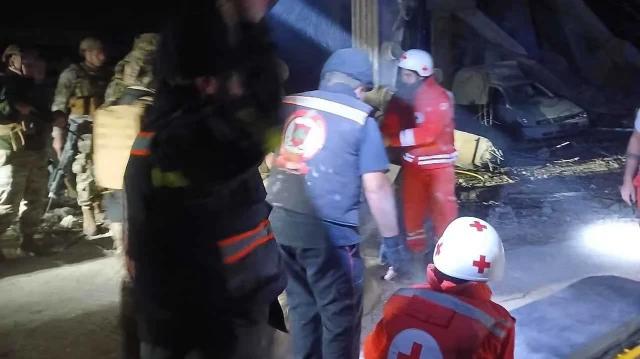
Israeli Attacks Kill 20 People in Lebanon in Last 24 Hours, Health Ministry Says
Key Takeaways
- 24-hour death toll ranges from 20 to 41 across outlets.
- Hospitals overwhelmed; health system under strain in southern Lebanon.
- Total deaths since March 2 cited as 2,659–2,679.
Deadly strikes and tolls
Israeli attacks in Lebanon killed 20 people in the last 24 hours, according to Lebanon’s Health Ministry, with the death toll since March 2 reaching 2,679.
The ministry said 46 people were also injured over the past day, bringing injuries to 8,229 during the same period, as reported by Anadolu.

Anadolu also said the Israeli attacks were the latest violations of a temporary ceasefire since April 17, and that the Israeli army escalated its air and ground attacks in Lebanon after a cross-border strike by Hezbollah on March 2.
The same Anadolu report said the assault displaced more than 1.6 million people, citing official Lebanese figures.
It added that US President Donald Trump announced a 10-day ceasefire between Israel and Lebanon on April 17, before extending it by three weeks until May 17.
Al Jazeera reported a different but overlapping toll for the same 24-hour window, saying Israel’s strikes on Lebanon killed 41 people in 24-hours, with Lebanon’s Ministry of Health saying the total recorded over the previous 24 hours increased to 41.
Al Jazeera also gave a broader cumulative figure, saying the overall death toll since March 2 is 2,659, with 8,183 injured.
In parallel, India News Network said Israeli air strikes on Saturday in southern Lebanon killed at least 10 individuals, raising the overall toll to 41 fatalities in just 24 hours, and placing injuries at approximately 8,183.
Ceasefire violations and escalation
Multiple reports tied the latest casualties to continuing violations of a ceasefire that began on April 17 and was later extended.
Anadolu said the Israeli attacks were “the latest violations of a temporary ceasefire since April 17,” and it added that the Israeli army escalated its air and ground attacks in Lebanon “since a cross-border strike by Hezbollah on March 2.”
Al Jazeera similarly said Israel continues to violate the ceasefire that began on April 17 and was later extended until mid-May, while also describing the ceasefire as not matching conditions on the ground.
Al Jazeera included a direct quote from its Beirut correspondent Rory Challands, saying, “Essentially, it’s a diplomatic construct. The reality is that, certainly down in the south, the war continues, and, in fact, it is expanding,” as the conflict continued.
The same Al Jazeera report said the latest war between Israel and Hezbollah began on March 2, when Hezbollah fired rockets into northern Israel two days after the United States and Israel attacked its main backer, Iran.
It also said Israel carried out “hundreds of air strikes and launched a ground invasion of southern Lebanon,” capturing dozens of towns and villages along the border.
TRT عربي described the broader escalation timeline as well, saying the war spread regionally to include Lebanon on March 2, when Hezbollah attacked a military site north of Israel “despite a ceasefire in place since late 2024.”
TRT عربي added that on March 2 Israel began a new aggression against Lebanon via air raids on the southern suburbs of Beirut and central Beirut, and that on March 3 it began a limited ground incursion in the south that caused “hundreds of thousands to be displaced.”
Places hit and reported deaths
Across southern Lebanon, Al Jazeera and India News Network described multiple specific locations struck during the latest wave of attacks, including Shoukine in Nabatieh district, Kfar Dajjal, and Lwaizeh.
“Israel has launched multiple strikes across southern Lebanon, killing at least 10 people in further violations of the “ceasefire” declared two weeks ago”
Al Jazeera said Lebanon’s National News Agency (NNA) reported “three people were killed in an Israeli attack on the town of Shoukine in Nabatieh district,” and it added that “an earlier attack on a car in the village of Kfar Dajjal killed two people.”
Al Jazeera also reported that “Three others were killed when a home was hit in the village of Lwaizeh,” and it added that “A strike on the village of Shoukin killed two people, NNA reported.”
India News Network similarly said the latest air strikes occurred in various locations including “the town of Shoukine in the Nabatieh district, where three people lost their lives,” and it said a strike on a vehicle in “the village of Kfar Dajjal resulted in two deaths.”
It also reported that “Further casualties were reported from an attack on a residential building in Lwaizeh.”
TRT عربي provided additional town-level detail, saying an Israeli air strike targeted “the town of Qlaouiyeh in the Bint Jbeil District, killing four people,” and that in the Sidon District “two people were killed after an Israeli drone targeted a car in the town of al-Qulaylah.”
TRT عربي also said in the Nabatieh District “the death toll from a strike targeting the town of al-Nimiriyeh rose to eight,” and it specified that the eight included “three sisters and a child of one of them.”
In the same TRT عربي report, it said Israeli warplanes carried out “three strikes targeting buildings in the Jamous and Lilaki areas” in the southern suburbs of Beirut, with “no immediate reports of injuries,” and it added that a person was killed after a motorcycle was struck in “the Al-Ouzai area.”
Hezbollah attacks and Israeli pressure
Hezbollah said it would continue attacks on Israeli forces inside Lebanese territory even as the death toll rose, and Al Jazeera reported the group’s pledge alongside details of its strikes.
Al Jazeera said “Hezbollah says attacks will continue,” and it quoted the group targeting “multiple gatherings of Israeli soldiers and vehicles in several front-line towns in southern Lebanon.”

The report said the attacks included “artillery strikes on troops near Moussa Abbas complex in Bint Jbeil and the village of Hula,” and it added that “Drones were used to attack soldiers in Biyyada.”
Al Jazeera also described Hezbollah’s drone tactics, saying “Hezbollah has recently been using small drones controlled by fibre-optic cables to hit Israeli tanks,” and it said “Three Israeli soldiers have been killed.”
It further reported that “Attack drones also targeted military hardware, including a Humvee truck in the town of Taybeh and a Merkava tank in Rishaf.”
TRT عربي likewise described Hezbollah’s role in a drone attack, saying “three Israeli soldiers were lightly injured late Tuesday evening in a drone attack launched by Hezbollah on a military site near the Lebanese border,” citing Yedioth Ahronoth and Channel 12.
The same TRT عربي report also said Hezbollah fired “more than 40 missiles toward settlements in the north and the Galilee,” causing injuries in Nahariya and sparking widespread fires, while Israeli air raids continued.
Al Jazeera added that Israeli Prime Minister Benjamin Netanyahu faced pressure to abandon the ceasefire, quoting Jack Barton and also quoting Fu Cong at the UN.
Humanitarian stakes and future steps
The conflict’s humanitarian toll and the political steps around ceasefire efforts were central to the reporting, with multiple outlets citing Health Ministry figures and UN calls.
Anadolu said the assault displaced more than 1.6 million people, citing official Lebanese figures, and it also described the ceasefire timeline tied to US President Donald Trump’s announcement on April 17 and extension until May 17.

Al Jazeera reported that “More than one million people in Lebanon have been registered as displaced since the outbreak of the war,” and it placed the death toll since March 2 at 2,659 with 8,183 injured.
The Gulf | West Asian reported a different cumulative snapshot, saying “at least 773 people have been killed in Lebanon, including 103 children,” since the start of the war earlier this month, and it specified that “the total number of deaths since March 2 has reached 773 and the number of wounded is 1,933,” with a previous toll on Thursday of 687.
It added that the United Nations urged the warring parties to reach a ceasefire to “end the war” that has caused the displacement of hundreds of thousands.
Le Monde described a separate set of strikes on February 20, saying “At least twelve people were killed” in Israeli strikes in southern and eastern Lebanon, including “10 people” killed in the Bekaa Valley and “two people” killed in the Ain el-Hilweh Palestinian refugee camp, and it said a meeting is to be held in Cairo to prepare the next conference aimed at raising funds to strengthen Lebanon’s armed forces and internal security forces.
Le Monde also said the meeting will be held in coordination with the Quintet members “namely Saudi Arabia, France, Qatar, Egypt and the United States,” and it reported that the Lebanese government announced earlier this week that the army would have a four-month period, renewable, to implement the second phase of its plan to disarm Hezbollah.
TRT عربي added another layer of future concern by describing the UN Security Council context and regional diplomacy, while Anadolu and Al Jazeera both emphasized the ceasefire’s fragility and the ongoing violations.
More on Lebanon

Israeli Airstrikes Kill At Least 5 Civilians, Wound Others in Qana and Tyre
28 sources compared

Gold Slips as Oil Prices Rise, Keeping Interest Rates Elevated in Lebanon-Linked Tensions
17 sources compared

US Pushes Joseph Aoun To Meet Benjamin Netanyahu As Hezbollah Rejects Israel Talks
18 sources compared

China Urges UN Security Council To Reconsider UNIFIL Troop Withdrawal From Lebanon
12 sources compared