Full story
Three strikes in al-Tiri
Human Rights Watch said Israeli military attacks on April 22, 2026 in the southern town of al-Tiri killed Lebanese journalist Amal Khalil and severely injured Lebanese freelance journalist Zainab Faraj, and that the attacks included apparently deliberate attacks on civilians and civilian objects that would make them war crimes.
“TheIsraelimilitary’s April 22, 2026 attacks inLebanonthat killed one journalist and severely injured another included apparently deliberate attacks”
Amnesty International UK said the Israeli attack that killed Amal Khalil and seriously wounded Zeinab Faraj was a direct attack on civilians that “should be investigated as a war crime,” after the journalists had taken shelter following an air strike on the car in front of them that killed two men.
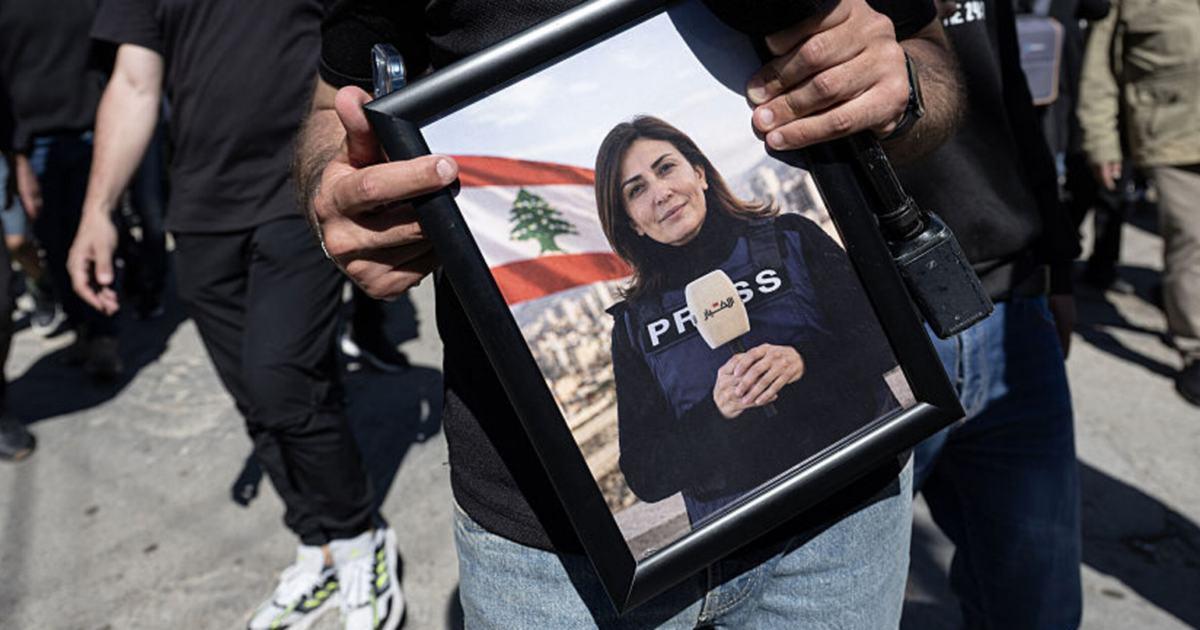
Amnesty said that over the following two hours, with drones hovering at close range overhead, two further air strikes hit first their car parked near them and then the building where they were sheltering, before the third strike led to the death of Amal Khalil and seriously wounded Zeinab Faraj.
Human Rights Watch described a timeline in which the first strike at about 2:30 p.m. killed Ali Bazzi and Mohammed al-Hourani, the second attack between 3:21 p.m. and 3:42 p.m. hit Khalil and Faraj’s car, and the third attack at about 4:25 p.m. bombed the building where they were sheltering.
Amnesty said the first strike hit a car at 2.25pm and killed two men, and that the journalists left their car and sought shelter in a nearby structure because two drones were hovering overhead and they feared further strikes.
Drones, delays, and obstruction
Human Rights Watch said photo and video evidence reviewed by the group, witness statements, and a deconfliction request to access the site by the Lebanese Red Cross to the Israeli military indicated that the Israeli military knew or should have known that Khalil and Faraj were civilians.
Human Rights Watch quoted Ramzi Kaiss saying, “Israeli forces’ continued killing of journalists shows a brazen willingness to commit atrocities without any fear of consequences,” and Amnesty International UK said the Israeli military “knew or should have known” that two civilian women were sheltering in the building.

The Guardian reported that investigations from Human Rights Watch, Amnesty International and Legal Agenda showed Israel deliberately and directly attacked Khalil and Faraj with apparent knowledge that they were civilians, and it said HRW called for states to halt arm sales to Israel and put targeted sanctions on Israeli officials.
The Guardian also said the reports indicated that Israel delayed Lebanese ambulances from reaching Khalil and Faraj for hours, including at one point dropping stun grenades on Lebanese Red Cross workers and firing on their ambulances.
Human Rights Watch added that Israeli quadcopter drones appeared to be monitoring Faraj and Khalil while they were hiding and subsequently attacked, and it said a drone-delivered stun grenade forced Lebanese Red Cross paramedics to initially retreat without rescuing Khalil.
Accountability and wider impact
Amnesty International UK said the fact that the two journalists were in what Israel has designated a “no-return zone” does not make them lawful targets, and it argued that all parties to a conflict must distinguish between civilians and military targets at all times.
““The fact that the two journalists were in what Israel has designated a no-return zone does not make them lawful targets.””
Amnesty International UK also said the attack must be promptly, independently and impartially investigated as a war crime, while Human Rights Watch said Israel’s allies, including the United States, the United Kingdom, Germany, and other European Union states should immediately suspend all arms transfers and military assistance to Israel and impose targeted sanctions on Israeli officials responsible for ongoing abuses.
The Guardian reported that Israel said it “regrets any harm caused to journalists,” and that it said the journalists were killed “as part of a series of events” during which two Hezbollah military operatives were killed.
Human Rights Watch said the text of a recently concluded framework agreement between Lebanon and Israel raises concerns that Lebanon’s authorities could act to curtail victims’ access to justice for serious international crimes, and it urged Lebanon’s judicial authorities to initiate domestic investigations.
Human Rights Watch further said parliament should act to strengthen the legal framework by putting in place a law criminalizing war crimes, crimes against humanity, and genocide in line with international standards, and it said the Lebanese government should accede to the Rome Statute of the International.