Gaza Genocide17 April, 20266 min read
Israeli Colonists Attack Displaced Bedouin Community Near Jericho, WAFA Says
This article is an automated aggregation of coverage from news outlets. Our editorials offer in-depth analysis curated by the NewsCord team.
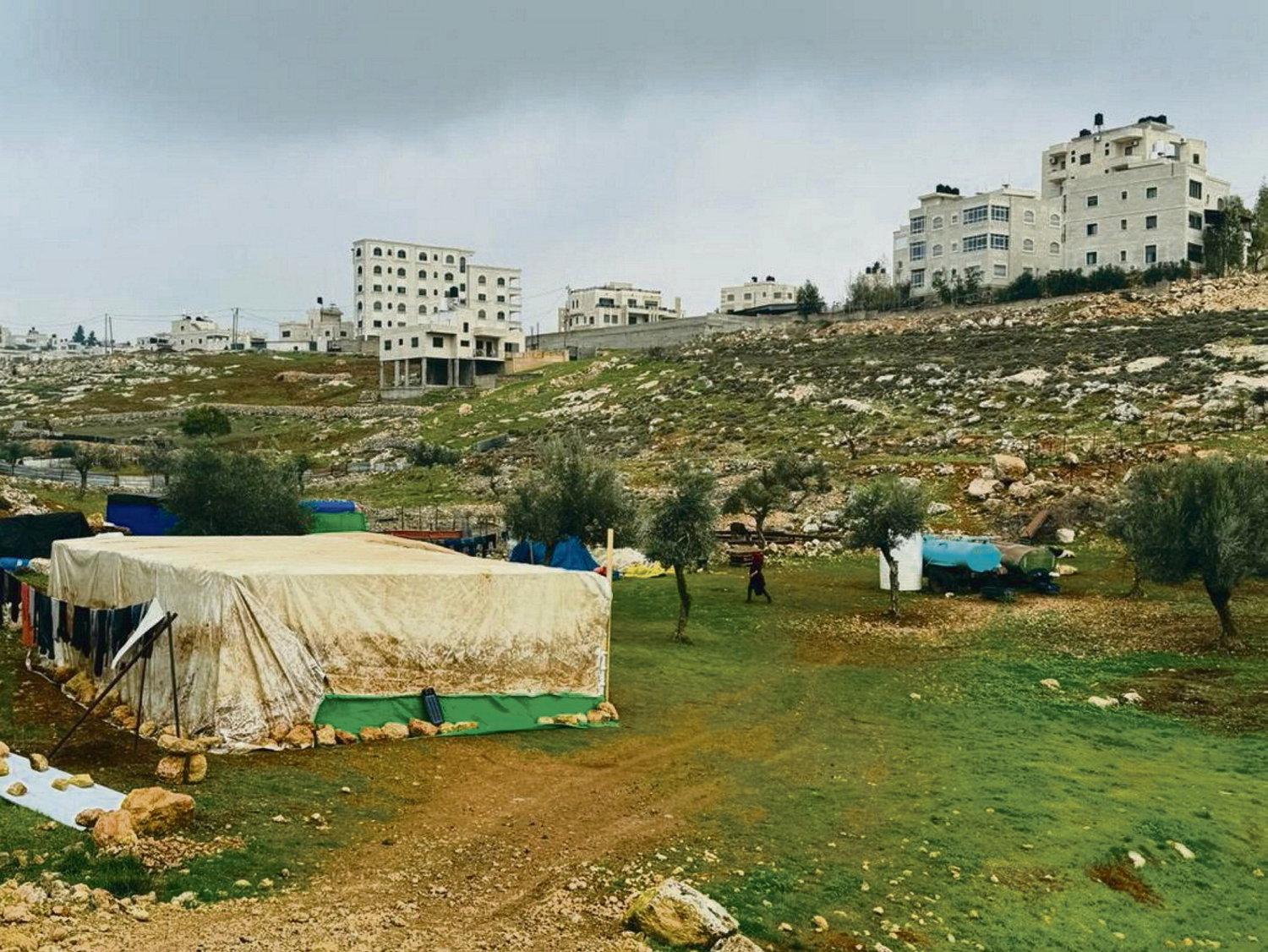
Israeli colonists attacked the displaced Bedouin community near Jericho. Colonists broke into dwellings and chased livestock, Al-Baydar reports.
Attacks Near Jericho
Israeli colonists attacked a displaced Bedouin community near Jericho in the Al-Balqaa area north of Jericho, according to the WAFA Agency. WAFA said that the Al-Baydar Organization for the Defense of Bedouin Rights reported that colonists “broke into the dwellings of the community and chased livestock herders.” WAFA added that the organization said colonists “systematically assaulted and terrorized the civilian community” as part of “the occupying Power’s efforts to entrench its occupation and control the land.”
WAFA also said the community had been forcibly displaced in July 2025, and that colonists’ violence against Palestinians and their property is “routine in the West Bank and is rarely prosecuted by Israeli authorities.” The report described colonists’ violence as including “property and mosque arsons, stone-throwing, uprooting of crops and olive trees, and attacks on vulnerable homes, among others.”
WAFA further stated that “Approximately 1 million Israeli colonists are living in colonies in the West Bank and East Jerusalem in violation of international law.” The WAFA report was dated “Jericho, April 17, 2026,” and it identified “K.F.” as the signature at the end of the dispatch.
Jordan Valley Exodus
Multiple reports describe Bedouin communities in the West Bank being emptied under pressure from Israeli extremist settlers and the effects of Israeli control over land. Le Monde.fr described Bedouin hamlets in the Jordan Valley as “empting one after another under the violence of radicalized settlers, with near-official support from the Netanyahu government.” In Le Monde’s account, Mouarrajat, a Bedouin hamlet in the West Bank where “seventy-five families had lived for decades,” is “now nothing more than a ghost town,” with “empty pens, the abandoned houses, and the mosque” after “The settlers burned it.”
Le Monde quoted Souleiman Mleihat, 34, saying, “The settlers burned it,” and it said he watched the site from “a hillside seven kilometers away.” Le Monde also said that on “July 20” the hamlet was already empty, and that the community leader was forced to leave on “July 3.” It described an early-morning attack in which “about fifty 'hill youths', extremist and violent Jewish settlers armed with M-16 assault rifles for some, entered the village,” and it said the attackers “'overturned' several sheep with their off-road vehicles, before stealing about sixty.”
Le Monde further reported that attackers “urinated at the entrances of the Bedouin homes” and ordered occupants to leave or be killed, and that those who left took “identity documents, a little cash, and a few easily portable pieces of furniture.” Le Monde concluded that “Since that day, no one has been able to return to recover the rest of their belongings,” and that “All those who tried to come back were targeted by the settlers' gunfire.”
Zone C and Harassment
L’Humanité and La Vie.fr connect the Bedouin displacement described in the Jordan Valley to the structure of Israeli administration and security in Zone C, and to ongoing harassment that disrupts pastoral life.
L’Humanité said that “From the east of Ramallah to Jericho, Bedouin communities are driven from their lands by settlers,” and it described “Zone C” as the area where “ethnic cleansing is underway.”
The outlet said that the area “lies in Zone C (which covers 60% of Palestinian territory), as decided by the Oslo Accords signed in 1993,” and it added that “administration and security fall exclusively under the Israeli occupier.”
L’Humanité described the Bedouin way of life as “regular movements according to the seasons,” and it said that “The livestock used to drive out the shepherds,” before “Until then, everything had gone relatively well.”
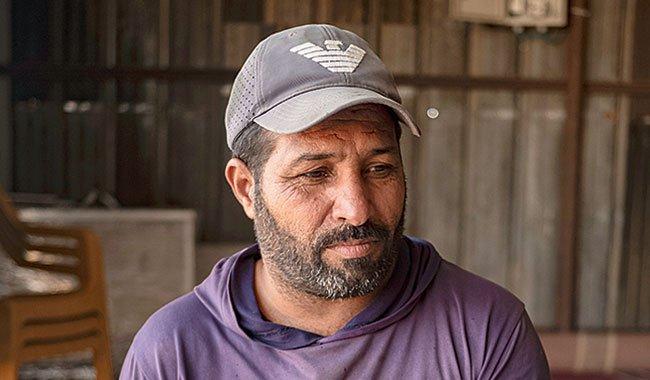
It quoted Habes Kaabneh, described as “the Bedouin chief of a community gathered from three extended families (220 people),” who said, “For five years, the settlers have been harassing us, preventing us from moving as we normally do.”
L’Humanité said that “ten settler outposts” had been established near Bedouin hamlets in recent years, and it described them as “illegal, even under Israeli law,” while also saying “the current far-right government is working hard to legalize them.”
La Vie.fr, meanwhile, described Ras Ein al-Auja west of Jericho as “paralyzed by fear and uncertainty,” and it said “About 120 families live there, encircled by Israeli expansion.”
La Vie.fr quoted Nayef Jawalwa, a “48-year-old Bedouin herdsman and father of ten,” saying, “We could drive our herds within a radius of 6 km without fear. Today, every outing is risky,” and it said he had reduced his herd from “400 to 50 sheep.”
Voices of Fear
Accounts from Bedouin residents and community leaders emphasize fear, deprivation, and the practical limits on daily movement. In Le Parisien, Nayef Zaed described the urgency of leaving, telling the outlet, “We should have left here by Saturday, the time to finish packing up our things,” while standing on the threshold of an “almost-empty house” north of the village of Ras Ein al-Auja in the West Bank. Le Parisien said the Bedouin camp he joined in the 1980s “seems, at first glance, peaceful,” but it described the camp as spanning “nearly twenty square kilometers” and said the Bedouins “have lived here permanently for nearly half a century.”
The outlet said the camp’s residents live in “extreme deprivation and under the constant threat of ultra-radical settlers nicknamed 'the Hill Youths.'” Le Parisien reported that the residents are “Already deprived of essential resources — water, electricity, pastures — they are now preparing to lose their shelter,” and it described rudimentary shelters made of “tarps and tin” that are “almost all dismantled.” La Vie.fr similarly described Ras Ein al-Auja as “paralyzed by fear and uncertainty,” and it said the herds are confined as “Reduction of pastures and goat theft” reshapes daily life.
La Vie.fr quoted Nayef Jawalwa saying, “His gaze stays fixed on the distance, as if trying to glimpse the lands now inaccessible,” and it added that he had reduced his herd from “400 to 50 sheep.” La Vie.fr also attributed the situation to “the youths of the hills' — ultranationalist Israeli youths, reputed for their uncompromising stance, gunmen and snipers adept at the Greater Israel.”
What Comes Next
The sources frame the ongoing Bedouin displacement as part of a broader, continuing process rather than a one-time incident, and they describe land control and daily survival as the immediate stakes. WAFA’s report said colonists’ violence is “routine in the West Bank and is rarely prosecuted by Israeli authorities,” and it described violence including “property and mosque arsons” and “uprooting of crops and olive trees.” Le Monde.fr described how, after the July 3 departure from Mouarrajat, “Since that day, no one has been able to return to recover the rest of their belongings,” and it said return attempts were met with “settlers' gunfire.”
L’Humanité described the situation as “ethnic cleansing is underway” in Zone C and said “A precise political plan aimed at Judaizing the West Bank” is being pursued, while also stating that Zone C “covers 60% of Palestinian territory.” La Vie.fr and Le Parisien both depict the immediate consequences for families: La Vie.fr said Ras Ein al-Auja is “paralyzed by fear and uncertainty” and that herds are confined, while Le Parisien said residents are “now preparing to lose their shelter.” In Le Parisien’s account, the camp spans “nearly twenty square kilometers,” and the residents’ shelters made of “tarps and tin” are “almost all dismantled,” underscoring that the next step is further loss of housing.
In L’Humanité’s account, Habes Kaabneh said harassment had prevented movement “for five years,” and it described the Bedouins’ seasonal pastoral transhumance as disrupted. Across the reports, the stakes are presented as survival under constrained movement, loss of livestock and access, and the inability to recover belongings after forced departures.