Israeli Forces Demolish Palestinian Home in Occupied East Jerusalem
Key Takeaways
- Israeli forces demolished a Palestinian home in Arab al-Ararara near Jaba roundabout, north of Jerusalem.
- Jerusalem Governorate confirmed the demolition near the Jaba roundabout.
- Described as part of a broader campaign targeting Palestinian presence in the West Bank.
Demolitions in Jerusalem
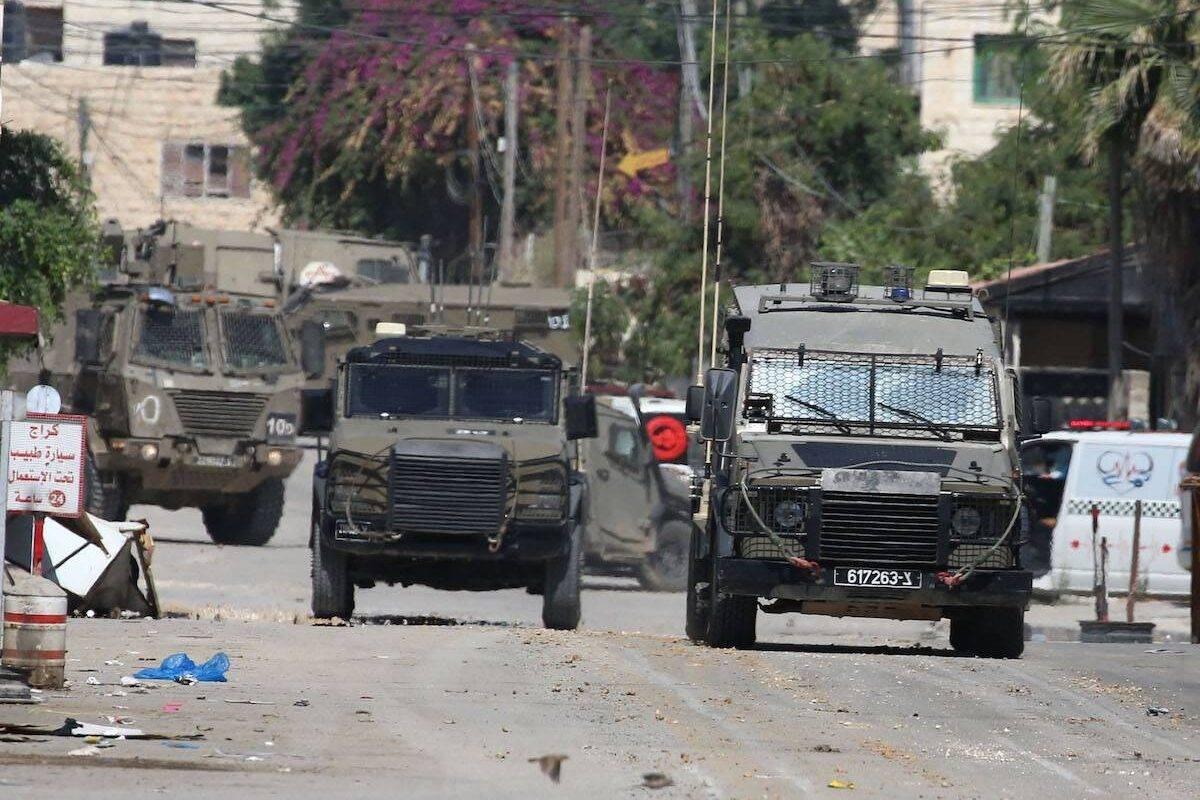
Israeli forces demolished a Palestinian-owned home in occupied East Jerusalem and also razed a structure used for livestock in Ramallah, in what multiple outlets described as ongoing home demolitions across the occupied West Bank.
TRT World reported that the Jerusalem Governorate said Israeli forces razed a house in the Arab al-Ararara area near Jaba roundabout, north of East Jerusalem, and that the governorate cited “lack of a building permit” for the demolitions.

WAFA similarly reported that Israeli occupation forces demolished a house in the Arab al-Ara’ara area near Jaba’ roundabout, north of Jerusalem, on Tuesday, claiming it lacked a building permit, and said the Jerusalem Governorate reported that Israeli bulldozers, accompanied by the so-called “Civil Administration,” stormed the area and began demolishing the house belonging to Mohammad Deifallah Ararara.
İlke Haber Ajansı added that Israeli bulldozers—escorted by units from the so-called Civil Administration—raided the area and proceeded to raze the home of Palestinian resident Mohammad Deifallah Ararara, again citing the lack of a building permit.
TRT World also said Israeli forces raided the town of Silwad, east of Ramallah, and demolished a structure used for livestock, with local sources telling Anadolu.
The same TRT World report anchored the demolitions in a broader escalation, saying the West Bank has seen a sustained escalation in violent incident since the outbreak of Israel’s genocidal war on Gaza in October 2023, including killings, arrests, demolitions and settlement expansion.
TRT World further quantified the impact using official Palestinian data, saying the violence has resulted in the deaths of at least 1,155 Palestinians, the wounding of about 11,750 others, and the arrest of nearly 22,000 people.
April demolitions and escalation
TRT World tied the latest demolitions to a quantified pattern of destruction in April, citing data from the official Colonisation and Wall Resistance Commission.
It said Israeli forces carried out 37 demolition operations in April, targeting 78 structures, including inhabited homes and agricultural facilities, and issued dozens of demolition notices.

TRT World also described the West Bank’s escalation as sustained since the outbreak of Israel’s genocidal war on Gaza in October 2023, listing killings, arrests, demolitions and settlement expansion as part of the same trajectory.
In the same framing, İlke Haber Ajansı described the demolition near Jaba’ roundabout as “a move widely condemned as part of a broader campaign targeting Palestinian presence in the region,” and said authorities justified the demolition by claiming the structure lacked a building permit.
İlke Haber Ajansı further asserted that Palestinian officials and rights groups argue that such justifications reflect “a discriminatory system that makes it nearly impossible for Palestinians to obtain building permits,” particularly in areas surrounding Jerusalem.
It added that families are often left with no option but to build without authorization, “only to face demolition orders later,” and described demolitions as a recurring reality for Palestinians in and around Jerusalem.
The WAFA report, while focused on the specific Tuesday demolition, also placed it within the policy of demolishing homes in Jerusalem and its surrounding areas “under the pretext of building without a permit.”
Iran’s 45th missile wave
While the Jerusalem and West Bank demolitions were reported alongside Gaza-related escalation, another thread in the provided coverage centered on Iran’s stated missile and drone campaign against Israel.
بوابة أخبار اليوم الإلكترونية described “A bloody day for the Israeli occupation” in which it said Iranian missiles struck Israeli facilities and caused widespread destruction to homes, “this Friday,” after the Iranian Revolutionary Guard Corps launched the 45th wave of attacks.
The outlet said the Iranian Revolutionary Guard announced that it had launched missiles and drones at Israel, in coordination with the Lebanese Hezbollah movement that Tehran backs, and that the IRGC explained in a statement that the operation came within the framework of Quds Day, observed on the last Friday of Ramadan.
It further said the IRGC announced that the naval and air forces and the Iranian army and Hezbollah jointly and in coordination carried out the 45th wave of Operation Al-Waad Al-Sadiq 4 (the True Promise).
The same report listed locations it said were hit, saying Iranian missiles and Hezbollah drones hit Haifa, Caesarea, Zer’iya, and Shlomi, as well as the Military-Industrial Complex in Holon.
It also said the IRGC’s naval forces, in coordination with the Iranian army, targeted American facilities in Erbil in northern Iraq and in Al Dhafra in the UAE.
The outlet added that Tehran was also targeted in the morning by Israeli airstrikes near the site of a rally marking Quds Day, in which senior Iranian officials participated.
Lebanon villages leveled
Another provided report, attributed to the New York Times, described large-scale Israeli demolitions near the border south of Lebanon.
النجاح الإخباري said the New York Times quoted satellite images indicating that wide-scale Israeli demolitions have leveled 20 villages near the border south of Lebanon.

It added that the Times said Israeli demolition operations included government buildings and civilian infrastructure.
The same report said the Times quoted the Israeli army as saying that the directives allow demolishing facilities used for military purposes or for operational reasons.
In the text, the outlet framed the claim as “Occupation forces completely destroy 20 Lebanese villages,” and it presented the satellite-image basis as the mechanism for the count.
While the report did not provide additional named officials beyond referencing “the Israeli army,” it did specify the number of villages as 20 and tied the demolitions to both government buildings and civilian infrastructure.
The report’s internal logic therefore connected the Gaza-era escalation described elsewhere in the dataset to a broader pattern of destruction extending beyond the West Bank and into Lebanon’s border areas, at least as characterized by the New York Times via satellite imagery.
War as a West Bank model
A long-form piece in Chronique de Palestine described Israeli operations in the West Bank as intensifying alongside the Gaza war, asserting that Israel aims to make life “unbearable for Palestinians” by mobilizing “all its military and colonial means.”
“By Mariam Barghouti In the occupied West Bank, Israel has mobilized all its military and colonial means to make life unbearable for Palestinians”
The author, Mariam Barghouti, wrote that “another war is unfolding in the West Bank” as the United States seeks to extend Israeli aggression against Gaza “under the guise of a ceasefire.”
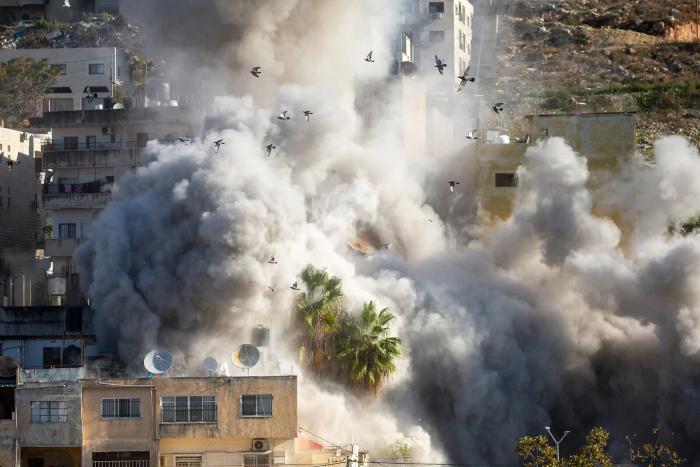
The piece said that over the past two years Israel intensified its “counter-insurgency operations” in the West Bank to “fight Palestinian terrorism,” and argued that the term “counter-insurgency operations” is “not accidental.”
Barghouti asserted that the intensification of military aggression, “the violence of settler militias, the destruction of infrastructure, the demolition of homes, and the multiplication of roadblocks and checkpoints” are aimed at creating on-the-ground conditions “modeled after Gaza.”
The article provided a quantitative claim, saying that in 2025 the Israeli military offensive triggered “the largest campaign of mass displacement Palestinians have known since 1967,” with “nearly 50,000 Palestinians forcibly expelled from their homes.”
It also stated that “At least 70% of Jenin's roads have been bulldozed,” and said “the majority of water pipes and sewer networks have been destroyed in Jenin and Tulkarem within a few weeks,” causing “economic losses of several million dollars.”
The same piece described a weekly pattern of violence, writing that “Every week, on average, nine Palestinians are killed, 88 others wounded, 180 arrested,” and adding “in addition to an average of 100 attacks by Israeli settlers, 300 military raids and assaults, and 10 demolitions of Palestinian homes and property.”
More on Gaza Genocide

Gideon Sa’ar Cuts All Contact With EU Foreign Policy Chief Kaja Kallas Over Apartheid Remarks
15 sources compared

Trump, Iran Sign MOU To Reopen Strait of Hormuz, End Blockade and Sanctions
13 sources compared

Moshe Feiglin Says He Will Build a New Jewish Temple at Al-Aqsa
11 sources compared

Naël Barghouti Says Hamas-Israel Prisoner Exchange Sent Him Into Exile in Egypt
10 sources compared