
Israeli Military Maps Expand Restricted Zones and Move Yellow Line Deeper in Gaza
Key Takeaways
- Israel issued new Gaza maps expanding restricted zones, trapping thousands of displaced inside.
- Satellite imagery shows blocks marking the boundary moved deeper into Gaza.
- Outlets describe expansion of Israeli control with displacement risk for Gaza residents.
Aid, lines, and control
Israeli military control in Gaza is being reshaped through maps, evacuation orders, and shifting internal boundaries that humanitarian groups say create confusion and fear for civilians.
“By Hani Mahmoud, January 26, 2026”
Reuters, as relayed by Palestine Chronicle, said “New maps quietly distributed by the Israeli military to humanitarian organizations have expanded restricted zones inside Gaza,” placing “thousands of displaced Palestinians within areas where Israeli forces may operate and open fire.”
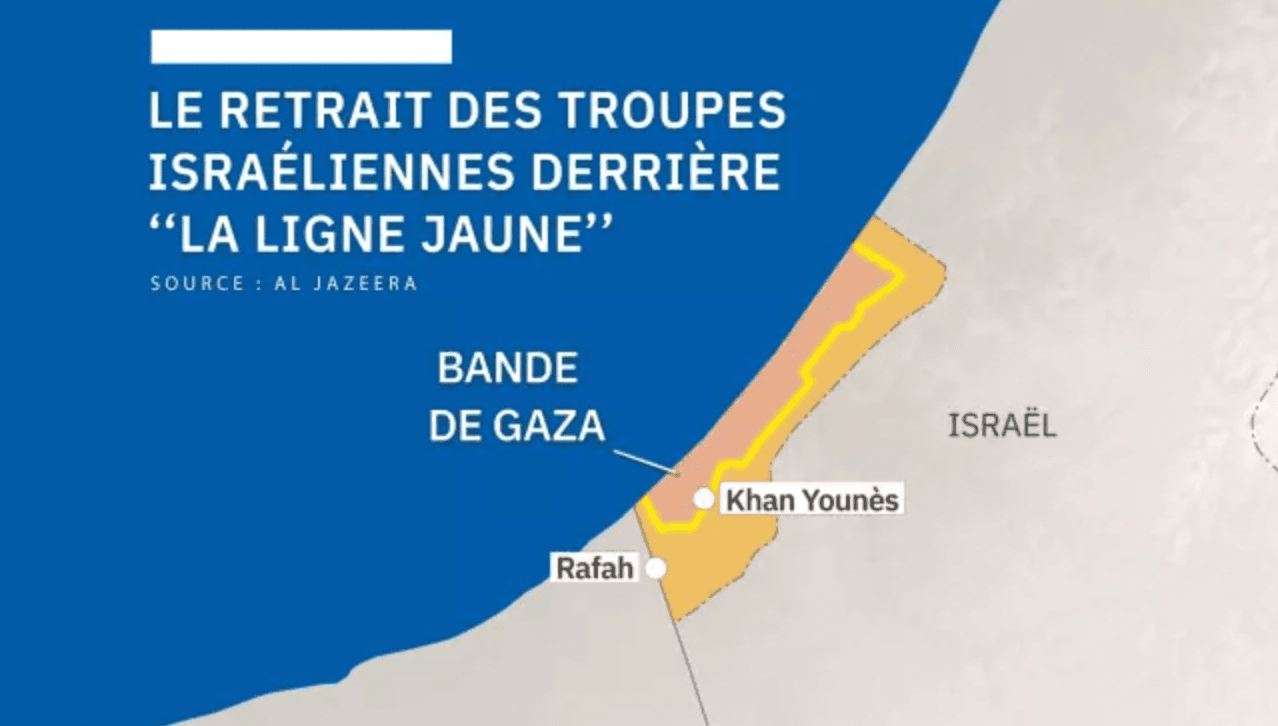
The same Reuters reporting described an enlarged restricted area marked by an orange line beyond the “so-called Yellow Line,” and said the change “encompass[es] an additional 11 percent of Gaza’s territory,” bringing the total effectively controlled or restricted by Israel to “nearly two-thirds of the Strip.”
France 24 also described “New maps of Gaza quietly issued by Israel a little more than a month ago” that put “thousands of displaced Palestinians inside an expanded restricted area,” with boundaries the military says “can continue to change.”
BBC Verify reported that Israel “moved the blocks intended to mark its post ceasefire control line deeper into the Gaza Strip in several places,” and said “In total, 16 positions have been moved.”
BBC Verify further said the markers were moved “an average of 295 meters (968 feet) farther into the Gaza Strip,” while an IDF spokesperson rejected allegations that the yellow line had been moved or crossed by Israeli ground troops.
Together, the reporting portrays a system where the “yellow line” and related restricted zones function as de facto borders that determine where people can live, move, and receive aid.
Evacuation orders and fear
Beyond maps, the sources describe a dense pattern of evacuation orders and militarized zones that force repeated displacement and narrow the space where civilians can shelter.
France 24 Observers reported that “since March, the Israeli army's evacuation orders cover 78% of the Gaza Strip,” and said that “Between March 18, the day the ceasefire broke, and May 29, the Israeli army issued 32 evacuation orders forcing Gaza residents to flee.”
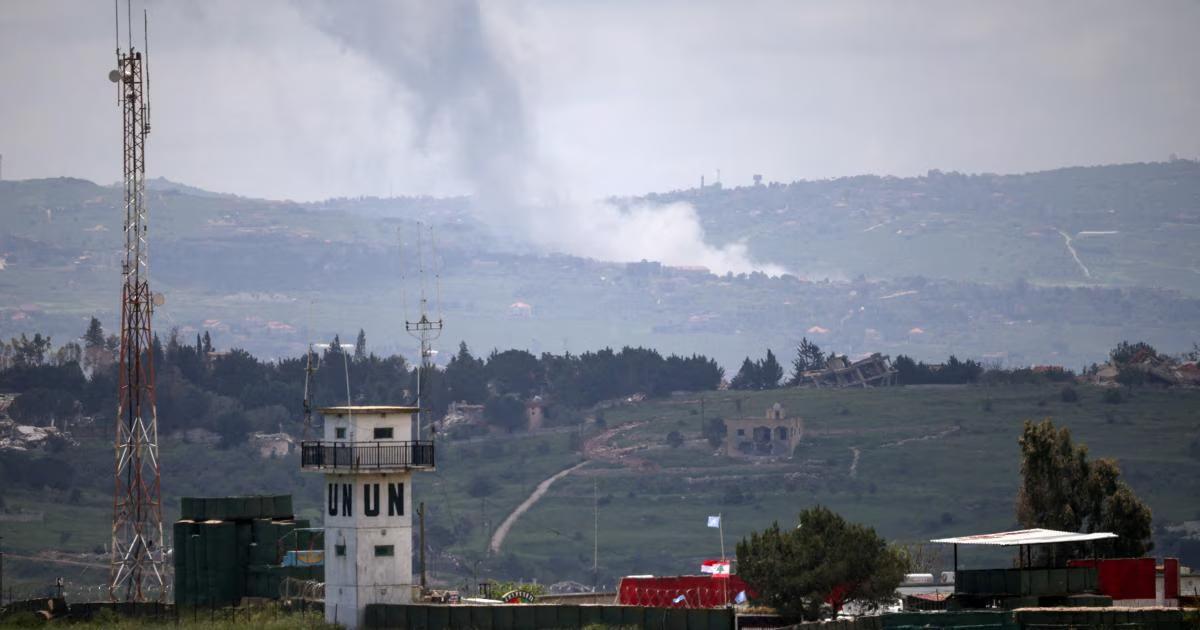
The same investigation said “More than two million Gaza residents are now supposed to shelter on a territory that covers less than 65 square kilometers,” and described how orders were distributed “via its Telegram, Facebook or X accounts, or via printed flyers.”
France 24 Observers quoted an Arabic message transmitted on the Telegram channel of the Israeli army's Arabic-speaking spokesperson on April 11, stating: “For your safety, you must immediately evacuate to the known shelters in Khan Younis.”
The report also described how some residents faced complete evacuation after previously receiving partial orders, with Mohammad recalling that after their conversation “Mohammad eventually had to set out again, after the army ordered the complete evacuation of his neighborhood, threatening to bomb their homes.”
In parallel, the France 24 Observers investigation described militarized “buffer zones” where “all movement is prohibited,” quoting Israeli Defense Minister Israel Katz: “The army will stay in security zones to act as a buffer between the enemy and the communities [Israeli], as in Lebanon and Syria.”
Reuters-linked reporting and BBC Verify both tie these shifting boundaries to uncertainty on the ground, with BBC Verify describing that “leaving some people in Gaza uncertain about the exact location of what the Israeli army calls a dangerous combat zone.”
People describe the danger
Civilians and aid workers described the practical consequences of the shifting lines as immediate, daily threats rather than abstract policy.
Reuters reporting cited by Palestine Chronicle included displaced resident Rani Ashour saying, “People don’t know what is what,” and adding, “The line is here today, you sleep, and you wake up, and you find it has passed you.”
The same Reuters-linked account said Palestinians living in the areas feared they could be “considered military targets simply for remaining inside zones whose boundaries continue to change.”
BBC Verify also included a resident near Khan Younis whose name it withheld for safety, saying, “We now live inside the yellow line, behind the yellow blocks, not knowing what the future holds,” and that “The atmosphere is terrifying at night.”
In the same BBC Verify report, Professor Andreas Krieg described the moving of blocks as “an engineering tool of territorial engineering,” while Efraim Inbar suggested the line might not account for natural obstacles and that “Israeli army engineers could place the blocks where they find it easier to put them.”
Agence Media Palestine, in a separate account, described Zaid Mohammed sheltering “Just a few meters from yellow-painted concrete blocks,” and said the “yellow line” extends “from 1.5 km to 6.5 km inside Gaza” and covers “about 58% of the enclave.”
Zaid told Al Jazeera that “The bombardments and the gunfire continue 24 hours a day,” and described how “It is dangerous to move even a few steps beyond this zone.”
Deadly incidents and disputes
The sources connect the shifting boundaries to lethal incidents and to disagreements over what the Israeli military says is happening on the ground.
Palestine Chronicle, citing Reuters, said “at least three Palestinians working with international aid agencies have been killed by Israeli attacks in the area between the two lines since mid-March,” naming victims “two workers affiliated with UNICEF and one with the World Health Organization.”

It added that in both incidents “the Israeli military said it identified threats near the Yellow Line and opened fire,” while “UNICEF and WHO did not immediately comment on whether their personnel had coordinated movements with Israeli authorities.”
BBC Verify described a string of deadly incidents around the yellow line after Defense Minister Israel Katz warned in October that anyone crossing would be fired upon, and said “Since Katz's warning in October, soldiers have fired at least 69 times at people who crossed the yellow line.”
BBC Verify also reported that on December 19 “Five people, including children, were killed in the explosion,” and said the Gaza Civil Defense Agency, led by Hamas, blamed the strike on a school housing displaced people in the al-Tuffah district.
BBC Verify included the Israeli army response that it “had fired on suspicious individuals to the west of the yellow line,” adding that the incident was “under investigation” and that it “regretted any harm caused to uninvolved people.”
BBC Verify also stated that “An IDF spokesperson said he rejected all allegations that the yellow line had been moved or crossed by Israeli ground troops,” and that the Israeli army said it strives to visually mark the line based on “field conditions” and “ongoing operational assessment.”
Negotiations and ongoing violations
While the boundary disputes and deadly incidents unfold, other reporting focuses on ceasefire negotiations and on continued violations described by regional outlets.
i24NEWS said Israel is “considering presenting new cards to Hamas to attempt a breakthrough in the negotiations,” and that “a final decision could be made this Sunday evening at a meeting chaired by Israeli Prime Minister Benjamin Netanyahu.”
i24NEWS reported that if accepted, the proposed cards could open “a ceasefire agreement involving the release of 10 hostages alive and 18 hostages dead,” followed by “a 60-day negotiating period toward a permanent ceasefire.”
The same i24NEWS account said Israel wants to retain “control of about 40% of the Gaza Strip during the ceasefire,” while Hamas “demands a broader withdrawal of Israeli forces,” and it said Hamas “rejects any expansion of the buffer zone or any attempt to isolate the city of Rafah.”
On the Palestinian side, i24NEWS quoted Mohammad al-Hindi, the second in command of Islamic Jihad, saying on Al Jazeera that Israeli offers amount to “demanding surrender,” which Hamas and its allies “categorically reject.”
In parallel, عرب 48 described the humanitarian situation as deteriorating as Israeli violations persist for “the 203rd day in a row,” and said the ceasefire took effect on “October 11, 2025.”
عرب 48 reported that the toll since the start of the ceasefire rose to “824 killed and 2,316 injured,” and said “A Hamas delegation arrived in Cairo two days ago, led by Khalil al-Hayya.”
More on Gaza Genocide

Israeli Forces Kill 16-Year-Old Palestinian Ibrahim Al-Khayyat in Hebron Raid
13 sources compared

Israeli Forces Intercept Global Sumud Flotilla Near Crete, Detain Activists
40 sources compared

Israeli Attacks Continue in Lebanon as Joseph Aoun Condemns Violations Despite Ceasefire
20 sources compared

UK Court Finds Palestine Action Ban Illegal as Shabana Mahmood Appeals
24 sources compared