
Israeli Navy Seizes Global Resilience Flotilla Ships Near Crete, Turkey Condemns
Key Takeaways
- Israeli navy intercepted the Gaza-bound flotilla near Crete in international waters.
- Detentions ranged from dozens to hundreds of activists across reports.
- Turkey condemned the action and called for international accountability.
Ships seized off Crete
Israel’s navy seized and took control of ships tied to the “Global Resilience Flotilla” as they sailed in international waters near the Greek island of Crete, in what multiple outlets described as a major escalation.
The Israeli navy intercepted and seized “approximately 20 ships” early Thursday morning as they sailed near Crete, according to صــوت الإمارات, while the flotilla organizers said the Israeli military attacked “21 ships 45 nautical miles west of Crete.”
The Israeli Foreign Ministry confirmed via its “X” platform that “approximately 175 activists of various nationalities are being taken to Israel after their ships were seized,” as reported by صــوت الإمارات.
Al-Jazeera Net later reported that the Israeli Navy “had taken control of 21 of 58 ships,” describing the phase as preliminary and noting the possibility of resuming operations against remaining ships if they do not retreat.
The flotilla organizers said they were aiming to break the naval blockade imposed on the Gaza Strip and deliver urgent humanitarian aid, and they framed the seizure as an illegal detention far from Israeli territorial waters.
The outlets also placed the operation in a specific geographic and timing context: the seizure occurred near Crete, with one report stating it was “about 45 nautical miles west of Crete,” and another noting Israeli forces arrived near the ships “around seven o’clock in the evening Israel time (16:00 GMT).”
Rescue and communications accounts from the flotilla described interference and distress signals as the ships approached Gaza, with Al-Jazeera Net saying the organizers issued a distress signal and reported that “most of their boats in the Mediterranean were experiencing interference.”
Interception timeline and scale
The reporting portrayed the interception as both distant from Israel’s shores and unusually extensive, with outlets describing different counts of ships and different stages of control.
صــوت الإمارات said the operation involved “elite naval units in coordination with the Military Intelligence Directorate (Aman)” and that it was “directly overseen by Navy Commander Rear Admiral Eyal Harel,” while also describing drones surrounding the ships before warships boarded them.

علامات أونلاين added that the “assault on the Fleet of Steadfastness tonight comes at the furthest distance yet in Israel's assaults on flotillas bound for Gaza,” and it quoted a security source saying “the decision this time was to surprise them at a great distance, because of the size of the fleet.”
That same outlet said Kan 11 reported the flotilla included “about 100 vessels and about 1,000 activists,” and it described the Israeli government’s approach as deciding to seize only “20 ships and issued warnings to the rest.”
Al-Jazeera Net described the Israeli Navy’s justification as being based on the claim that “an attempt to break the legal maritime blockade of Gaza constitutes a violation of international law,” and it said the decision to take control was made “despite its distance from Israeli shores due to its size.”
In parallel, the flotilla’s own communications described interference and a distress signal, with Al-Jazeera Net stating that “Minutes to midnight, the organizers of the Global Resilience Fleet issued a distress signal and reported that most of their boats in the Mediterranean were experiencing interference.”
The same outlet said the Israeli Navy announced it had begun intercepting the fleet near Crete and that it had taken control of part of the fleet, with the possibility of resuming operations if ships did not retreat.
It also provided a departure and route timeline: the “Spring 2026 Mission” began with “about 39 vessels” sailing from Barcelona, Spain, on “April 12,” and it said that on “Saturday, April 25” the ships reached “the port of Syracuse in Sicily,” before departing the following day.
Al-Jazeera Net further reported that “56 ships left the Italian port of Augusta, en route to Gaza,” and it said Marine Traffic data showed the fleet’s ships moving in the eastern Mediterranean.
Justifications and counterclaims
The Israeli side and the flotilla organizers offered sharply different explanations for the seizure, with Israeli officials framing the action as enforcement of a maritime blockade and the flotilla describing it as piracy and illegal detention.
صــوت الإمارات said the Israeli government adopted a “deterrence” strategy by seizing part of the flotilla and issuing warnings to the rest, and it described the operation as involving coordination with Aman and oversight by Rear Admiral Eyal Harel.
Al-Jazeera Net reported that the Israeli Navy justified its attack by saying that “an attempt to break the legal maritime blockade of Gaza constitutes a violation of international law,” and it quoted naval officers saying the Israeli army was “now enforcing the maritime blockade on Gaza based on directives from the political leadership.”
The same outlet described the Israeli Navy’s approach as taking control of part of the fleet and potentially resuming operations if ships did not retreat.
In contrast, علامات أونلاين quoted the flotilla’s organizers saying, “This is piracy... this is an illegal detention of people at sea near Crete,” and it added that organizers said Israel could operate “far beyond its borders, and without bearing any consequences.”
ميدل ايست اونلاين similarly said the flotilla announced that Israeli naval vessels “had illegally blockaded the flotilla in international waters (in the Mediterranean)” and threatened to hijack it and use violence against it.
That outlet also reported that the flotilla said a fast military boat approached and “ordered participants to move to the bow of the boats and kneel on their hands and knees,” while directing “laser beams and semi-automatic weapons toward the flotilla’s boats.”
It further stated that the flotilla said communications with the boats were being jammed and that a distress call had been issued.
Al-Jazeera Net also described the Israeli pretext as being tied to the claim that humanitarian campaigns seek to breach a “security legal blockade,” while it noted that organizers describe their campaign as a humanitarian mission to break the blockade.
Condemnations and official reactions
International and political reactions described the seizure as a violation of law and a threat to activists, while Hamas and Turkey framed the incident in harsher terms.
صــوت الإمارات reported that the Turkish Foreign Ministry described the operation as “piracy” and a “blatant violation of human values and international law,” and it said Turkey stated that Israel was violating the principle of freedom of navigation in international waters.

The same outlet said Ankara confirmed it was in “intensive contact with the countries involved to ensure the safety of its citizens and other participants.”
Hamas condemned the attack as “terrorism” perpetrated by the occupying government, and it called on the international community to take immediate action to secure the release of the detained activists while holding Israel fully responsible for their safety.
ميدل ايست اونلاين quoted UN Special Rapporteur Francesca Albanese saying on X, “How can it be that Israel is allowed to attack ships and seize them in international waters off Greece/Europe?” and it added that Albanese wrote “Apartheid without borders.”
The outlet also said Hamas described the Israeli attack as “an act of terrorism and a crime,” and it quoted Hamas calling it “Zionist piracy far from Gaza’s shores” and “a crime and a brazen aggression carried out by the occupying government in full view of the world without deterrence or accountability.”
In addition, Al-Jazeera Net described how the Israeli Navy justified intercepting the fleet and how the flotilla organizers issued distress signals and reported interference, while it also noted that the campaign’s symbolic weight followed a prior attempt in 2025 that was intercepted and involved hundreds of participants detained.
The same outlet said the organizers described their campaign as the “largest coordinated civilian maritime mobilization” toward Gaza and said it aimed to deliver humanitarian aid and open a civilian maritime corridor.
Together, the reactions and counter-reactions showed a dispute not only over the immediate seizure but over the legal and moral framing of maritime access to Gaza.
What happens next
The sources tied the seizure to immediate next steps for detainees and to broader consequences for future maritime attempts, while also placing the incident within a longer pattern of flotilla confrontations.
صــوت الإمارات said the activists were being taken to Israel after the seizure, and it described concerns about their fate by referencing “past experiences” in which participants in blockade-breaking flotillas were subjected to “ill-treatment and torture during interrogations at Israeli detention centers,” before deportation.

It also said the confrontation came amid human rights reports indicating that seizing ships in international waters is illegal under the “1982 United Nations Convention on the Law of the Sea.”
علامات أونلاين added that the Israeli Foreign Ministry said “About 175 activists from more than 20 ships of the fleet are now headed to Israel,” and it reported that Walla said the flotilla commander, “Major General Eyal Harel,” would assess the situation in the coming hours and present recommendations with participation from “Aman” and the Foreign Ministry.
Al-Jazeera Net described the Israeli Navy’s current phase as preliminary, with the possibility of resuming operations against remaining ships if they do not retreat, and it said some ships will likely be towed to the port of Ashdod.
The outlet also connected the current mission to prior campaigns, saying that in October 2025 there was a violent Israeli assault on the Global Resilience Fleet in its previous mission, with organizers reporting that “at least 21 of 44 ships were attacked and hundreds of activists detained,” and it recalled that the flotilla at that time consisted of “6 ships carrying 663 activists from 37 countries.”
It further said Israeli forces intercepted the fleet about “64 nautical miles off the coast,” and that naval commandos conducted the raid, linking the current seizure to a recurring operational pattern.
In parallel, the flotilla’s own framing emphasized that the mission carried humanitarian aid and included an official page noting that aid includes “food, infant formula, medical supplies, hygiene items, and educational materials,” which raised the stakes for what detainees and aid delivery would mean.
Across the reporting, the immediate consequence was the detention and transfer of activists, while the longer consequence was the potential for further interceptions and the continuation of a contested maritime corridor effort toward Gaza.
More on Gaza Genocide
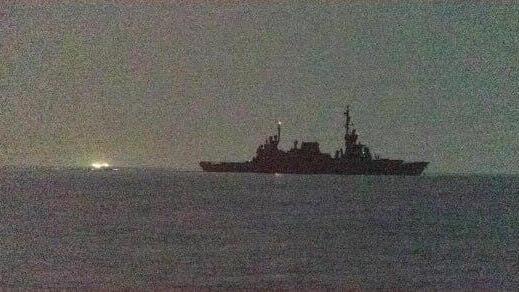
Israeli Forces Intercept Global Sumud Flotilla Boats Near Crete, Detain 175 Activists
29 sources compared

Israeli Attacks Continue in Lebanon as Joseph Aoun Condemns Violations Despite Ceasefire
20 sources compared
Israel Kills Hind Rajab and Family as They Try to Flee Gaza City
14 sources compared
UK Court Finds Palestine Action Ban Illegal as Shabana Mahmood Appeals
23 sources compared