Gaza Genocide05 May, 20266 min read
Israeli Offensive Kills 70,000 Gazaouis, Displaces 90% as Winter Floods Tents
This article is an automated aggregation of coverage from news outlets. Our editorials offer in-depth analysis curated by the NewsCord team.
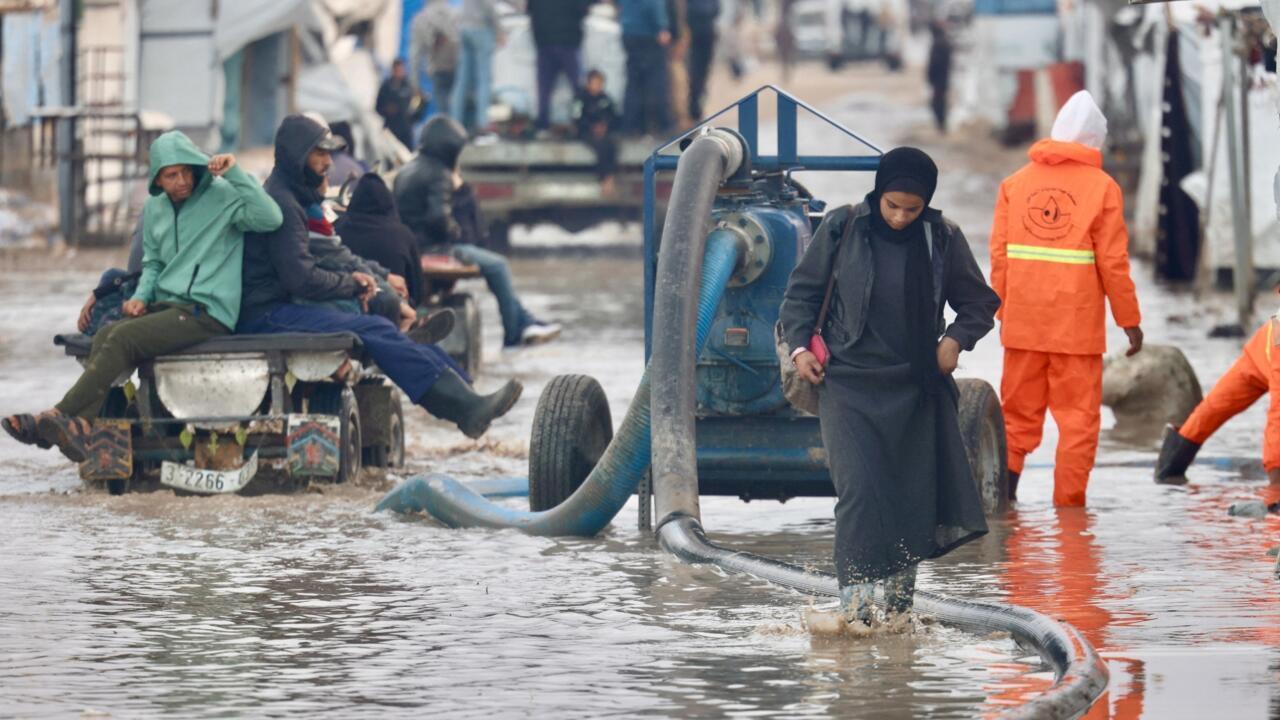
Skin infections in Gaza camps have tripled, nearing 10,000 cases per UNRWA. About 1.5 million displaced Gaza residents live in shelters as tents flood in winter rains.
Al Jazeera was read line by line by the Watchdog: 1.2. See the score →
Winter deepens Gaza’s crisis
Since the start of the Israeli offensive in Gaza, the human toll described by Le magazine GEO has continued to mount, with the outlet saying that “70 000 Gazaouis ont été tués” and that “90 % des habitants ont été déplacés” while “1,5 million de personnes sont privées d'un toit, selon l'ONU.” The same article frames the winter months as a worsening layer on top of already destroyed living conditions, writing that “Leur territoire est détruit, et l'arrivée de l'hiver pourrait avoir des conséquences catastrophiques pour les habitants.” Le magazine GEO links the seasonal shift to flooding and disease risk, stating that “les pluies hivernales inondent des milliers de tentes à Gaza alors que les températures chutent.”
It also describes environmental damage and contamination, saying that “La destruction environnementale, y compris l’impact des armes chimiques et des eaux polluées, rend l’ampleur de la catastrophe humanitaire encore plus apocalyptique.” The outlet adds that “Les infrastructures d'eau, d'assainissement et d'hôpitaux ont été pulvérisées” and that, “selon l'ONU, Israël ne laisse rentrer qu'au compte-gouttes la nourriture, les tentes, les vêtements chauds et les médicaments dont les habitants ont un besoin vital.” In the same account, the winter danger is personalized through a specific incident, noting that “un bébé mort dans une tente froide et inondée.”

Tents take on water
RFI describes Gaza’s winter conditions as ongoing and physically destructive, saying that “Gaza continue à endurer wintry weather” and that “Freezing rains and strong winds have been battering the Palestinian enclave since the start of the month.” The outlet reports that “A new low-pressure system rolled in on Sunday, December 28,” and frames the weather as worsening “the humanitarian catastrophe in the territory almost completely destroyed by Israeli bombardments.” RFI also grounds its account in specific on-the-ground visuals, stating that “In footage shot by Palestinian journalist Bader Tabash in Khan Younis in southern Gaza,” the beachfront tents appear “swept by the freezing wind and flooded by waves.”
The UN is quoted in RFI’s framing, with the outlet saying that “The UN denounces a 'natural' disaster whose consequences are human-made because the bombardments and the Israeli blockade have driven people from their homes.” In the center of the enclave, RFI includes testimony from humanitarian Eyad Amawi, who says, “While I am speaking to you, a strong wind lifts the tents and the remaining hope among the people here.”

Amawi adds that “This winter is harsher than last year,” and he links that to collapsed infrastructure, stating that “the infrastructure and residential buildings have collapsed.” RFI also reports UNRWA figures and deaths, saying that “more than 42,000 tents or temporary shelters have been completely or partially damaged, affecting at least 235,000 people between December 10 and 17,” and that “Eighteen people, including four children, have died.”
Hunger as a weapon
Le Nouvel Obs frames Gaza’s winter suffering through the lens of hunger, describing famine as a weapon of war rather than a passive outcome of scarcity.
The outlet says that “Selon les critères de l'ONU, le seuil de la famine a été dépassé” in “une partie de l'enclave palestinienne,” and it presents the argument through the discussion of “trois British doctors” returning from a mission.
Le Nouvel Obs quotes the doctors’ explanation of how death unfolds, writing that “People don't die from hunger. People die when the body, deprived of resources, derails and can no longer repair itself.”
It describes a timeline of physiological collapse, stating that “When simple sugars and glycogen are depleted, after about forty-eight hours, the body turns to fat,” and that “After the fats, it devours the muscles, then the organs.”
The article continues with the immune consequences, saying “L'immunité s'effondre, même une infection mineure devient fatale,” and it adds that “And for a baby, a child, an elderly person? It's a matter of days.”
Le Nouvel Obs then ties the medical description to the war’s progression, stating that “After the bombs and missiles, tank shells, and the snipers, here comes the last weapon of the war: hunger.”
The outlet concludes the quoted framing by asserting that “The Palestinian enclave no longer survives; it is now dying.”
Skin infections surge, hygiene blocked
Euronews reports that disease patterns in Gaza are shifting toward skin infections and pest-related illnesses, and it links the trend to shelter conditions and limited access to hygiene supplies. The outlet says that “the number of people affected is approaching 10,000, compared with around 3,000 cases in January,” based on data from UNRWA. Euronews adds that UN spokesperson Stéphane Dujarric told a press briefing that “field reports from teams on the ground indicate a continued increase in the spread of diseases and skin pests,” and that “the number of infections in UN-run displacement sites has risen more than threefold in March.”
Dujarric is quoted urging action, with Euronews stating he stressed “the need to facilitate the entry of basic hygiene supplies, including anti-lice shampoo, sanitary products, and insecticides.” The outlet also describes a shelter workaround, saying that humanitarian partners resorted to “reusing wooden platforms that were originally used to transport aid, converting them into emergency housing units,” and that “around 20 such shelters were established in various areas of the Gaza and North Gaza governorates at the start of the week.”

Euronews reports that humanitarian actors brought in “tens of thousands of bedding items, tents, and blankets, to meet the needs of more than 45,000 families.” In a separate but related thread, Euronews includes a dispute over ceasefire violations, quoting that “the Gaza government media office announced on April 14” that Israel committed “2,400 violations of the ceasefire agreement signed last October,” and it adds that “According to data from Gaza’s Health Ministry, these violations left 784 Palestinians dead and 2,214 others injured.”
Ceasefire, blockade, and disease
Al Jazeera shifts the focus from winter flooding to the health trajectory as “summer approaches,” describing how skin diseases spread through Gaza’s refugee camps and warning that the situation could worsen during hotter months. The outlet says the UN warned of “a new public health crisis” as “skin diseases spread in crowded camps throughout the enclave,” and it reports that UNRWA said “the number of skin infections has tripled in recent months.” Al Jazeera links the rise to “rising temperatures, overcrowding and worsening sanitation,” and it names diseases including “scabies, chickenpox and other diseases,” particularly among children.
The outlet also connects the current health emergency to a prior period, saying that families and healthcare officials are desperate to avoid a repeat of 2024 when “at least 150,000 people in Gaza suffered from skin conditions.” Al Jazeera attributes the shortages to Israel’s restrictions, stating that those conditions were “largely due to shortages in medical equipment brought about by Israel’s genocidal war on the territory,” and it says that “a “ceasefire” has been in place in the Gaza Strip since October 2025” while “Israel has continued to strike the territory and enforced a blockade that has severely limited the import of essential medical equipment.” The outlet includes a direct quote from Fawzi al-Najjar, who says, “We searched all the land across the Strip; it’s filled with displaced people,” and he adds, “There are a million people crammed on top of each other.”
Al Jazeera also quotes UN spokesperson Stephane Dujarric, who says, “Teams on the ground say that pests and skin infections among people in Gaza are still on the rise,” and he adds that “In March, such infections have more than tripled in our own UN-run displacement sites.” Finally, Al Jazeera reports a specific sanitation effort in Khan Younis, quoting Saeb Lagan: “So far, within 26 days, we have sprayed more than 50,000 tents out of a total of 200,000,” while noting that “the pesticides are not available in the local market.”