
Israeli Police and Shin Bet Arrest Al-Aqsa Imam as Jewish Extremists Backed by Israel Pressure Ramadan Prayers
Key Takeaways
- Israeli police deny Akram Sabri entry to Al-Aqsa Mosque.
- Ramadan prayers at Al-Aqsa face tightened access and closures.
- Waqf staff barred from entering Al-Aqsa by authorities.
Prayer status quo shatters
A six-decade-old agreement governing Muslim and Jewish prayers at Jerusalem’s most sensitive sacred site is “collapsed” under pressure from Jewish extremists backed by the Israeli government, experts warned, as tensions around the Al-Aqsa Mosque intensified during Ramadan.
Association France Palestine Solidarité described how a series of arrests of Muslim guards, bans on access for hundreds of Muslims, and escalating incursions by radical Jewish groups culminated this week with the arrest of an imam of the Al-Aqsa Mosque and a raid by Israeli police during the evening prayers, the first night of Ramadan.

The article said the actions of the Jerusalem Police and the Shin Bet internal security forces, “both now under the direction of the far right,” mark a rupture of the post-1967 status quo, which it says states that only Muslims are allowed to pray in the sacred enclosure around the mosque, known to Muslims as al-Haram al-Sharif.
It also set out the competing religious framing of the site, saying that for Jews it is the Temple Mount, “site of the First and Second Temples dating to the 10th century BCE,” destroyed by the Romans in 70 CE.
Daniel Seidemann, a Jerusalem lawyer who “regularly advises the Israeli, Palestinian, and foreign governments,” said, “Al-Aqsa is a flashpoint,” and argued that “There have been frequent provocations during Ramadan, but the situation is now exponentially more sensitive.”
The same account tied the current flashpoint to past unrest, saying a visit by former Israeli opposition leader Ariel Sharon in 2000 sparked the Second Palestinian Intifada, which lasted five years, and that Hamas gave the name “Al-Aqsa Flood” to its attack on Israel in October 2023, which killed 1,200 Israelis and triggered the Gaza war.
Detentions and access bans
Alongside the broader dispute over prayer arrangements, multiple reports described Israeli restrictions and bans affecting worshippers and staff connected to the Al-Aqsa Mosque.
Association France Palestine Solidarité said that as Ramadan approached, the Jerusalem Waqf “has come under increasing pressure,” adding that “five of its employees were placed in administrative detention (detention without charge) this week by Shin Bet” and that “38 others were barred from accessing the site,” while “Six imams of the mosque were also denied entry.”

It further alleged that “six Waqf offices had been ransacked in recent weeks” and that staff had been “prevented from replacing doors or carrying out other repairs,” while officials said the Waqf was prevented from installing “sun- and rain-shelters or temporary clinics for worshippers” and even from bringing “toilet paper onto the site.”
The article said these measures “cumulatively strained the Waqf's ability to host the 10,000 Muslims who were expected to come pray at Al-Aqsa Mosque during Ramadan,” and it contrasted that with figures from the Jerusalem governorate led by Palestinians, which it said gave “25 Waqf staff members barred from access and four detainees.”
In a separate WAFA report, Israeli authorities issued an order banning a Waqf employee from entering the Al-Aqsa Mosque compound, stating that the occupation authorities handed Rami Al-Khatib, who “serves as a media personnel,” an order banning him from entering “for six months.”
Another West Asian report said Israeli occupation forces continued to close Al-Aqsa Mosque for the “20th consecutive day,” preventing worshippers from praying there and barring citizens from entering its courtyards, citing a “state of emergency” and heavy deployment around the mosque and gates of the Old City.
Ben-Gvir’s Temple Mount prayers
The dispute over Al-Aqsa and the Temple Mount also played out through high-profile visits and changes to access, with multiple reports describing international condemnation and official pushback.
Virgule.lu reported that Israeli minister Itamar Ben-Gvir, described as a “far-right hard-liner known for provocations,” prayed on Tuesday with about 3,000 Jewish worshippers on the Temple Mount esplanade in East Jerusalem, “immediately triggering the anger of the international community.”
It said the UN, the European Union, the United States, and several Muslim countries condemned the stance of the leader of the far-right Jewish Power party as either an “unnecessary provocation” or “unacceptable,” and quoted the UN Secretary-General’s spokesperson Farhan Haq saying he was “against any attempt to change the status quo at holy sites, adding that this kind of behavior does not help and is an unnecessary provocation.”
The same report said Ben-Gvir posted a video for Tisha B'Av calling to “defeat Hamas rather than negotiate with the Palestinian Islamist movement,” and it described how, during the hours when the esplanade was open to non-Muslims, “about 2,250 Jews prayed, danced and raised the Israeli flag at the site” according to an AFP report from a Waqf official.
It also said that during the second non-Muslim time slot, “more than 700 Jews prayed there,” again citing the same source.
Virgule.lu further stated that Prime Minister Benjamin Netanyahu’s office condemned the event as an exception to the status quo and that U.S. Secretary of State Antony Blinken said, “we expect the Israeli government to prevent such incidents in the future,” denouncing Ben-Gvir’s “blatant contempt.”
Ramadan access limits and disputes
As Ramadan progressed, reporting described both Israeli adjustments to visiting hours and broader restrictions on Palestinian worshippers, with the same actions framed differently across outlets.
The Times of Israël said that on Wednesday Israel announced it would limit to 10,000 the number of Palestinian worshippers from the West Bank who can attend weekly Friday prayers inside the Al-Aqsa Mosque compound during Ramadan, citing the Coordinator of Government Activities in the Territories (COGAT), a Defense Ministry body.
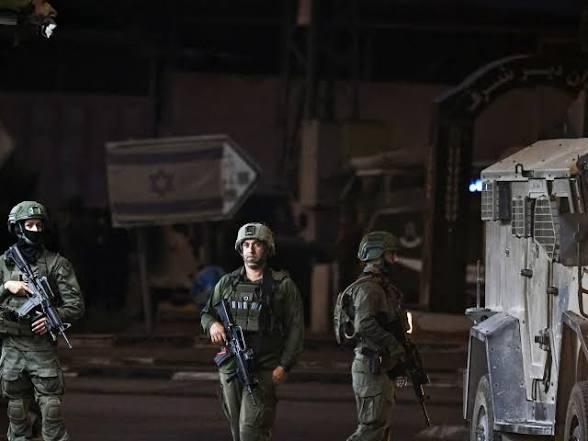
It said that under last year’s criteria, “only men aged 55 and older, women aged 50 and older, and children under 12 accompanied by a first-degree relative will be allowed to attend prayers at Al-Aqsa,” and that COGAT said political leaders “accepted the recommendation of the defense authorities regarding the entry framework for Palestinian worshippers into the Temple Mount/Al-Aqsa Mosque complex during Ramadan.”
The same report quoted COGAT saying, “This measure aims to enable and facilitate freedom of worship and religion for the public, subject to maintaining security stability,” and added that “all permits are subject to the prior agreement of the competent security authorities.”
In contrast, WAFA reported that Israeli authorities banned access for worshippers for Friday prayers and that this was “for the second consecutive week,” describing closures of doors and access points such as Bab Hutta and Bab al-Silsila, and saying only “450 worshippers were allowed to enter for the Dhuhr (noon) prayer on Thursday.”
WAFA also said that “Only some employees of the Islamic Waqf were allowed to enter via Bab al-Silsila and Bab Hutta, under tight military supervision,” while it claimed Israeli forces opened Bab al-Maghariba to allow settlers to enter the mosque.
Jordan rejects Netanyahu meeting
The escalating restrictions at Al-Aqsa also fed into diplomatic friction, with Jordan refusing to meet Israel’s prime minister and regional governments condemning the closures.
“The police extended by one hour the visiting hours for Jews on the Temple Mount in Jerusalem during Ramadan, on Wednesday, the first day of the Muslim fasting month”
Ain Libya reported that Jordanian King Abdullah II refused to hold any meeting with Israeli Prime Minister Benjamin Netanyahu “according to the Israeli Broadcasting Authority,” attributing the refusal to the “continued closure of the al-Aqsa Mosque.”
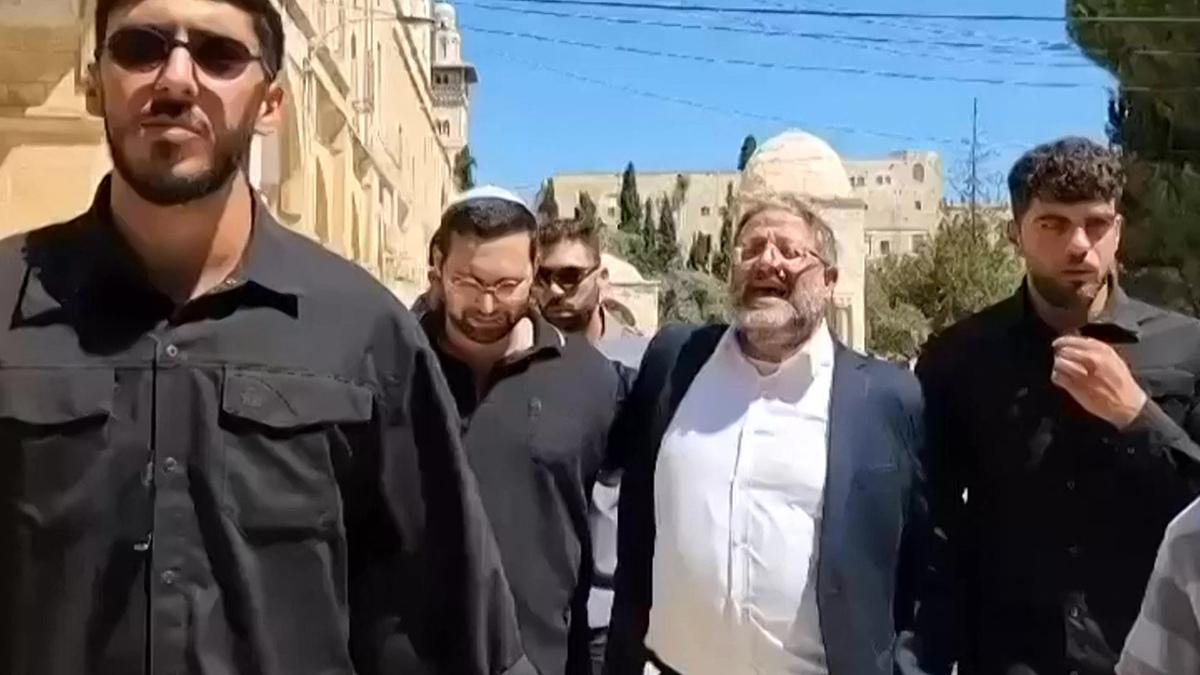
It said the Israeli report described Netanyahu as attempting “several times to arrange a meeting” but that efforts were met with “persistent rejection from the Jordanian side,” which considered that the continued closure “prevents hosting any Israeli official under these circumstances.”
The same report said Israeli authorities continued to close al-Aqsa Mosque for the “thirty-first day in a row,” calling it the “longest closure since the city was occupied in 1967,” and said the closure would continue until “mid-April,” with access restricted to “employees of the Islamic Waqf and the Al-Aqsa guards only.”
It also stated that the Jordanian government and its religious institutions affirmed that “the administration of the Al-Aqsa Mosque is the responsibility of the Hashemite Kingdom of Jordan under international law,” citing the “1994 Wadi Araba Accords” and a “2013 agreement with the Palestinian Authority,” and asserting that Israel has “no legal sovereignty over the holy city and its sanctities.”
Ain Libya further reported that the foreign ministers of Jordan, the United Arab Emirates, Indonesia, Pakistan, Turkey, Saudi Arabia, Qatar, and Egypt “strongly condemned the restrictions imposed by Israel on freedom of worship for Muslims and Christians in Jerusalem,” and urged Israel to “immediately stop the restrictions and permit unhindered access to holy sites.”
More on Gaza Genocide
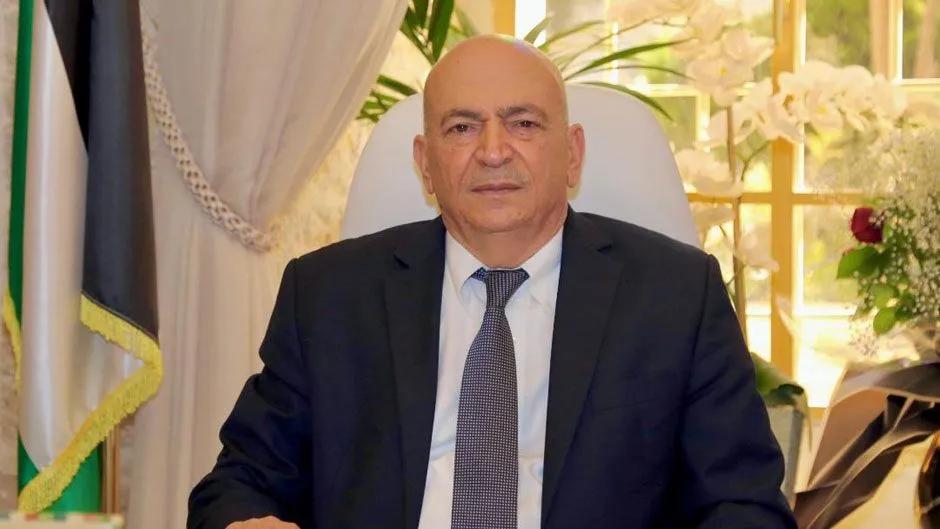
Hani Al-Hayek Meets ICESCO Director-General Salim Al-Malik To Protect Gaza Heritage
10 sources compared

Isaac Herzog Pushes Netanyahu Plea Deal as Attorney-General Bars Preconditions
11 sources compared

Hamas Calls Israel’s Jerusalem Demolition Notices a War Crime Targeting Palestinian Presence
10 sources compared

Israel’s Boeing KC-46 Pegasus “Gideon” Completes Maiden Test Flight in the United States
16 sources compared