Full Analysis Summary
Settler violence in West Bank
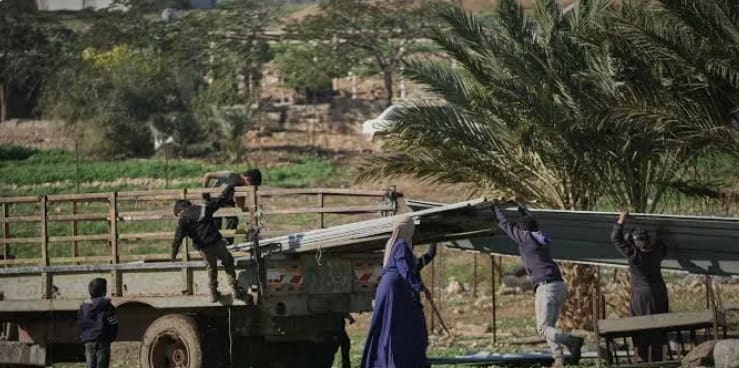
A campaign of escalating settler violence has driven Bedouin families from parts of the occupied West Bank, including the Bedouin village of Ras Ein al-Auja.
Rights groups say dozens of families fled Ras Ein al-Auja after recent attacks.
The Guardian reports settlers carried out arson, theft, beatings, intimidation and destruction of property, forcing many to abandon grazing lands now under settler control.
Witnesses and monitors, including Dror Etkes and Sarit Michaeli, describe expulsions that accelerated after the Gaza war and say settlers sometimes used livestock to intimidate residents.
Al-Jazeera Net reports that after attacks last Thursday families from Ras Ein al-Auja dispersed seeking safety and that rights groups count more than 20 (26 by their count) families as already fled.
Some residents say they face "unbearable" harassment but vow to stay.
These sources therefore describe a pattern of attacks and displacement centered on Ras Ein al-Auja and nearby areas of the West Bank, though they differ in emphasis and some details.
Coverage Differences
Emphasis and detail
Both sources report settler attacks and displacement at Ras ‘Ein al ‘Auja, but The Guardian (Western Mainstream) emphasizes a broader campaign of settler violence across large tracts of the West Bank, referencing specific monitors and describing alleged state backing and impunity; Al-Jazeera Net (West Asian) emphasizes the immediate displacement in Ras Ain al-Auja, provides the specific count of families who fled (26), and frames the incidents within a wider pattern of daily attacks recorded by the UN. The Guardian reports expulsions accelerated after the Gaza war and cites killings and a rise in settler violence; Al-Jazeera reports the families’ dispersal timelines and the UN’s recorded attack rates and notes sanctions by the US, EU and Britain have not stopped the violence.
Settler violence and displacement
Reports describe a range of tactics used against the community, including cutting electricity and water lines, night raids on homes, and intimidation that forced families to flee.
Survivors describe fear, loss, and broken livelihoods as a result of these actions.
The Guardian reports that settlers severed electricity and water lines, raided homes at night, and forced 26 families — more than 120 people — to flee Ras ‘Ein al ‘Auja.
The Guardian links these incidents to a broader process of settlers taking control of land that had been used for grazing a decade ago.
Al-Jazeera Net similarly describes residents dispersing after attacks and details a “pastoral settlement” strategy in which settlers gradually seize land, grazing areas, and water springs.
Al-Jazeera Net cites UN figures recording average daily settler attacks in October and monthly totals in November.
Coverage Differences
Narrative focus
The Guardian focuses on concrete episodes in Ras ‘Ein al ‘Auja (power and water cuts, night raids, the number of families and people forced to flee) and the claim that land used for grazing has been taken over; Al-Jazeera Net frames the incidents within a strategy it calls “pastoral settlement,” highlights UN-recorded attack rates, and emphasizes broader patterns across the West Bank. The Guardian references monitors and suggests state backing and impunity, while Al-Jazeera reports that sanctions have not halted the violence and that residents face imminent displacement.
Settler violence and impunity
Both sources report that security and legal remedies have been ineffective.
The Guardian says courts' orders to restore Palestinians were only briefly enforced, security forces often ignore or fail to stop settler attacks, and activists say the campaign has state backing and near-total impunity.
Al-Jazeera Net reports that sanctions by the US, EU and Britain have not stopped the violence and alleges the Israeli government is supporting and arming settler militias that destroy homes, confiscate land and push communities to migrate while establishing settlements.
Rights groups quoted in both pieces warn that remaining residents are among the last Palestinians in some areas and that similar attacks have emptied neighbouring villages.
Coverage Differences
Attribution and intensity of allegation
The Guardian attributes claims of state backing and impunity to witnesses and monitors (e.g., Dror Etkes and Sarit Michaeli) and reports failures of enforcement by courts and security forces; Al-Jazeera Net reports allegations that the Israeli government is supporting and arming settler militias and notes that sanctions have failed to stop the violence. The Guardian frames some allegations through named monitors and specific enforcement failures, while Al-Jazeera frames government support more directly as an allegation and references international responses and their ineffectiveness.
Disputed casualty and displacement
The human toll and contested figures are central.
The Guardian reports that settlers' campaign has helped empty areas envisioned for a future Palestinian state, citing activists who say more than 250 sq km have been brought under settler control.
It reports that since October 2023 Israeli forces and settlers have killed over 1,000 Palestinians in the West Bank with no convictions.
Al-Jazeera Net highlights rights groups' tallies and the UN's recorded attack rates, noting about 26 families in Ras Ain al-Auja.
It quotes Sarit Michaeli warning the remaining residents are among the last Palestinians in the area.
There is a clear discrepancy between these sources and the user's phrasing.
Neither source supports the user's figure of 135 families forced to flee Ras Ein al-Auja; both pieces indicate about 20-26 families in that specific episode.
Coverage Differences
Numerical claims and scope
The Guardian provides broad-scale figures about land loss (250 sq km) and fatalities across the West Bank since October 2023, while Al-Jazeera Net gives the specific count of families who fled Ras Ain al-Auja (26). The user’s headline claiming 135 families forced to flee is not supported by either provided source. The Guardian’s scale-focused framing contrasts with Al-Jazeera’s local-count and UN-rate emphasis.
Settler violence and displacement
The two supplied sources generally agree that violent settler activity has caused displacement in Ras ‘Ein al ‘Auja and elsewhere in the West Bank.
However, the sources differ in framing, emphasis, and some specific details.
The Guardian places the events within a broader narrative about territorial loss and impunity, citing monitors' testimony and figures on killings and land loss.
Al-Jazeera Net emphasizes the immediate displacement incident, UN-recorded attack rates, and alleges government support for militias.
Neither article supports the user's claim that 135 families were forced to flee Ras ‘Ein al ‘Auja; the reporting notes roughly 20–26 families.
Source diversity is limited because only The Guardian and Al-Jazeera Net were provided, so alternative perspectives or additional corroborating figures are not available in the supplied material.
Coverage Differences
Source scope and omissions
The primary difference arises because The Guardian (Western Mainstream) presents broader, long-term context (land control, alleged impunity, fatalities across the West Bank), while Al-Jazeera Net (West Asian) emphasizes immediate displacement, UN attack data and the alleged failure of international sanctions. Each source reports claims from monitors or rights groups; neither supports the 135-family figure. The limited available sources mean other viewpoints (e.g., Israeli government responses or independent verification beyond these monitors) are not present in the supplied material.