Other12 November, 20253 min read
Israeli Settlers Launch Arson Attacks, Torch Palestinian Warehouse and Trucks, Injure Several Palestinians
This article is an automated aggregation of coverage from news outlets. Our editorials offer in-depth analysis curated by the NewsCord team.
Dozens of Israeli settlers set fire to a Palestinian warehouse, trucks, farmland, and Bedouin village Several Palestinians were injured during the arson attacks

6 outlets told this the same way.
Outlets did split on Lebanon Returns 37 Smuggled Artefacts to Egypt After 2020 Port Seizure →
Arson attacks in West Bank
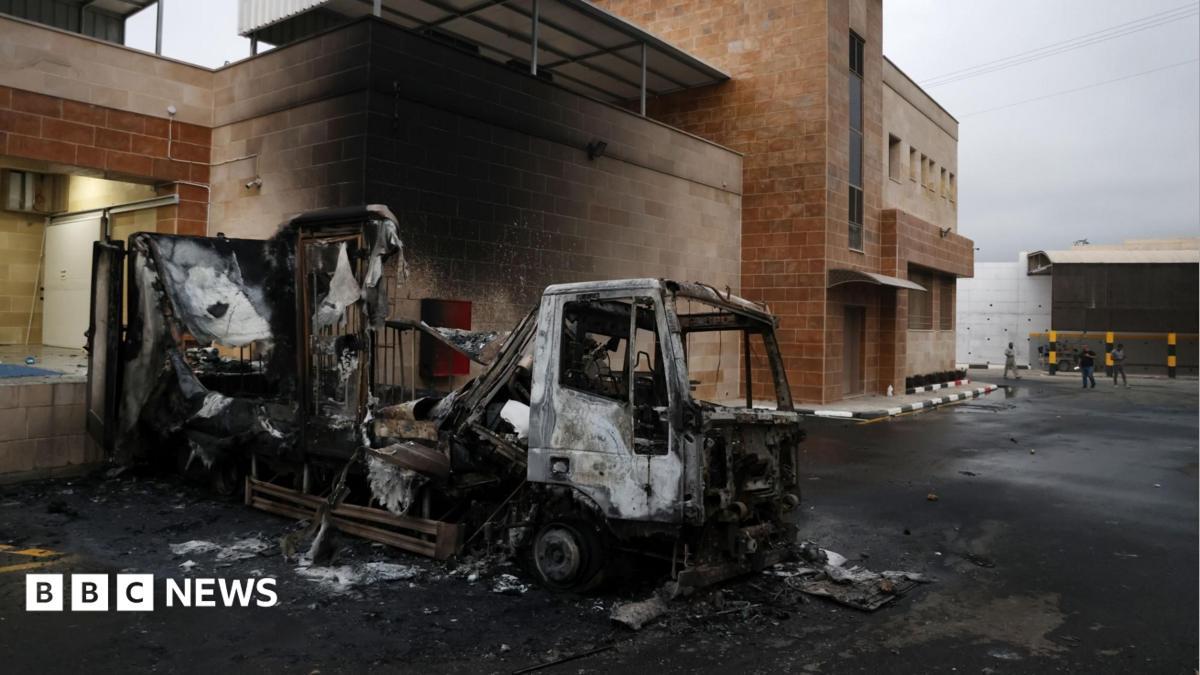
Dozens of Israeli settlers carried out arson attacks in the occupied West Bank on Tuesday, targeting a Palestinian warehouse in Beit Lid where lorries were set alight. They also attacked a Bedouin village and nearby farmland, burning vehicles and tents and injuring several Palestinians, according to multiple reports. UPI's video footage showed scores of masked Israeli settlers carrying out arson attacks on multiple Palestinian-owned properties, including about 10 vehicles, a warehouse, a plastic factory, farmland and a Bedouin village.
“New video showed scores of masked Israeli settlers carrying out arson attacks on multiple Palestinian-owned properties in the occupied West Bank, including about 10 vehicles, a warehouse, a plastic factory, farmland and a Bedouin village near the industrial zone by the western village of Beit Lid.”
The BBC reported that dozens of Israeli settlers carried out arson attacks. LBC said four suspects were arrested after settlers carried out suspected arson attacks on farmland and a warehouse in the Bedouin village, injuring several Palestinians. WION likewise reported that Israeli settlers set fire to Palestinian farmland and a warehouse in a Bedouin village in the West Bank, injuring several Palestinians.
Surge in settler violence
The incidents occurred amid the olive-harvest season, which multiple outlets link to a wider pattern of settler-related attacks. The UN’s humanitarian office and OCHA described a recent surge in such incidents. BBC reported that the UN said last month’s settler attacks were the highest since it began collecting data nearly 20 years ago.
LBC relayed OCHA’s comment that settler violence around the olive harvest had reached its highest level in nearly 20 years, with around 150 attacks and more than 140 Palestinians injured. WION cited the UN humanitarian office saying that settler-related attacks reached a record high last month, with 264 incidents reported through last Friday. UPI likewise reported that the UN described settler violence over the past month as the highest level in nearly 20 years.
Official response to attacks
Israeli leaders and the military publicly condemned the attacks and said steps were taken on the ground.
“President Isaac Herzog and IDF Central Command head Maj.-Gen. Avi Bluth condemned the violence and ordered soldiers to prevent such ‘nationalist’ crimes.”
LBC reported that President Isaac Herzog and IDF Central Command head Maj.-Gen. Avi Bluth condemned the violence and ordered soldiers to prevent such 'nationalist' crimes.
UPI said President Isaac Herzog and senior military commanders condemned the violence and called for firm action.
WION likewise noted that President Isaac Herzog and IDF Central Command chief Maj.-Gen. Avi Bluth condemned the violence as serious and unacceptable.
Several outlets reported that Israeli police or authorities arrested four suspects in the aftermath.
Settler violence and impunity
Rights groups and watchdog figures are invoked to question long-term accountability. WION cites Yesh Din reporting that of 1,701 police investigations into settler attacks in the West Bank, 93% were closed without indictments, framing the incident as part of a pattern of impunity.
LBC and the BBC note UN appeals for protection and accountability, with LBC reporting that UN officials "urged protection and accountability." Media reports emphasize the settlements' legal and demographic context: roughly 160 settlements and about 700,000 settlers living alongside some 3.3 million Palestinians.

Olive-harvest violence reports
Eyewitness visuals and survivor reports underscore the human toll. UPI described footage showing tents burning, women screaming, and attackers with clubs, and said several Palestinians were reported injured by stones or beatings. BBC and LBC likewise reported that several Palestinians were injured.
“The footage showed tents burning, women screaming and attackers with clubs; several Palestinians were reported injured by stones or beatings.”
WION emphasized the timing during the annual olive-harvest season and noted the incident as part of a recent surge in violence around harvests. Across sources, the immediate human impacts, including injuries, destroyed property, and fear during the harvest season, are consistent. However, the outlets differ in which eyewitness details and allegations they emphasize.