Full Analysis Summary
Foreign press access to Gaza
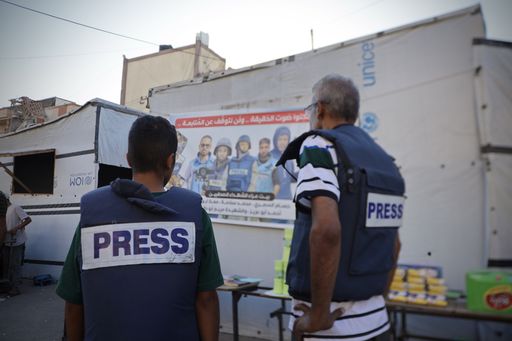
Israel’s Supreme Court again postponed a ruling on the Foreign Press Association’s (FPA) 2024 petition for free, independent press access to Gaza, effectively allowing Israel to continue barring foreign journalists from entering Gaza independently for now.
The FPA said it was 'deeply disappointed' by the delay and noted the court will give an update by March 31; since October 2023 Israel has limited foreign reporters to a small number of case-by-case embeds with the military rather than permitting independent entry.
These media restrictions and secretive legal steps have allowed the government to maintain what the FPA calls a 'blanket ban' on independent foreign reporting while humanitarian workers continue to be allowed into Gaza.
Coverage Differences
Tone and focus (legal/press rights vs. humanitarian verification vs. diplomacy)
Asharq Al-awsat (West Asian) centers the story on press freedom and legal procedure, quoting the FPA’s frustration at the Supreme Court delay and the secretive process; TRT World (West Asian) centers on how media restrictions have blocked independent verification of casualties; Al Jazeera (West Asian) focuses on diplomatic negotiations and postponed actions related to ceasefire and demilitarisation rather than the court case itself. Each source reports different primary concerns—legal access, humanitarian verification, and diplomatic sequencing—so the narrative emphasis changes depending on the outlet.
Press restrictions and casualty counts
Press restrictions have a direct effect on the public record.
TRT World reports that the Gaza Health Ministry says more than 71,600 people, most of them women and children, have been killed and over 171,300 injured in an Israeli offensive since October 2023, which the outlet says has left Gaza in ruins.
With Israel controlling independent access for foreign reporters and limiting embeds, independent verification of these casualty figures is hampered.
The FPA argues the Israeli government's secretive court submissions and continued ban on independent entry foreclose normal legal and journalistic rebuttal and oversight.
Coverage Differences
Emphasis on casualty verification vs. legal process vs. broader diplomatic context
TRT World (West Asian) provides detailed casualty figures and stresses how media restrictions prevent verification. Asharq Al-awsat (West Asian) emphasizes the legal angle—how the Supreme Court’s delay and closed hearings block the FPA’s ability to argue against security claims. Al Jazeera (West Asian) places these access and verification issues in a wider diplomatic context about ceasefire sequencing and demilitarisation, rather than focusing primarily on press freedom or casualty counts.
Journalist access and verification
Asharq Al-Awsat highlights the FPA’s contention that no valid security rationale justifies what it calls a blanket ban on independent journalists while humanitarian workers are allowed in.
That contrast fuels accusations that Israel’s restrictions are not purely about operational security but have also prevented outside scrutiny of military operations.
TRT World reports that restricted access has prevented independent verification of casualty figures, leaving international audiences to rely on Gaza Health Ministry tallies and secondhand reports.
Al Jazeera adds that diplomatic proposals, including a US-backed buyback to disarm Hamas supervised by international monitors, are being debated even as journalists remain excluded.
Coverage Differences
Framing of access restrictions (rights vs. security vs. diplomatic timetables)
Asharq Al-awsat (West Asian) frames the restrictions as a rights and transparency issue, quoting the FPA’s argument that no security rationale justifies the ban. TRT World (West Asian) frames restricted access as a practical barrier to verifying casualty numbers. Al Jazeera (West Asian) frames access within the diplomatic debate over demilitarisation and sequencing of withdrawal, showing divergent narratives about the primary purpose and impact of the reporting ban.
Media coverage of Gaza conflict
The outlets reveal differing emphases on Israel's military actions and international responses.
TRT World reports the Gaza Health Ministry's claim that Israel's offensive has killed tens of thousands and that, despite a ceasefire, the ministry says Israel has continued attacks that killed 484 Palestinians and wounded 1,321.
Al Jazeera records that Israeli Prime Minister Benjamin Netanyahu insists demilitarisation must occur before further ceasefire steps and that Hamas still controls parts of Gaza, highlighting how sequencing of withdrawal and disarmament is contested.
Asharq Al-awsat documents the legal steps and the Israeli government's repeated extensions in court that keep the press ban in place.
These differences show how each source assigns responsibility differently: TRT foregrounds civilian killing by Israel, Al Jazeera foregrounds diplomatic sequencing, and Asharq foregrounds legal barriers to scrutiny.
Coverage Differences
Attribution and narrative priority
TRT World (West Asian) attributes large-scale civilian deaths to Israel’s offensive and reports continued attacks despite a ceasefire; Al Jazeera (West Asian) attributes the stalemate to disagreements over demilitarisation sequencing, quoting Netanyahu’s condition that demilitarisation must happen before further ceasefire steps; Asharq Al-awsat (West Asian) attributes continued lack of scrutiny to legal delays and secretive court procedures that advantage the government. Each outlet therefore emphasizes different actors and mechanisms—military action, diplomatic negotiation, and legal process.
Media coverage of Gaza
Three sources document heavy Palestinian casualties and restricted press access.
TRT World reports tens of thousands of deaths and describes Gaza as left 'in ruins'.
Asharq Al-Awsat notes the legal exclusion of foreign journalists and cites the FPA's claim of a 'blanket ban'.
Al Jazeera highlights stalled diplomatic proposals for demilitarisation and a US-backed buyback mechanism.
None of the provided excerpts explicitly use the term 'genocide,' so the sources cannot be said to uniformly describe the events that way.
Across the sources, Israeli military actions are reported to have killed very large numbers of Palestinians and been accompanied by restrictions that block independent journalistic verification.
Coverage Differences
Use of explicit labels vs. reporting of facts
None of the three provided snippets (Asharq Al-awsat, TRT World, Al Jazeera) explicitly uses the word "genocide"; TRT World provides casualty figures and describes Gaza as "left in ruins," Asharq Al-awsat focuses on legal processes that block journalists, and Al Jazeera centers on diplomatic proposals and sequencing for demilitarisation. Therefore, while the factual reporting shows mass civilian deaths and restricted oversight, the explicit legal or moral label "genocide" is not applied in the quoted passages.