Full Analysis Summary
West Bank flood damage
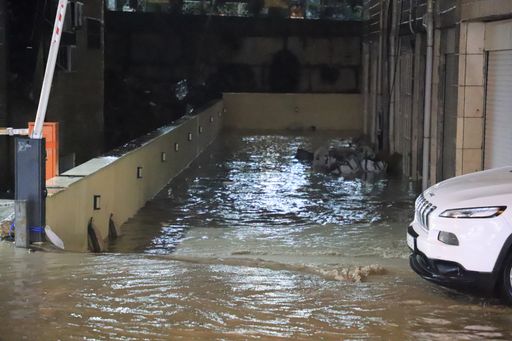
Heavy rains and flash floods swept the occupied West Bank on Tuesday, triggering landslides, damaging infrastructure and causing a partial collapse of Israel's concrete separation wall south of Hebron.
TRT World reported that flooding south of Hebron partially collapsed a section of the concrete separation wall Israel began building in 2002 and that a video showed a destroyed portion of the wall.
The outlet noted landslides disrupted traffic west of Ramallah and said there were no injuries reported.
TRT's report cited an Anadolu correspondent and a Palestinian meteorologist who said unusually heavy rainfall fell across wide areas.
Al Jazeera likewise reported that heavy rains caused a partial collapse of the Israeli separation wall south of Hebron, reportedly in the town of Dura, and triggered landslides and disruption of main roads in the central West Bank.
Al Jazeera added that eyewitnesses said a section of the concrete barrier was completely destroyed by torrential floods.
Coverage Differences
Emphasis/Tone
TRT World stresses meteorological causes and local reporting (Anadolu correspondent, Palestinian meteorologist) and uses the term 'occupied West Bank', framing the incident as weather-induced damage. Al-Jazeera provides more specific local detail (reports the town of Dura and eyewitness descriptions) and repeats the eyewitness characterization that the barrier was "completely destroyed" by floods. Both are West Asian outlets but TRT foregrounds the meteorological sources while Al-Jazeera emphasizes eyewitness accounts and precise local identification.
West Bank separation barrier
The separation barrier at the centre of the collapse has long been contested.
Israel began construction of the barrier in 2002, citing security reasons and saying it would prevent Palestinian entry into Israeli territory and nearby settlements.
Palestinians view the barrier as a tool that restricts daily life and annexes parts of the West Bank.
Al-Jazeera noted this context, and TRT World recalled that the wall was deemed illegal in a 2004 International Court of Justice advisory opinion, underlining the long-standing international legal rejection of the barrier.
Coverage Differences
Context/Narrative
Both sources provide background on when Israel began building the barrier and the opposing narratives (security vs. restriction/annexation). Al-Jazeera explicitly quotes both Israeli and Palestinian rationales and details the June 2002 start date, while TRT World explicitly highlights the ICJ advisory opinion calling the wall illegal. The difference is one of emphasis: Al-Jazeera foregrounds the competing political narratives, TRT foregrounds the legal judgment.
Response to border breach
Israeli authorities moved quickly to assess and secure the breach.
Al-Jazeera reports that Yedioth Ahronoth said the army and Border Administration began assessing and repairing the damage and reinforced security around the breach to prevent crossings.
Al-Jazeera cites Quds News Network as reporting this on Nov. 25, 2025.
That account portrays the Israeli response as prioritising security and preventing Palestinian crossings at the damaged section.
Regional outlets, meanwhile, focus on the physical destruction and the disruption to Palestinian movement.
Coverage Differences
Narrative/Priority
Al-Jazeera relays an Israeli domestic outlet (Yedioth Ahronoth) that frames the response as an active security operation—army and Border Administration assessing and repairing damage and "reinforced security around the breach to prevent crossings"—while TRT focuses on the meteorological cause and damage to infrastructure without reporting on immediate Israeli security measures. This contrast shows Al-Jazeera including Israeli official action reported by an Israeli outlet, whereas TRT foregrounds the weather and damage impacts.
Wall collapse implications
Implications for Palestinians and for enforcement of international rulings remain unclear: the collapse reopened immediate questions about movement, access and Israel's physical control of West Bank territory, while the wall's prior ICJ advisory ruling remains a legal backdrop.
Available reporting lacks an independent international authority assessing the breach on the ground; TRT and Al-Jazeera document destruction and disruption, and Al-Jazeera cites Israeli media on security measures, but none of the provided pieces include an on-the-record international response or any claim that crossings actually occurred.
Given those gaps, the full humanitarian and legal consequences remain ambiguous in the sources provided.
Coverage Differences
Missed Information/Unclear
Both TRT World and Al-Jazeera document material damage and traffic disruption but neither provides independent international verification of crossings or a detailed humanitarian assessment. Al-Jazeera includes Israeli media reporting on reinforced security, while TRT cites meteorological sources; neither source includes on-the-record statements from international bodies about the breach's legal or humanitarian consequences. This leaves the situation’s full implications ambiguous in the available reporting.