Gaza Genocide11 November, 20252 min read
Israel's Knesset Approves First Reading Of Bill To Impose Death Penalty On Palestinians Convicted Of Killing Israelis
This article is an automated aggregation of coverage from news outlets. Our editorials offer in-depth analysis curated by the NewsCord team.
Knesset approved the bill's first reading by a 39–16 vote. Bill mandates death sentences for racially or ideologically motivated murders targeting Israelis.
22 outlets told this the same way.
Outlets did split on Israel Marks Oct. 7 Anniversary With Strikes on Gaza, Netanyahu Faces Election After Nova Tribute →
Knesset death-penalty bill
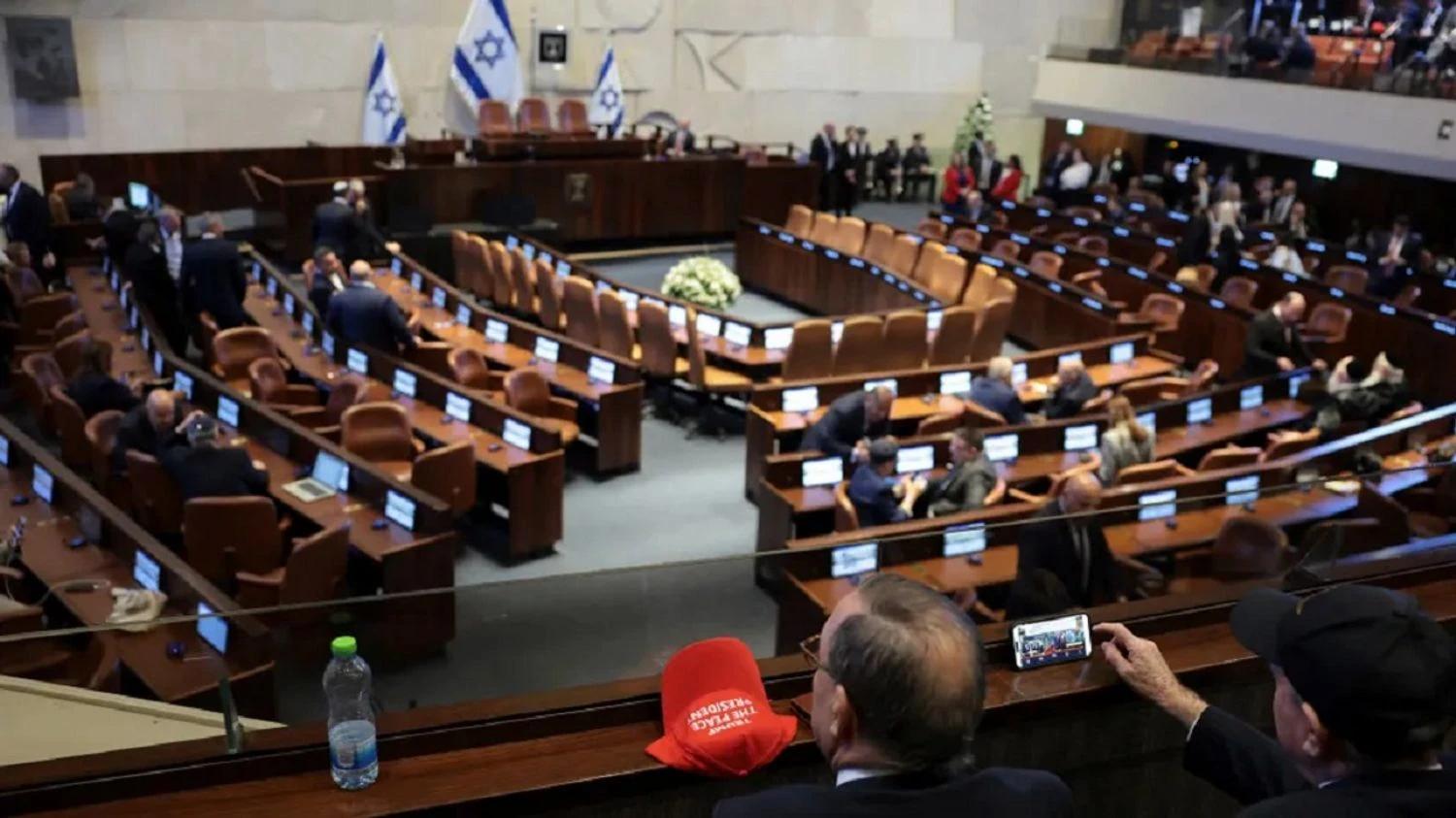
Israel’s Knesset advanced a highly controversial bill in a first reading that would impose mandatory death sentences on people convicted of killing Israelis when the act is described as motivated by "racism or hatred" or intended to harm the State of Israel. The parliamentary vote passed 39–16 and the measure still needs two more readings to become law.
“Israel’s parliament advanced a controversial bill in a first reading that would mandate the death penalty for people who kill Israeli citizens ‘out of racist motives’ and ‘with the aim of harming the State of Israel,’ a measure critics say is aimed almost exclusively at Palestinians.”
Multiple outlets describe the bill as primarily aimed at Palestinians accused of deadly attacks. Newsbook calls it "a measure critics say is aimed almost exclusively at Palestinians," Al Jazeera says it is "mainly targeting Palestinians convicted of killing Israelis," and The New Arab notes the bill’s language covers killings "with 'racist' motives aimed at harming the state and the Jewish people."

Far-right coalition bill
The bill was driven by far-right figures inside the governing coalition: National Security Minister Itamar Ben-Gvir and the Otzma Yehudit/Jewish Power bloc forced the measure forward and publicly celebrated the vote. Multiple reports note Ben-Gvir's political leverage, saying he threatened to withdraw coalition support if the vote was not held. News outlets reported symbolic gestures marking the vote: Al Jazeera and RBC-Ukraine said Ben-Gvir handed out sweets or baklava in the Knesset, while The New Arab and The Sun Malaysia said he hailed the vote as historic and that his party pushed the measure after threatening to leave the coalition.
Military court changes
The draft law would go beyond symbolism and alter legal practice and military-court procedures. Several sources report amendments that would allow military courts in the West Bank to impose death sentences by a simple majority rather than unanimity, bar reductions of death sentences, and remove commanders' power to commute penalties. CNN, news.liga.net, i24NEWS and Українські Національні Новини specifically describe changes to military-court rules and commutation powers, and multiple outlets note Israel has not carried out executions in decades, with Eichmann's 1962 execution remaining the most recent.
“The draft law would require courts to impose death sentences for nationalist‑motivated murders of Israelis, change West Bank military‑court rules so a majority rather than unanimity can impose death, and strip military commanders of the power to commute such sentences.”
Concerns over proposed bill
Human-rights groups, Palestinian officials and several international observers warn the bill would be discriminatory, deepen systemic oppression of Palestinians and risk breaching international law, particularly if applied retroactively to detainees held after Oct. 7, 2023.
Newsbook, Amnesty and Human Rights Watch reporting cited in Newsbook, Al-Jazeera Net and the BBC relay strong condemnations.

Newsbook and Türkiye Today specifically highlight rights groups’ concerns about discriminatory application and the very high conviction rates in military courts for Palestinian defendants.
Media coverage of bill
Coverage differs sharply across source types. West Asian outlets emphasize the bill's impact on Palestinians and link it to the broader picture of Israeli operations in Gaza and the West Bank. Western mainstream media balance that critique with legal and procedural analysis.
“Israel’s parliament (the Knesset) has advanced a controversial bill to allow the death penalty for people officially designated as ‘terrorists’—a measure described as mainly targeting Palestinians convicted of killing Israelis.”
Israeli and some local outlets emphasize legislative mechanics and coalition politics, sometimes presenting supporters' deterrence claims without equal focus on civil-liberties warnings. These differences produce divergent audiences. Al Jazeera, The New Arab and Al-Jazeera Net foreground the bill as part of a campaign against Palestinians.

BBC, CNN and Newsbook underline legal change and due-process risks. i24NEWS, Daijiworld and news.liga.net highlight amendments and parliamentary strategy.