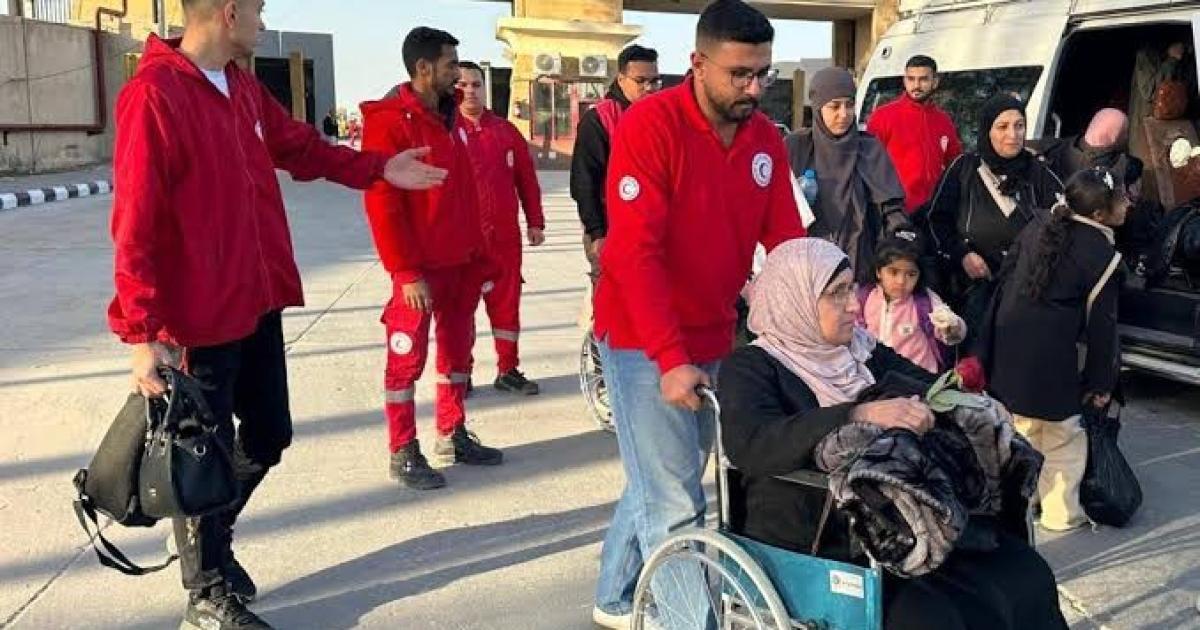
Israel’s Travel Restrictions Push Gaza Cardiac Patients Toward “Silent, Deadly” Death
Key Takeaways
- Rafah crossing restrictions prevent severely ill Gazans from seeking essential medical care abroad.
- Gaza health system erodes under blockade, with medicine shortages and disruption of specialized services.
- Health officials call the border closure a violation and urge opening Rafah to allow treatment.
Cardiac care collapses
In Gaza, cardiac patients are facing what Al-Jazeera Net describes as a “silent, deadly” fate as the health system erodes under blockade conditions and specialized services near-total disruption.
“At a time when the health system in the Gaza Strip is eroding under the blockade, the suffering of heart patients is rising to unprecedented levels amid a severe shortage of medicines and medical supplies and near-total disruption of specialized services, leaving patients to face their fate in a silent, deadly way”
The report by Al Jazeera’s Gaza correspondent Rami Abu Taimeh says “more than half of the sector's deaths are due to heart diseases, according to the Ministry of Health,” and it links the crisis to “a severe shortage of medicines and medical supplies” plus Israeli travel restrictions that keep patients from leaving the enclave.

In the intensive care unit of the heart department at Shuhada al-Aqsa Hospital in Deir al-Balah, the report depicts elderly Salma Abu Nadi “connected to temporary wires keeping her heart beating while waiting for a battery that may not arrive in time.”
Her daughter says she “urgently needs a permanent device to regulate her heartbeats,” warning that “its absence could mean losing her life,” because “the absence of such devices inside the enclave” leaves no alternative.
Al-Jazeera Net adds that in Al-Quds Hospital in Gaza City, the center has become “the only one continuing to perform cardiac catheterizations after the others stopped due to the war,” increasing pressure on limited staff.
Cardiology specialist Dr. Majed Al-Shanat says “the sector suffers a severe shortage of medical supplies,” and that “current capacity does not exceed four or five cases per day, a number that does not meet the minimum needs.”
The same report says Gaza’s Ministry of Health states “heart diseases account for more than 56% of total deaths,” while “five specialized centers have ceased operations” and “open heart surgeries have been halted completely.”
Permits and hospital limits
Beyond cardiology, The New Arab frames Gaza’s broader health system as approaching “total collapse” as restrictions tighten and hospitals struggle with shortages of medicines, equipment, and fuel.
Mohammed Abu Salmiya, director of Gaza City’s Al-Shifa Hospital, tells The New Arab that “the situation is stark,” and he says “the territory has reached its worst point with the health system nearing complete breakdown.”
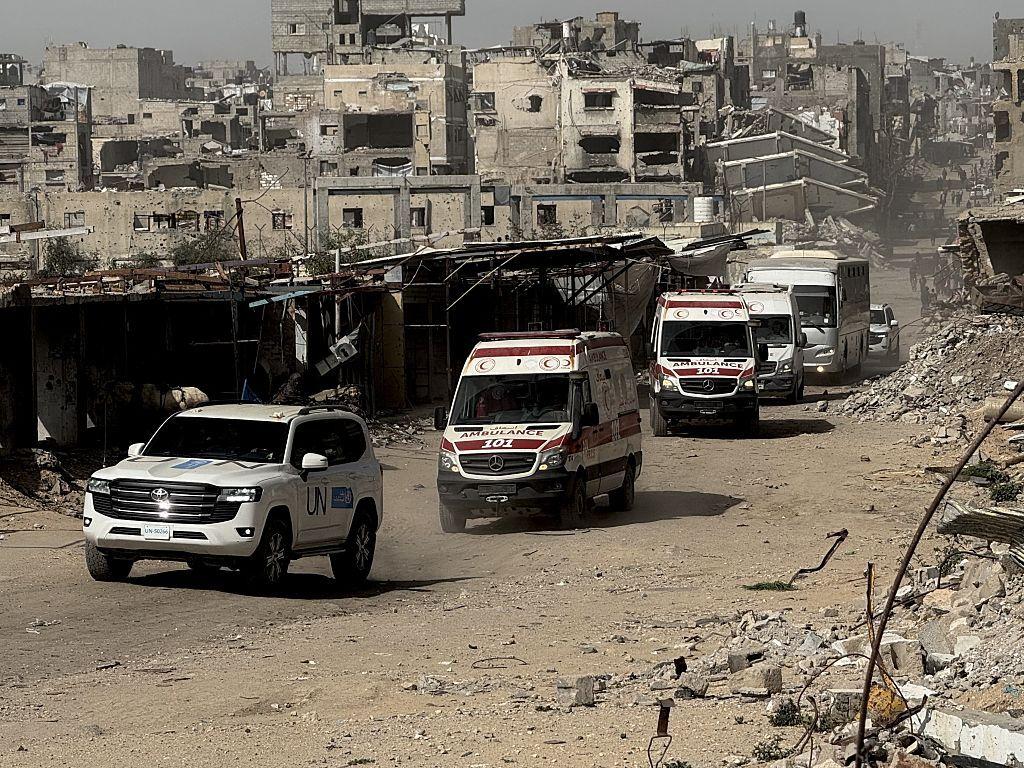
The New Arab reports that “More than half of essential medicines are now unavailable,” and that “roughly 70 per cent of medical supplies have been depleted,” leaving hospitals unable to respond to rising needs.
Abu Salmiya warns that “The system is no longer able to respond to the growing needs,” describing a widening gap between demand and capacity “costing lives daily.”
The New Arab also says Gaza faces a travel-permit bottleneck, with “more than 22,000 wounded and sick people are awaiting permits to leave Gaza for treatment unavailable inside the Strip,” and it adds that “around 1,400 have already died while waiting.”
It further reports that “at least six patients are dying every day as a result of delayed access to treatment,” whether due to restrictions on supplies or denial of travel permits.
In Jabalia refugee camp, 52-year-old Mahmoud al-Shaer describes dialysis sessions becoming irregular as fuel and medication shortages disrupt care, telling The New Arab: “I used to have three sessions a week. Now sometimes we wait for hours, and sometimes we are sent back home without treatment.”
For heart disease, The New Arab quotes 61-year-old Amina al-Haddad saying, “I am afraid any moment could be the end, even a small pain in my chest terrifies me,” and it notes her scheduled cardiac catheterisation has been “indefinitely postponed” due to lack of equipment and delays in referrals.
Rafah crossing closure
A separate thread of the crisis centers on the Rafah border crossing, which Al-رسالة نت says has remained closed to the movement of patients and wounded, threatening “the lives of thousands of Palestinians” waiting for treatment outside Gaza.
“Gaza'sbattered health system is rapidly unravelling due to an illegal blockade byIsrael, which has unleashed restrictions, supply shortages, and the systematic destruction of medical infrastructure, leaving hundreds of thousands ofpatientstrapped”
The outlet states that “Since February 28 of last year, passenger movement through the crossing has halted completely,” and it describes Rafah as “the enclave’s only land gateway to the outside world not passing through Israeli-controlled territory.”
Al-رسالة نت says the crossing’s closure has disrupted travel for critically ill patients who rely on medical referrals abroad, and it reports that before full closure, Rafah was opened “for a limited period for a short time,” allowing “only about 350 patients” to leave the Strip for treatment.
It adds that Palestinian estimates indicate “about 22,000 patients and wounded in the Gaza Strip need to travel abroad to receive treatment,” while local hospitals suffer shortages of medicines and medical supplies and some facilities were damaged.
The outlet frames the issue as a “serious violation,” with Hamas spokesman Hazem Qasim saying in a press statement that closing the crossing on security grounds is “a clear breach of the understandings reached through regional mediation.”
Qasim adds that “the continuation of this closure reflects, in his words, an intention to tighten the siege on the Gaza Strip,” and he says it “prevents thousands of wounded and patients from obtaining their natural right to treatment outside the Strip.”
Al-رسالة نت also reports Israel reopened the Palestinian side of the crossing on “February 2” after controlling it since “May 2024,” but it says Israel announced on “February 28” the closure of all crossings leading to the Palestinian territories “until further notice.”
It further notes that on “March 3” the Israeli army announced a phased opening of the Kerem Shalom commercial crossing with restrictions and that humanitarian aid would be carried out through coordination with the United Nations and international organizations.
Human rights allegations at checkpoints
Business AM focuses on Rafah border controls and the Gaza Health Ministry’s condemnation of Israel’s practices at the checkpoint, describing them as violations of human rights and international law while insisting that the crossing must be opened for patients and the wounded to move without restriction.
The outlet says “Israel restricts access to the Rafah crossing into Gaza, thereby preventing thousands of severely ill Palestinians from traveling abroad to receive essential medical care,” and it states that “The Gaza Health Ministry condemns Israel's practices at the checkpoint, calling them a violation of human rights and international law.”
It adds that “Returnees' reports, confirmed by the United Nations Office of the High Commissioner for Human Rights in the Occupied Palestinian Territories, detail encounters with armed Palestinian men who are said to be supported by the Israeli army.”
Business AM reports that at an Israeli checkpoint, “some were handcuffed and blindfolded,” and it says they were “searched and threatened” with “their personal belongings were confiscated.”
The outlet says two Israeli human rights organizations, Adalah and Gisha, “condemned these practices,” describing them as “'abuse' and 'illegal restrictions'” and calling for “an end to what they regard as a 'forced displacement'.”
It also states that the Gaza Health Ministry warns that maintaining restrictions “threatens the lives of thousands of people,” and it calls for “permanent opening of the crossing, to allow patients and the wounded to move freely and without delay.”
Business AM provides a broader timeline, saying that “Before the recent conflict, hundreds of Palestinians crossed Rafah daily in both directions,” and it adds that “Despite a ceasefire agreement stipulating the full reopening of the crossing on October 10, Israel has still not honored its commitment.”
The outlet also ties the current situation to the wider war, stating that the conflict began on “October 8, 2023,” and that it has “killing more than 72,000 Palestinians and injuring more than 171,000,” while “About 90 percent of civilian infrastructure has been affected” and “Reconstruction costs are estimated at 70 billion dollars by the United Nations.”
What comes next for patients
Across the reporting, the next steps described by health officials and advocates converge on restoring access to care—both inside Gaza through medical supplies and staffing, and outside Gaza through opening crossings for patients.
“At a time when the health system in the Gaza Strip is eroding under the blockade, the suffering of heart patients is rising to unprecedented levels amid a severe shortage of medicines and medical supplies and near-total disruption of specialized services, leaving patients to face their fate in a silent, deadly way”
Al-Jazeera Net quotes Dr. Muneer Al-Barsh, director-general of the Gaza Ministry of Health, saying that “targeting the health infrastructure and medical staff during the war has systematically dismantled the health system and caused the loss of expertise accumulated over years,” and it adds that “only one doctor is currently continuing to perform catheterization procedures in Gaza.”
Al-Barsh stresses “the urgent need to bring in medical supplies, especially stents and cardiac surgery tools, alongside restoring the medical staff who left the sector as a fundamental pillar for saving patients,” while warning that “around 51% of essential medicines are unavailable, while cardiac supplies are completely absent.”
He frames the consequence of continued breakdown as a rise in deaths, describing it as “the silent death.”
The New Arab similarly emphasizes that the system cannot meet needs, quoting Abu Salmiya that “The system is no longer able to respond to the growing needs,” and it reports that “around 1,400 have already died while waiting” for permits to leave Gaza.
Al-رسالة نت ties the immediate risk to Rafah’s closure, warning that depriving patients of timely treatment could lead to “additional human losses,” and it calls for the international community to intervene “to ensure the crossing is opened for humanitarian cases urgently.”
Business AM echoes the demand for movement and evacuation, stating that the Gaza Health Ministry calls for “permanent opening of the crossing” and “the immediate evacuation of critical cases,” while also urging “increasing the number of travelers according to growing medical needs.”
It also provides a figure for returnees, saying “Palestinian officials estimate that 80,000 people have registered to return to Gaza,” and it notes “a general reluctance to be displaced despite massive destruction.”
More on Gaza Genocide
Israeli Attacks Push Gaza Death Toll to 72,551, Injuries Reach 172,274
10 sources compared

EU Foreign Ministers Postpone Sanctions Against Israel Over Gaza and West Bank
11 sources compared
UNICEF Outraged After Israeli Forces Kill Two Water Truck Drivers in Northern Gaza
19 sources compared
Trump’s Gaza Peace Council Talks Paused After US-Iran War Breaks Out
10 sources compared