Full Analysis Summary
Italy rejects Board of Peace
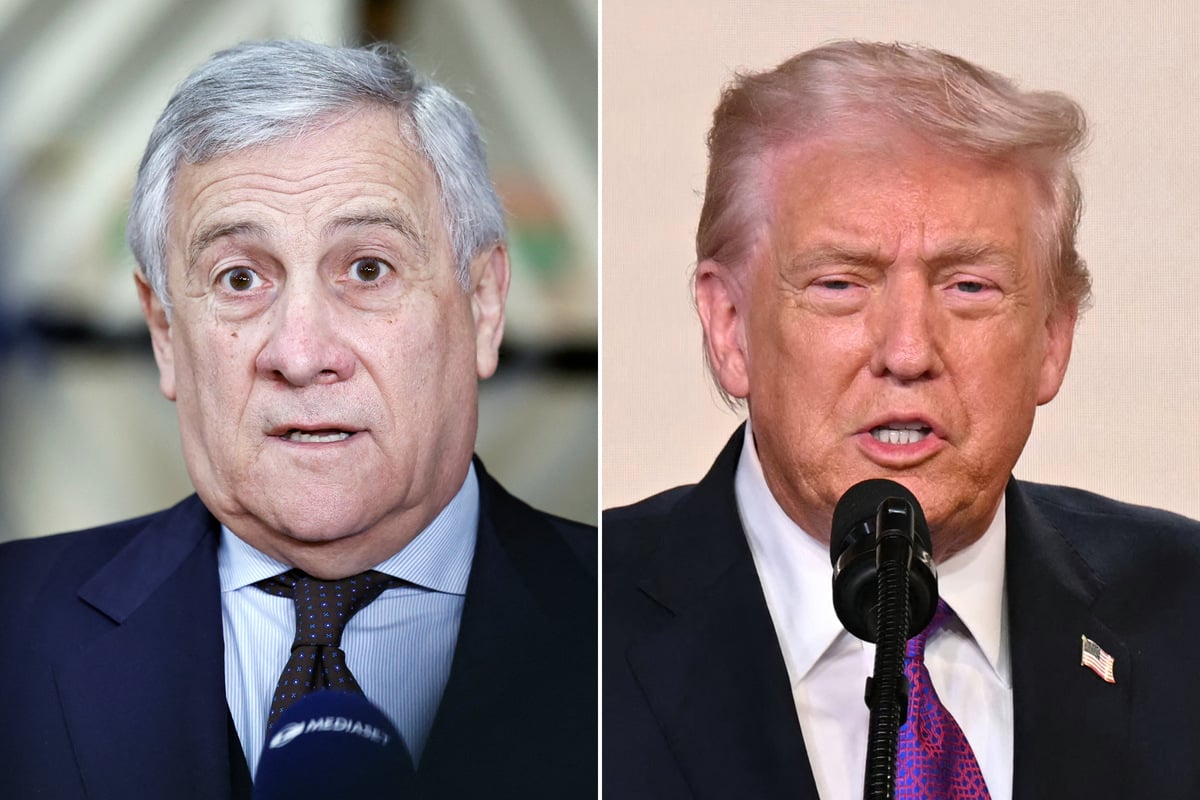
Italy has formally declined to join former US President Donald Trump's new Board of Peace.
Foreign Minister Antonio Tajani cited conflicts with the Italian constitution.
Tajani told ANSA that Article 11 prevents Italy from entering organisations unless member states stand on equal footing.
He described as impossible a charter that names a single, veto-wielding chairman with final authority.
The decision follows other European hesitations and refusals, even as some leaders like Hungary's Viktor Orban have signalled support for the board.
Coverage Differences
Tone and emphasis
Both sources report Italy’s refusal, but Al Jazeera (West Asian) focuses on the constitutional rationale Tajani gave and situates the decision amid broader European refusals and criticisms of the board; tag24 (Western Tabloid) emphasizes Tajani’s description of the limits as 'insurmountable' and highlights recent diplomatic contacts and domestic political context involving Prime Minister Giorgia Meloni and meetings with U.S. figures.
Italy rejects proposed charter
Tajani explicitly grounded Italy’s refusal in Article 11 of its constitution, which he told ANSA bars Italy from entering organisations that do not guarantee equal standing among members.
Al Jazeera quotes him noting the charter’s structure—a single chairman with final authority and veto power—as incompatible with that constitutional requirement.
Tag24 echoes the constitutional language but adds that Prime Minister Giorgia Meloni had earlier noted similar concerns while suggesting Trump could alter the framework; Tajani, however, appeared to rule out revisions after recent meetings with U.S. officials.
Coverage Differences
Narrative detail and domestic politics
Al Jazeera centers Tajani’s constitutional argument and the structural concern about a veto-wielding chair; tag24 supplements this with domestic political context by noting Giorgia Meloni’s prior remarks and Tajani’s interactions with U.S. politicians, which the tabloid treats as relevant to why Tajani ultimately rejected any revision.
Reactions to Italy's decision
Both sources place Italy’s move in a wider European and international context.
Al Jazeera notes that France, Germany and the UK had also expressed doubts or refused to join.
It points to criticisms of the board including reports that it demands $1 billion for a permanent seat and that it was controversially expanded beyond Gaza after being launched at Davos.
Tag24 likewise notes the charter has been signed by about 19 countries and stresses concerns that the board, originally pitched to help rebuild Gaza, could rival the United Nations.
Coverage Differences
Scope and criticism emphasized
Al Jazeera highlights reported criticism about the board’s scope expansion beyond Gaza and financial demands (e.g., $1bn for a permanent seat) and lists other European refusals; tag24 underscores the number of signatories and frames the charter as potentially rivaling the UN, adding the detail that the board was launched at Davos and signed by about 19 countries.
Italy's Gaza position
Tajani told ANSA that, despite rejecting membership, Italy remains willing to participate in peace initiatives and said it would be ready to do its part in Gaza by training the police, indicating openness to narrower, constitutionally compatible contributions.
The two reports differ in tone but converge on key facts: Italy's constitutional objection, the board's controversial aspects, and broader hesitancy among major Western allies.
Coverage Differences
Tone convergence and policy nuance
Al Jazeera frames the refusal primarily as a constitutional and international-standings issue and reports Tajani’s offer to help train police in Gaza; tag24 stresses domestic political signaling (Meloni and Tajani’s meetings) while also reporting Italy’s continued willingness to discuss peace initiatives, showing convergence on outcome but divergence on emphasis.