Full Analysis Summary
Support in supplied sources
I cannot find direct reporting in the supplied articles that the Liberal Democratic Party (LDP) has approved a specific arms-export plan or that Beijing has formally "voiced serious concern" about such an approval.
The only reporting about Japan in the provided material is a comment that "A critic warned that Japan's right-wing forces are again showing ambitions to evade the limits of the post-war international order and domestic law in order to pursue remilitarization."
That comment suggests concern about remilitarization but does not explicitly say the LDP approved an arms-export plan.
The other article concerns China's stance on Iran and U.S. tensions, noting that China "opposes the use or threat of force" and is "prepared to help promote de-escalation and negotiations".
Given these sources, the factual claim in your headline is not directly supported by the supplied texts, which instead point to a broader debate over remilitarization in Japan and to China's preference for restraint in international crises.
Coverage Differences
Missed Information
Asia News Network (Other) reports a critic warning about Japanese right‑wing ambitions toward remilitarization but does not report an LDP approval of an arms-export plan; PressTV (West Asian) reports China’s stance on Iran‑U.S. tensions and does not mention Japan. Thus, neither source directly supports the headline’s factual claim that the LDP approved an arms-export plan or that China formally voiced concern about that action. The Asia News Network quote is its own reporting about domestic critique, whereas PressTV quotes Chinese Foreign Ministry spokesperson Mao Ning on China’s general opposition to force and readiness to promote de‑escalation.
Remilitarization concerns in Japan
Asia News Network reports domestic critics are alarmed at renewed ambitions for remilitarization in Japan.
The article quotes a critic who warned that Japan's right-wing forces are seeking to "evade the limits of the post-war international order and domestic law in order to pursue remilitarization," framing the development as a challenge to post-war norms and legal constraints.
The source presents domestic political pushback or alarm but does not attribute specific government policy actions (such as an LDP cabinet action or parliamentary approval) to the LDP in the supplied snippet.
Coverage Differences
Tone
Asia News Network (Other) uses alarmed, cautionary language via a quoted critic about right‑wing ambitions and remilitarization, which frames the issue as a domestic democratic and legal concern. PressTV (West Asian) does not address Japanese domestic politics at all; instead it uses diplomatic, de‑escalatory language in reporting Chinese statements about Iran and U.S. tensions. The two sources thus differ in subject and tone: one is critical and domestic, the other diplomatic and regional.
China's Iran diplomacy stance
PressTV’s content frames Chinese diplomatic messaging around Iran-U.S. tensions.
It quotes China as supporting Iran’s stability and legitimate rights while opposing the use or threat of force.
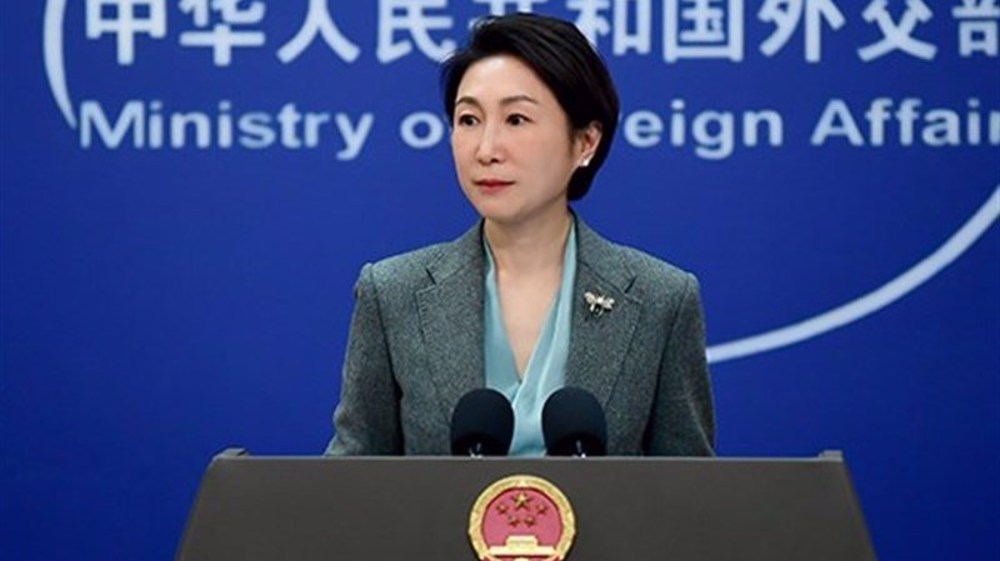
Foreign Ministry spokesperson Mao Ning is quoted saying China values long-standing friendship and is prepared to promote de-escalation and negotiations.
That statement suggests China prefers restraint in regional conflicts but, in the provided excerpt, does not connect Beijing’s remarks to Japan’s domestic policy debates or any Japanese arms-export decision.
Coverage Differences
Narrative Framing
PressTV (West Asian) frames China as a diplomatic actor urging restraint and de‑escalation in the Iran‑U.S. context, quoting Mao Ning directly. Asia News Network (Other) frames a domestic Japanese political critique about remilitarization and legal limits. The framing difference is that PressTV reports on external, regional diplomacy while Asia News Network reports internal Japanese political alarm — neither attributes to the other the specific link between LDP arms exports and Chinese reaction.
Source limits and verification
In sum, the supplied sources allow only cautious, partial conclusions: Asia News Network records domestic critique and alarm about renewed remilitarization impulses in Japan, while PressTV records China’s diplomatic posture of opposing force and favoring de‑escalation in the Iran‑U.S. theatre.
Neither provided excerpt confirms that the LDP approved a concrete arms‑export plan or that China explicitly voiced concern about that action; that gap should be filled by direct reporting from additional sources before asserting the headline as fact.
Because the supplied texts differ in subject and do not overlap on the specific claim, the claim remains unsupported by these excerpts and should be verified with more targeted coverage.
Coverage Differences
Missed Information
Both sources omit the key factual connection the user’s headline asserts: Asia News Network discusses domestic worries about remilitarization but does not report an LDP decision on arms exports; PressTV reports Chinese calls for restraint in the Iran‑U.S. context but does not discuss Chinese reactions to Japanese policy. This omission is material — the supplied articles do not substantiate that China 'voiced serious concern' about an LDP arms‑export approval.