
Crime · 29 April, 2026 · 7 min read
Jeffrey Epstein Built Island Mosque With Kaaba Tapestries and Uzbekistan Tiles, DOJ Records Say
Epstein decorated a private Caribbean island building with rare Islamic artifacts, calling it a mosque. Tapestries embroidered with Quranic verses from the Kaaba and Uzbekistan tiles sourced for the mosque.
Terminology and framing of the Little Saint James structure.
5 of 6 outlets skipped it: the exact Kiswa financial details (cost, silk weight, gold/silver weight) as claimed in one outlet.
6outlets compared
Same story, two versions
tap a side to read it in full
The Times of India
“Over the years, the structure has been described in various ways including as a music room, pavilion, chapel or even an occult space. However, correspondence and interviews cited in the documents suggest Epstein repeatedly referred to it as a 'mosque.'”Read the original ↗
The Seattle Times
“The building, a blue-and-white-striped structure topped with a golden dome, has been variously described as a music room, a pavilion, a chapel and even an occult temple. But correspondence between Epstein and his associates over many years, and an interview with an artist hired to work on it, illuminate its intended purpose. For Epstein, a secular Jew, the building was a “mosque.””Read the original ↗
Different outlets frame the same building with multiple design labels, highlighting whether they view it as a mosque or as a secular architectural project.
DOJ records and the “mosque”
Newly released US Justice Department records, made public in January, describe how disgraced financier Jeffrey Epstein spent years acquiring rare Islamic artefacts and cultivating high-level contacts across the Middle East while building a distinctive blue-and-white-striped structure topped with a golden dome on his private Caribbean island, Little Saint James. Multiple outlets tie the revelations to “millions of pages” released by the US Justice Department, with The New York Times cited as the source of key details about the artefacts and the building’s purpose. The Times of India says the documents show Epstein “focused on Islamic art and architecture” as he cultivated relationships with “wealthy and powerful figures in the region,” and it identifies the building materials as coming from across the Islamic world.T
Times Now similarly says the records “shed light on the origins and purpose” of the structure and notes that Epstein referred to it as a “mosque,” even as it “remains unclear whether it was intended for religious use.” The Seattle Times adds that the building has been “variously described as a music room, a pavilion, a chapel and even an occult temple,” but that correspondence and an interview with an artist hired for the project show Epstein’s intended purpose. TIn the same reporting stream, Newsmax frames the records as detailing how Epstein obtained “tapestries from the Kaaba in Mecca,” “tiles from a mosque in Uzbekistan,” and “architectural designs modeled on historic Syrian structures,” all connected to the island structure he referred to as a “mosque.”
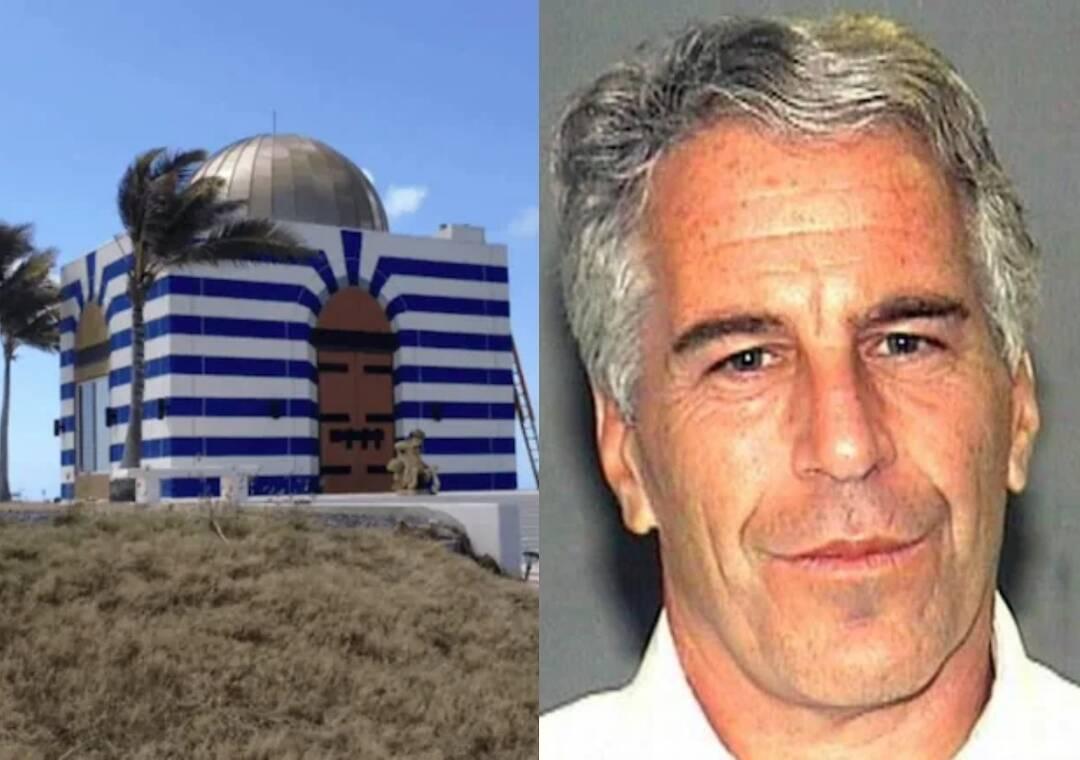
Artefacts from Mecca and beyond
The records described by the outlets connect Epstein’s island project to specific religious and cultural items sourced from major Islamic sites. The Times of India reports that Epstein obtained “tapestries embroidered with Quranic verses” shipped from the Kaaba in Mecca, and it says other items included “tiles sourced from a mosque in Uzbekistan” and “a golden dome structure designed to replicate architectural styles from ancient Syria.” TTimes Now likewise says “Tapestries embroidered with Quranic verses were shipped from the Kaaba in Mecca,” while “tiles were obtained from a mosque in Uzbekistan,” and it adds that “The design of the dome was inspired by historic Syrian architecture.”
The Seattle Times emphasizes the Kaaba connection by describing “tapestries embroidered with Quranic verses” that “were shipped from the Kaaba in Mecca,” and it pairs that with “tiles came from a mosque in Uzbekistan” and a “golden metal dome” meant to replicate “the architecture of ancient Syria.” Several outlets also describe the Kiswa, the black cloth that covers the Kaaba, and the Times of India says one document describes Epstein receiving “three pieces linked to the Kaaba, including sections of the Kiswa, the black cloth that covers the holy shrine and is replaced annually.”T
Times Now adds that correspondence indicates “three pieces from the Kaaba — including a Kiswa, the black cloth that covers the shrine — were sent to Epstein's island,” and it includes an email passage describing the cloth’s significance: “The black piece was touched by minimum 10 million Muslims… They walk around the Kaaba seven rounds… Hoping after that all their prayers to be accepted.” Newsmax similarly says the records detail how Epstein obtained “textiles that had been used inside and outside the Kaaba,” while also noting that “It is unclear how the items were obtained.”
Design instructions and symbolism
Beyond sourcing artefacts, the records described by the outlets depict Epstein giving detailed instructions about how Islamic motifs would be used and altered in the island building. The Times of India says that in emails Epstein “instructed collaborators to design interiors inspired by traditional Islamic patterns” and even “suggested replacing Arabic religious inscriptions with his own initials.” TTimes Now provides a specific example of that instruction, quoting an email in which Epstein wrote: “instead of allah, i thought j's and e ‘s”.
The Seattle Times similarly describes the same kind of alteration, saying Epstein asked designers to “include Islamic-style elements while replacing religious Arabic words with his own initials,” and it quotes an email passage: “Remember we saw the aribic writing in black and white,” followed by “instead of allah, i thought j’s and e ‘s.” TThe Times of India also describes how the building’s materials and symbolism were intended to culminate in a “distinctive blue-and-white striped building topped with a golden dome” on Little Saint James, and it says correspondence and interviews cited in the documents show Epstein repeatedly referred to it as a 'mosque.'T
Times Now adds that correspondence and interviews indicate Epstein himself described the building as a "mosque," while noting that the intended use remains unclear. The Seattle Times provides additional context on the project’s evolution, saying Epstein began with a plan for a “hammam,” a Turkish bathhouse surrounded by “Islamic gardening,” before scrapping it and seeking a permit for a “music room” in a building he called “5 Palms,” and it identifies Ion Nicola as the artist who confirmed Epstein regularly called the building his “mosque.”T
Saudi ties and political outreach
The documents described across the outlets also portray Epstein’s Islamic-art project as intertwined with efforts to build influence through international contacts, including figures connected to the Saudi royal court. Times Now says Epstein’s plans for the island structure began while he was serving a jail sentence in Florida in 2008, and it describes early proposals for a Turkish-style bathhouse, or “hammam,” surrounded by Islamic gardens. It then links the building’s later evolution to a network of contacts, saying “Terje Rod-Larsen” helped connect Epstein with figures linked to the Saudi royal court, and that Epstein pursued a meeting with “Mohammed bin Salman, then deputy crown prince.”
Times Now quotes the intermediaries’ efforts, including a message sent to Epstein instructing him to say “that you, Jeffrey Epstein, has an invitation from His Royal Highness: PRINCE mohammed bin salman.” The Seattle Times similarly describes how Rod-Larsen connected Epstein to “Raafat Al-Sabbagh, a consultant to the Saudi royal court, and his aide Aziza Al Ahmadi,” and it says Epstein pressed to pitch the royal in person while sharing “radical ideas,” including a proposed new currency called “the shariah.”T

The Times of India adds that Epstein met individuals linked to the Saudi royal court and pursued advisory opportunities related to Saudi economic reforms and the planned listing of the state-owned oil company Aramco. TTimes Now also places the outreach against a backdrop of shifting Saudi politics, saying relations with Saudi contacts appeared to cool after Mohammed bin Salman became crown prince and declined Epstein’s overtures, and it includes Rod-Larsen’s reply after the killing of journalist Jamal Khashoggi: “Dark cloud over his head,” and “And it won't go away.”
Aftermath, death, and ongoing scrutiny
The outlets place the newly described artefact shipments and “mosque” building plans within Epstein’s broader legal timeline and the consequences that followed. The Times of India says Epstein was “later arrested in 2019 on federal sex trafficking charges,” and it adds that “He was later found dead in a Manhattan jail cell in August 2019 while awaiting trial.” TTimes Now similarly says Epstein “was arrested in July that year and died by suicide the following month while in custody awaiting trial on sex trafficking charges,” and it frames the documents as revealing how “business ambitions and personal interests overlapped.”
The Seattle Times reiterates that Epstein “killed himself in 2019 while awaiting trial on sex trafficking charges,” and it connects the island project to a wider circle of associates, including Sultan Ahmed bin Sulayem, whom it says was “ultimately brought down by his association” and who “was forced to resign as the head of DP World, a Dubai ports company.” TThe Times of India also describes damage to the island during Hurricane Maria in 2017, saying it “suffered damage during Hurricane Maria in 2017, affecting parts of the so-called 'mosque' structure and its contents.”T
Times Now echoes that disruption, stating “In 2017, Hurricane Maria damaged parts of the island, including the structure in question.” Finally, Newsmax and The Seattle Times both emphasize that the records were released by the Justice Department in January and that the artefacts and building details are part of a larger set of disclosures, with Newsmax saying the documents are “part of millions of pages made public in January” and The Seattle Times describing “millions of pages of records released in January by the Justice Department.”