Full Analysis Summary
Sudan Solidarity Conference
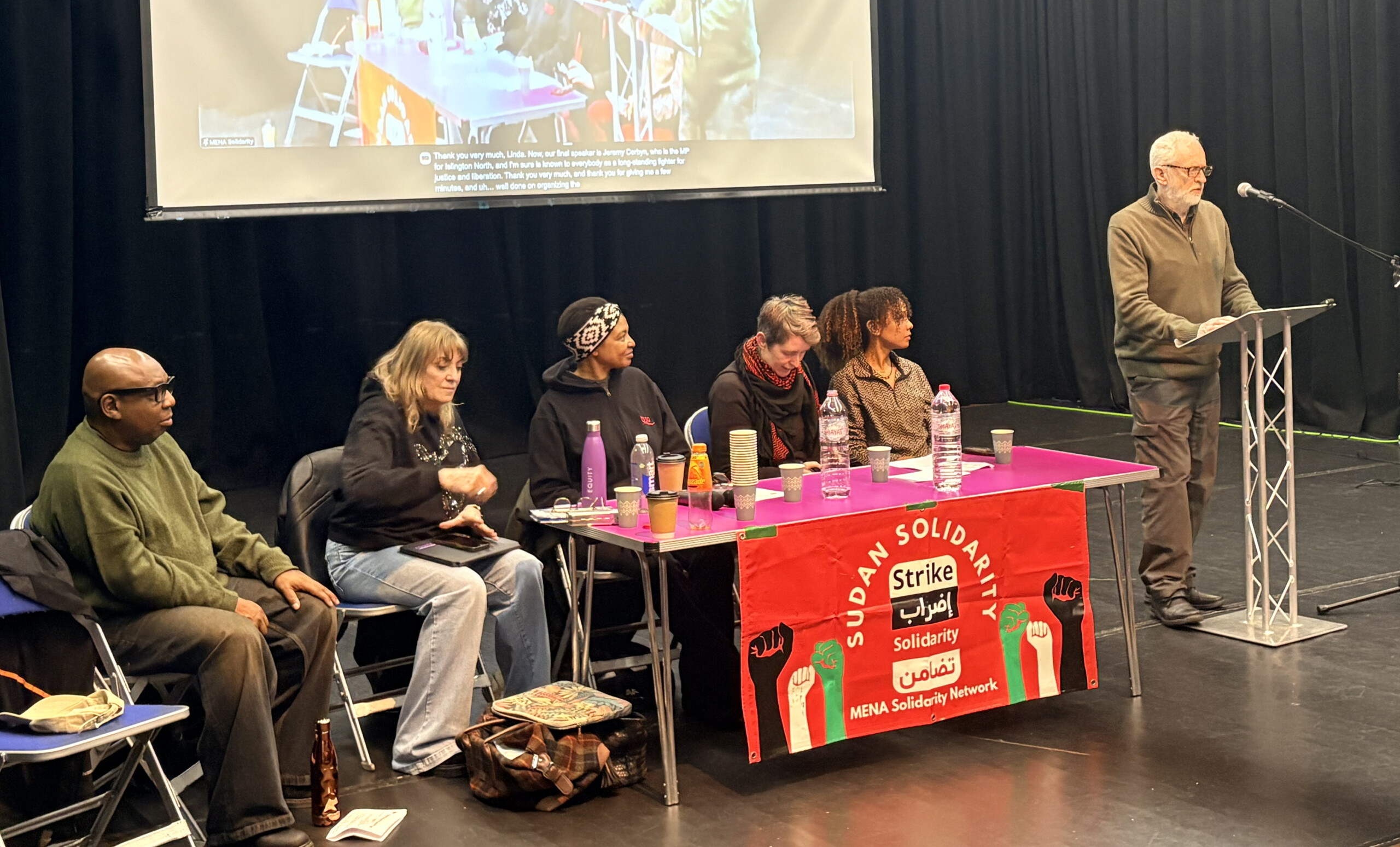
On 17 January 2026, trade unionists, Sudanese activists and international campaigners gathered in London for the Sudan Solidarity Conference organised by MENA Solidarity.
Speakers, including grassroots Sudanese organisers, diaspora groups and UK labour and anti-war activists, demanded an immediate end to the war in Sudan and urged scrutiny of Britain's role in the conflict; Radio Dabanga reporters covered the event and interviewed MPs Jeremy Corbyn and John McDonnell on the sidelines, emphasising the conference's political and grassroots coalition.
Coverage Differences
Consistency / Source overlap
Both Dabanga Radio TV Online (Other) and Radio Dabanga (Other) report nearly identical facts about the conference date, organisers, attendees and that Jeremy Corbyn and John McDonnell were interviewed; neither source presents a contrasting narrative or additional external viewpoints. The coverage is aligned in describing who organised the event (MENA Solidarity), who spoke (trade unionists, Sudanese activists, UK labour and anti‑war activists) and that demands focused on an immediate end to the war and scrutiny of Britain’s role.
Conference Condemnations and Reporting
Speakers at the conference explicitly condemned both the Sudanese Armed Forces (SAF) and the Rapid Support Forces (RSF).
They characterized the conflict since April 2023 as a counter-revolutionary war that has targeted and devastated civilians, including activists, and has been marked by a long record of serious abuses described in coverage as 'alleged genocide and crimes against humanity'.
The reporting frames these claims as the conference speakers' characterization rather than as new legal findings, noting the language used by organisers and activists on the ground.
Coverage Differences
Tone / Severity alignment
Both sources use forceful language from conference speakers — phrases like 'counter‑revolutionary war', 'devastated civilians', and 'alleged genocide and crimes against humanity' — and attribute those descriptions to speakers and campaigners rather than presenting them as the reporting outlet’s independent legal determinations. There is no evident divergence between the two sources on this framing.
Arms trade and foreign involvement
Foreign involvement and the international arms trade were central themes at the conference, with campaigners citing reports that British-made military components recovered from former RSF areas likely reached the RSF via the UAE.
Delegates used these reports to challenge the effectiveness of UK export controls and to argue that British policy and the international arms trade have facilitated the arming of forces accused of serious abuses, thereby implicating external actors in the conflict’s escalation.
Coverage Differences
Narrative focus / Emphasis
Both sources emphasise foreign involvement and the international arms trade. They report campaigners’ claims that British‑made components were found in RSF areas and may have transited via the UAE, raising questions about UK export controls. There is no competing account offered in either source; instead both present the campaigners’ allegations as the central foreign‑involvement claim discussed at the conference.
UK migration and accountability
Conference delegates criticised the UK’s treatment of Sudanese refugees and called for broader political accountability at home, arguing that Britain’s migration and foreign policies have compounded suffering and require scrutiny alongside arms-export questions.
Coverage framed these demands as central to the conference’s agenda, linking domestic policy criticism to the overseas consequences of UK decisions.
Coverage Differences
Scope / Domestic focus
Both Dabanga Radio TV Online and Radio Dabanga include criticism of Britain’s treatment of Sudanese refugees as part of the conference agenda. Neither source provides a counter‑statement from UK officials nor detailed alternative perspectives on the UK government’s position, meaning the domestic critique is presented without immediate official response in these reports.
Media coverage of MPs
On the sidelines, Radio Dabanga's Amgad Abdelgadir interviewed Labour figures Jeremy Corbyn and John McDonnell.
Reports highlighted their presence and implied political support for the conference's calls to end the war and scrutinise UK policy.
The coverage framed these interviews as part of the broader activist-political coalition at the event but did not quote extended extracts of what the MPs said.
This left the record focused on the conference's demands rather than verbatim party statements in these snippets.
Coverage Differences
Detail / Quotations omitted
Both sources note that Amgad Abdelgadir interviewed Jeremy Corbyn and John McDonnell on the sidelines, but neither source provides extended verbatim quotations from those interviews in the provided snippets; the coverage therefore signals MP involvement without delivering detailed transcripted remarks. This is a shared limitation across the two reports rather than a divergence between them.