Full story
Aoun meets Trump
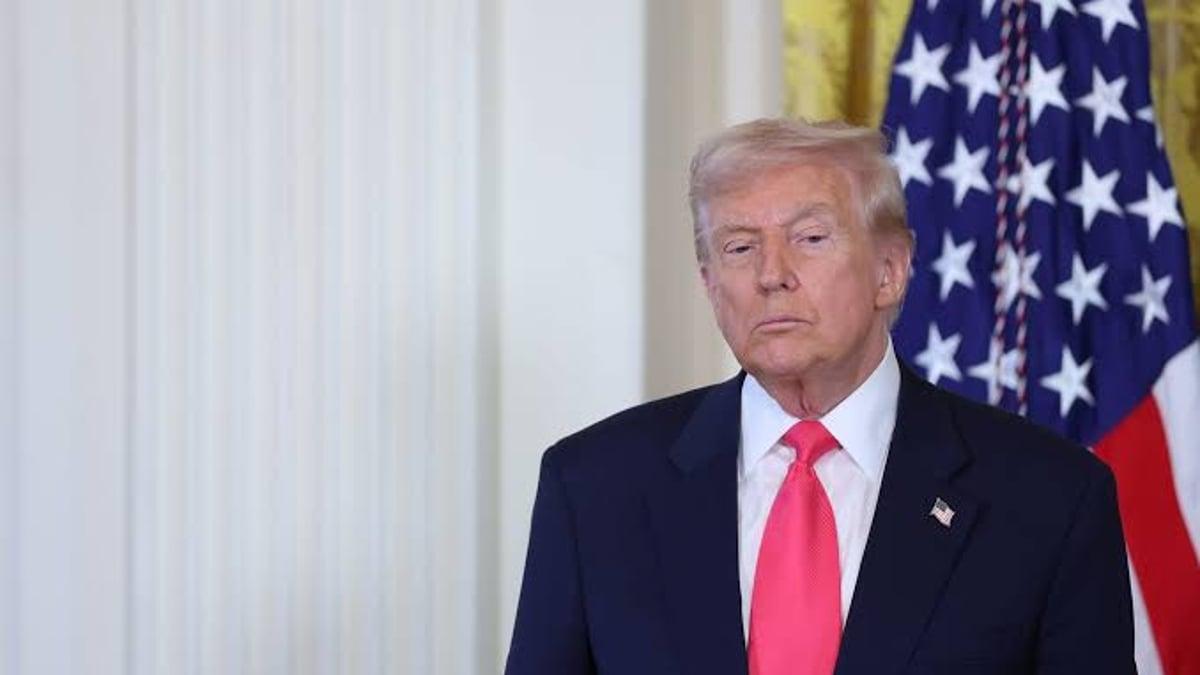
Lebanese President Joseph Aoun met U.S. President Donald Trump at the White House on Tuesday during Aoun’s first official working visit to Washington since taking office, with the talks centered on Israeli withdrawal from southern Lebanon and efforts to disarm Hezbollah.
“WASHINGTON (AP) - -- President Donald Trump pledged to help Lebanon "a lot" during a White House meeting on Tuesday with the country's leader, Joseph Aoun, who came to push for long-term calm after months of war between Israel and the Iran-backed Hezbollah militant group”
Aoun arrived in the Washington, DC, area on Saturday and met U.S. Secretary of State Marco Rubio on Sunday, where Aoun stressed the need to align Lebanese and American positions over the framework “through the achievement of an initial Israeli withdrawal from the first pilot zone”.

At the White House meeting, Trump told reporters, “We will solve many problems, though we have already managed to resolve some issues; there is a Hezbollah problem,” and he said he would discuss supporting the Lebanese Army with Aoun.
Aoun, for his part, said, “Together we can succeed in achieving this goal,” renewing his request for support for the Lebanese Army as he pressed for a complete and immediate Israeli withdrawal from Lebanese territory.
Talks, flights, and pilot zones
Trump said he was willing to engage in dialogue with Hezbollah if Aoun asked him to, telling reporters, “If President Aoun wants me to speak to them, I will do so,” while also pledging continued U.S. support for Lebanon.
Hours after the meeting, Trump announced an unexpected measure authorizing direct flights, saying, “I am hereby directing my Administration to allow all U.S. airline carriers to fly directly to Lebanon so that Americans can easily visit this beautiful land,” after the route had been suspended in 1985 by Ronald Reagan’s administration following the hijacking of TWA flight 847.

The meeting also coincided with the U.S. State Department’s announcement of the establishment of the first pilot zones in South Lebanon, where the Lebanese Armed Forces (LAF) would deploy as Israel withdraws to assert that there is no Hezbollah presence.
In southern Lebanon, the Lebanese army announced its units had deployed in the town of Zawtar al-Gharbiya after coordinating with the Military Coordination Group for Lebanon (MCG4L), while confirming they had not entered Zawtar al-Sharqiya.
The LAF said Israeli forces approached the outskirts of Zawtar al-Gharbiya while Lebanese troops were present and opened fire nearby, endangering soldiers and disrupting the deployment mission.
What’s at stake next
The trilateral framework discussed by Aoun and U.S. officials sets “pilot zones” in south Lebanon, with Lebanon recognizing Israel and agreeing to condition its withdrawal from the country on the disarmament of Hezbollah.
Aoun’s position in the talks emphasized that “Lebanon cannot be safe or united unless it is one state with one army that protects all Lebanese without discrimination,” linking U.S. support for the LAF to the ability to exercise sovereignty through legitimate institutions alone.
The sources also describe a dispute over the pilot-zone implementation, with the Lebanese army reporting Israeli fire toward its troops and the IDF describing its actions as “warning shots” aimed at Lebanese soldiers who had crossed into the buffer zone controlled by Israel.
Looking ahead, the sources frame the success of any future understandings as depending on progress toward a full Israeli withdrawal, strengthening the role of the LAF, and advancing reconstruction efforts, while the meeting reaffirmed coordination on security, defense, and economic issues to support Lebanon’s stability and recovery.
In the background of the summit, Trump’s statements also placed Hezbollah and Iran at the center of U.S. calculations, including his readiness to talk to Hezbollah and his warning that “Iran desperately wants to meet,” as the region’s tensions persist along Lebanon’s southern border.