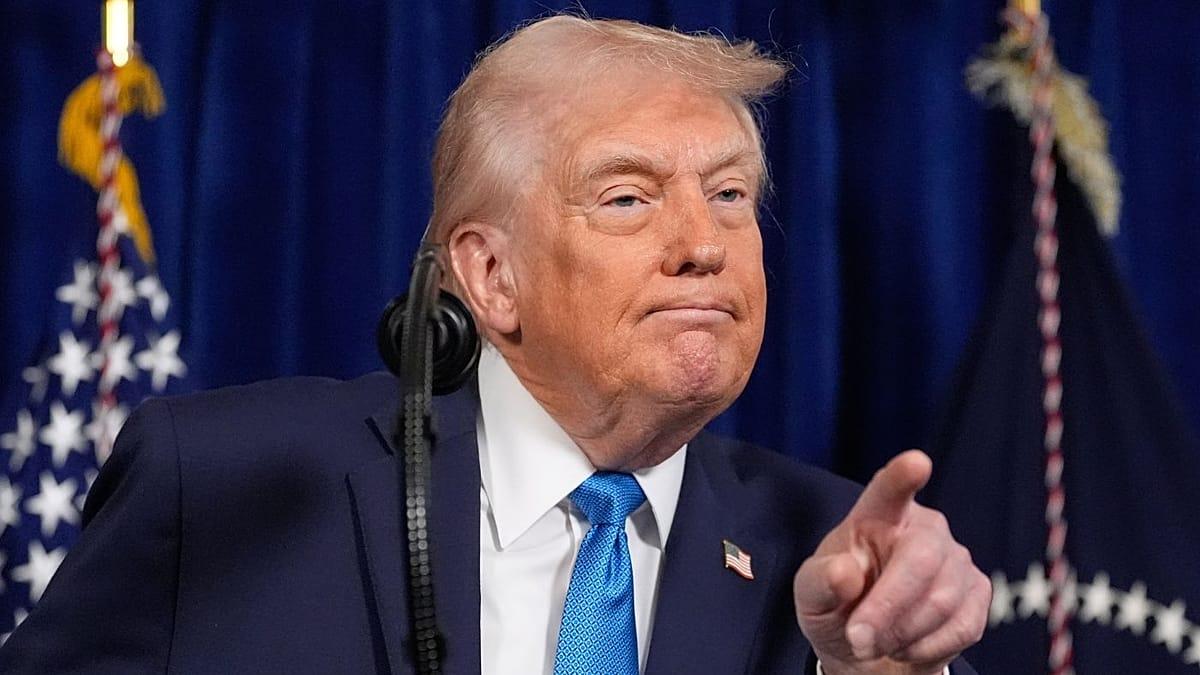
Karoline Leavitt Says Trump Does Not Bluff as He Threatens Strait of Hormuz Strikes
Key Takeaways
- Trump claims Strait of Hormuz under U.S. control, Iran faces daily economic losses.
- Tehran resists Trump’s threats, refuses to meet a U.S. delegation led by VP Vance.
- Media coverage portrays Trump's bluffs as leverage in the Iran conflict.
Trump’s Deadlines and Delays
On the fifth day of the Iran war, March 4, White House press secretary Karoline Leavitt delivered a defiant message in which she said, “The terrorists made a bet that President Trump would be like many of his predecessors — that he would just talk, and he would refuse to enforce his clear red lines,” and she added, “But that has proven to be a catastrophic error in judgment.”
“On the fifth day of the Iran war, March 4, White House press secretary Karoline Leavitt had a defiant message for America’s enemies”
Leavitt also insisted, “President Trump does not bluff,” framing the administration’s approach as one of enforceable “clear red lines.”

CNN’s account then recaps a sequence of deadlines and extensions that it says repeatedly pushed the goalposts for Iran without, in its telling, evidence that Tehran met the terms.
The timeline begins with a March 21 deadline that Trump set to expire March 23, when he said Iran had to “FULLY OPEN, WITHOUT THREAT, the Strait of Hormuz, within 48 HOURS,” or the United States would “start striking its power plants.”
CNN says that with about 12 hours to go, Trump delayed again on March 23, citing “VERY GOOD AND PRODUCTIVE CONVERSATIONS” and setting a new March 28 deadline “SUBJECT TO THE SUCCESS OF THE ONGOING MEETINGS AND DISCUSSIONS.”
The same CNN timeline continues with a March 26 deadline moved to April 6, and then a further shift to April 7, with Trump citing Easter and saying, “I thought it was inappropriate the day after Easter,” and “I want to be a nice person.”
CNN’s account also says Trump later announced a two-week ceasefire on April 7 and then set a new April 21 deadline, while warning that if demands were not met he would blow up Iran’s electric power plants, oil wells and Kharg Island, and possibly desalination plants.
Hormuz Open-Close and Markets
A separate account of the Iran crisis emphasizes the Strait of Hormuz’s rapid opening and closing and links it to market swings.
The American Bazaar describes what it calls “the Hormuz whipsaw of the past 48 hours,” saying, “Iran opens the Strait on Friday — oil drops 11%, the Dow jumps over a thousand points,” and then adding that “Trump immediately announces the blockade stays.”
It then says, “Iran closes the Strait again within hours,” and that “Markets reverse.”
The piece frames these moves as “not just diplomatic theatre — it is, functionally, a wealth transfer,” describing a cycle in which “When the Strait opens, retail investors exhale and buy in” and “When it closes again hours later, they panic and sell.”
It also asserts that “The hedge fund managers and institutional desks who know the diplomatic reality before it becomes a headline are positioned perfectly on both sides of that swing,” and it claims they “buy the dip, sell the spike, and pocket the difference.”
The article then ties the stakes to ordinary people, saying “the pensioner in Ohio and the small saver in Karachi absorb the loss,” and it uses that contrast to argue the conflict is being used to create profit from instability.
The American Bazaar also quotes a slogan, “Every Day Is Ashura — Every Land Is Karbala,” and it presents Karbala as a framework for interpreting resistance rather than submission.
Iran’s “Trick,” Mediation, and Reinforcements
As negotiations and military posture intersect, Sky News Arabic reports that Iran told mediators it had been deceived twice by Donald Trump and said it did not want to be fooled again.
“By Mohammad Akhlaq Siddiqi No naval blockade breaks the people who draw their identity from Karbala”
The outlet says Axios cited an informed source saying the Iranian side told the countries attempting to mediate peace talks with the United States that they had been deceived twice by U.S. President Donald Trump, and it adds that the Iranian side told mediators “Pakistan, Egypt, and Turkey” that American military moves and Trump’s decision to deploy large reinforcements increased their doubts that proposed peace talks were anything but a ruse.
Sky News Arabic also says American and Israeli officials have noted that Trump is trying to build options for diplomacy and for military escalation at the same time so he can decide based on developments.
In the same reporting, Axios is said to have quoted a White House official saying Trump is “optimistic about the negotiations with Iran, and a meeting in Pakistan is possible.”
CNN is also cited in Sky News Arabic’s account, saying Iran told the Trump administration that it preferred to negotiate with Vice President J. D. Vance and that it did not wish to restart negotiations with special envoy Steve Witkov and Jared Kushner.
Sky News Arabic further reports that the Trump administration presented a 15-point cease-fire plan to Iran, according to a person familiar with the plan’s details to the Associated Press, and it says the plan was presented to Iran through intermediaries from Pakistan.
The outlet also says Trump told reporters at the White House that the United States is talking with “the right people” in Iran, adding that “We are close to reaching an agreement and pursuing it,” and it quotes him saying the Iranian president (Masoud Bezhkian) is sending signals that “may be important and could have significance.”
A Resignation and a Challenge to the Case for War
The war’s internal U.S. politics are also highlighted through the resignation of Joseph Kent, described as the director of the National Counterterrorism Center.
Al-Arabiya Al-Jadeed reports that the resignation reveals divisions within President Donald Trump’s coalition amid the ongoing war with Iran, and it says Kent’s statement points to “a shift in decision‑making mechanisms” inside Washington.
In the account, Kent argues that “Iran did not pose an imminent threat to the United States or its national security,” directly challenging the justifications used to wage war.
The outlet also quotes Kent’s resignation statement saying, “Obviously we began this war as a result of pressure from Israel and the American lobbying groups allied with it (...).”
It further says Kent wrote that “Early in this administration, senior Israeli officials and influential voices in the American media launched a broad disinformation campaign that undermined the America First program and promoted war with Iran.”
The article adds that Kent recalled his experience in the Iraq War as a soldier, describing strategic decisions made under the influence of political and media campaigns.
It then provides biographical details, saying Kent was born in 1980 and served in the U.S. Army from 1998 to 2018, including work as a team leader and an intelligence officer in special forces and service in the Special Operations Command.
Blockade, Port Security, and Escalation Risks
Iran’s response to the blockade is presented in Iran International’s reporting through threats aimed at regional states and a warning about port safety.
“Mohammed Al-Badawi Listen to the summary The resignation of Joseph Kent, the director of the National Counterterrorism Center and one of the United States’ most prominent counterterrorism officials, reveals the scale of divisions within President Donald Trump’s coalition amid the ongoing war with Iran”
The outlet says the spokesperson for the Central Headquarters of the “Seal of the Prophets” (Khatam al-Anbiya) Ibrahim Dhu al-Faqari warned that port security would be threatened if the United States imposed a naval blockade, stating on Monday, April 13: “The security of ports in the Gulf waters and the Arabian Sea is either for everyone or for no one.”

It adds, “And if Iran's port security is threatened, no port in the region will be safe.”
Iran International says Dhu al-Faqari described the U.S. naval blockade as an “illegal action and an example of sea piracy.”
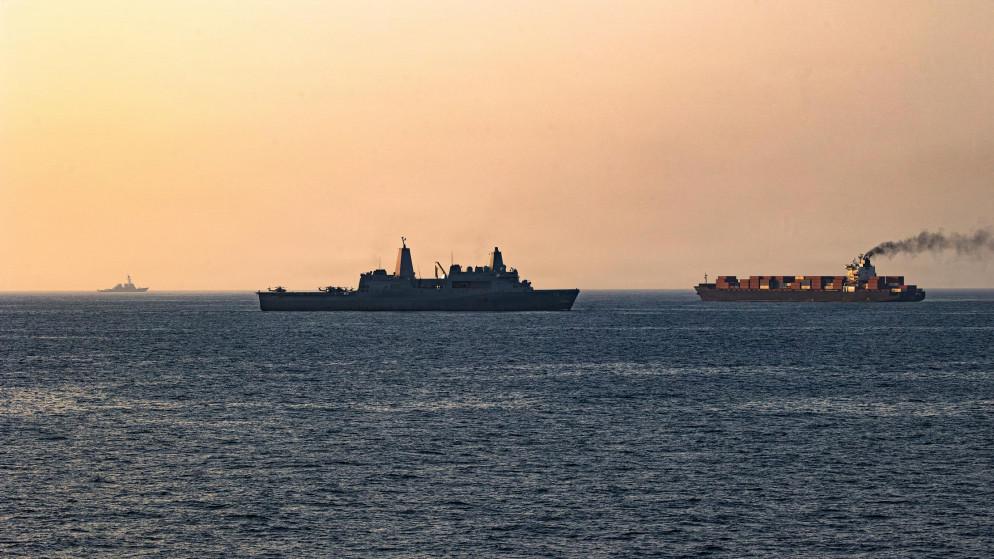
The same report says that on Sunday, April 12, Trump announced that in response to the failure of negotiations in Islamabad, the U.S. Navy would begin “immediately” imposing a blockade on the Strait of Hormuz and that NATO would participate, and it quotes Trump describing the operation as a “comprehensive blockade at a higher level than the Venezuela blockade.”
It also says U.S. Central Command (CENTCOM) reported that the naval blockade and restriction of vessel movement to and from Iranian ports would begin at 17:30 (Iran time) on Monday, April 13.
Iran International then says Tehran would impose “a permanent and firm mechanism to control the Strait of Hormuz,” and it quotes the spokesperson saying “enemy ships' would not be allowed to pass through the strait, and that other ships would cross only under 'the controls of the Iranian armed forces.'”
More on Iran
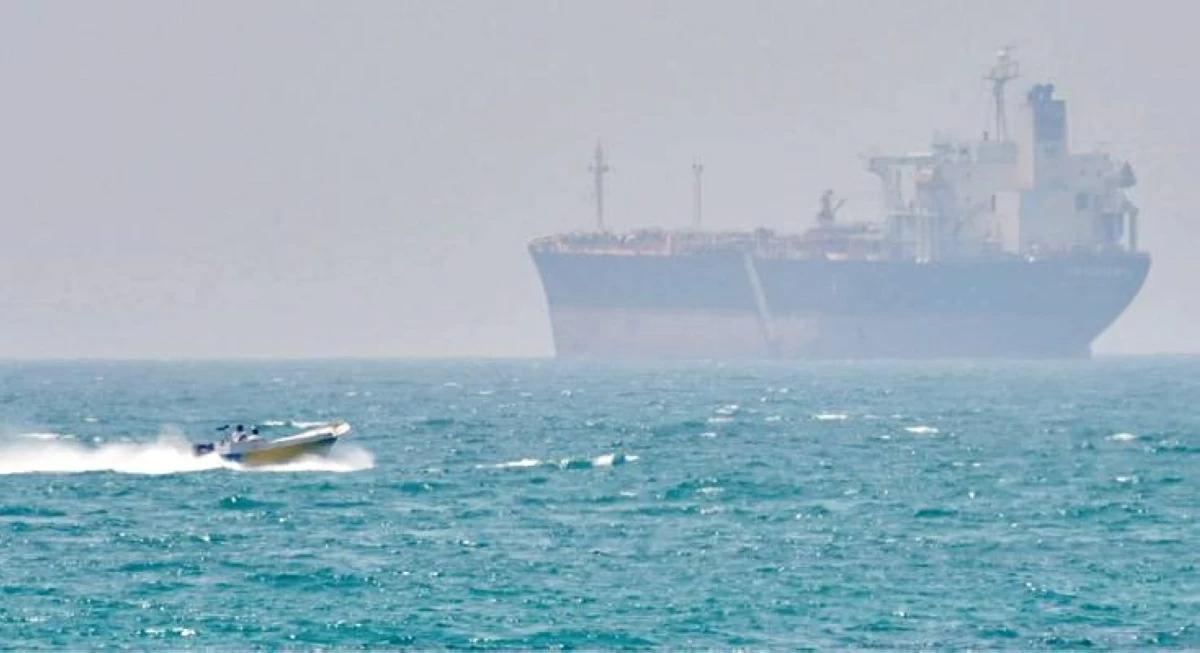
Iran Begins Collecting Strait of Hormuz Transit Fees, Deposits First Revenue in Central Bank
16 sources compared
Iran Seized Two Ships In The Strait Of Hormuz After US Called Off Attacks
16 sources compared
Donald Trump Says No Timetable for War as U.S. Keeps Naval Blockade on Tehran
27 sources compared
Iran Fires on Three Ships and Seizes Two in Strait of Hormuz, Trump Extends Ceasefire
28 sources compared