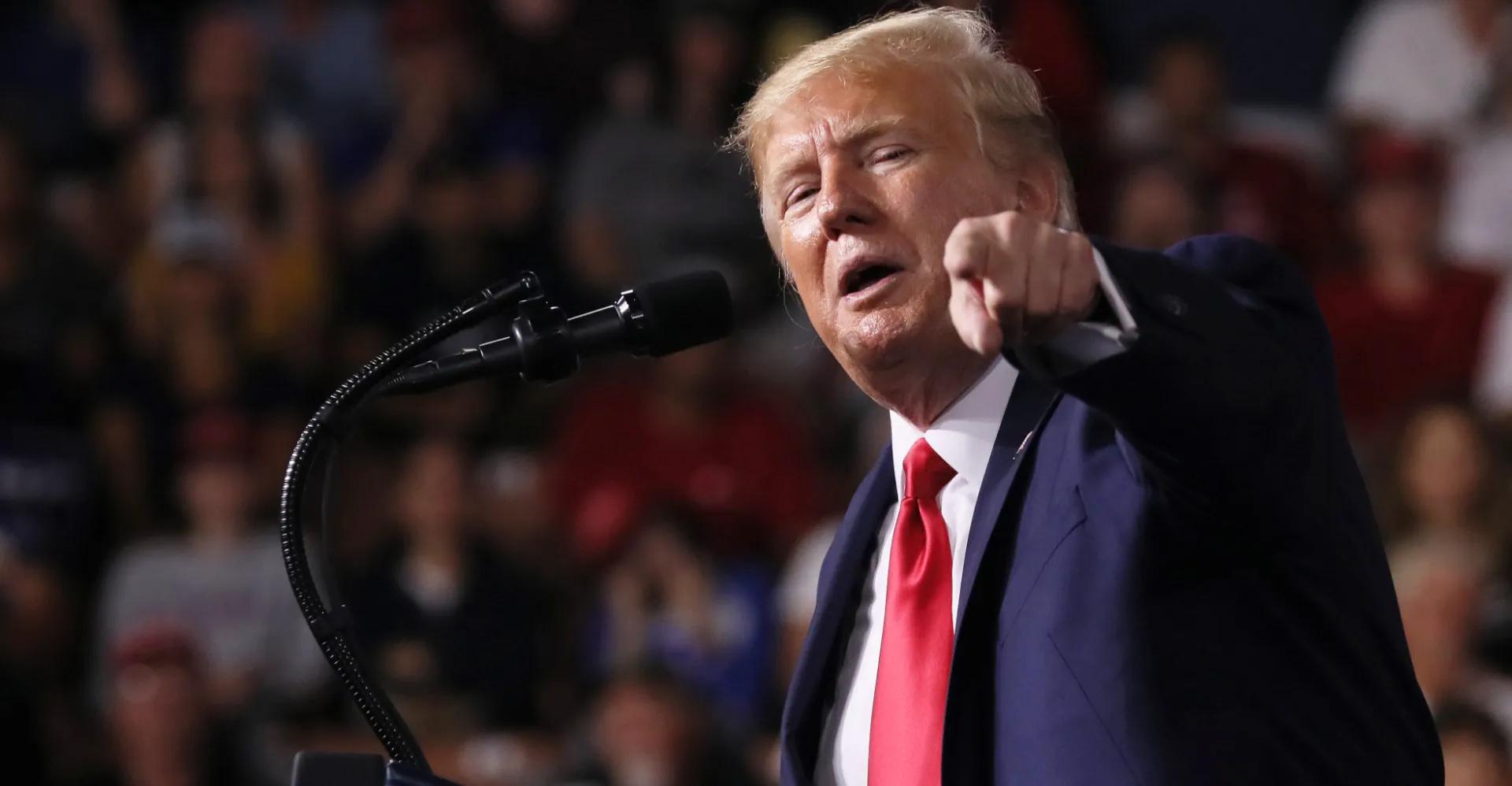
Karoline Leavitt Says Trump Does Not Bluff on Iran After March 21 Deadline Delays
Key Takeaways
- Trump extended Iran ceasefire at Pakistan's request after March 21 deadline.
- Trump warned of resuming bombing if talks stall or fail to reach agreement.
- Uncertainty persists about whether US-Iran peace talks will occur in Pakistan.
Trump’s deadlines and Iran
On the fifth day of the Iran war, March 4, White House press secretary Karoline Leavitt delivered a defiant message about President Donald Trump’s approach to Iran, saying, “The terrorists made a bet that President Trump would be like many of his predecessors — that he would just talk, and he would refuse to enforce his clear red lines,” and adding, “But that has proven to be a catastrophic error in judgment.”
Leavitt also insisted, “President Trump does not bluff,” while CNN’s account framed the period as one in which Trump repeatedly set deadlines for Iran and then delayed them.

CNN laid out a sequence of ultimata beginning with a March 21 deadline that Trump set for March 23, when he said Iran had to “FULLY OPEN, WITHOUT THREAT, the Strait of Hormuz, within 48 HOURS.”
CNN then described how, with about 12 hours to go, Trump announced a five-day delay from March 23 to March 28, citing “VERY GOOD AND PRODUCTIVE CONVERSATIONS” between the two sides.
The CNN narrative continued with a March 26 deadline that moved to April 6, and then a further shift to April 7, before Trump announced a two-week ceasefire on April 7.
In CNN’s account, the pattern culminated in a new April 21 deadline, with the article describing Trump’s repeated deadline extensions despite “little or no public evidence” that Iran met the terms as Trump laid them out.
Negotiations, intermediaries, and ruses
As the deadline cycle played out, multiple reports described parallel efforts to negotiate and to test whether Iran would accept terms.
سكاي نيوز عربية said Axios quoted an informed source claiming that the Iranian side told intermediaries brokering peace talks with the United States that they had been “deceived twice by President Donald Trump,” and that they “do not want to be deceived again.”

The same report said Iran told mediators “Pakistan, Egypt, and Turkey” that American military movements and Trump’s decision to deploy large reinforcements increased their doubts that his proposal to conduct peace talks was “nothing but a ruse.”
It also described how American and Israeli officials said Trump was trying to build options for diplomacy and for escalating military action at the same time so he could decide based on developments.
In that context, سكاي نيوز عربية reported that CNN cited sources saying Iran told the Trump administration it prefers to negotiate with Vice President J. D. Vance, and that Iranian officials did not wish to resume negotiations with special envoy Steve Witkoff and Jared Kushner.
The report also said the Trump administration presented a “15-point ceasefire plan” to Iran through intermediaries from Pakistan, which offered to host new talks between Washington and Tehran.
Iran’s response and threats
Iranian messaging in the sources portrayed the Strait of Hormuz as a central pressure point and framed U.S. actions as illegitimate.
ایـران اینترنشنال reported that the spokesperson for the central headquarters of the “Seal of the Prophets,” Ibrahim Dhu al-Faqari, said that “The security of ports in the Gulf waters and the Strait of Hormuz is either for everyone or for no one,” and warned, “if the security of Iran's ports is threatened, no port in the region will be safe.”
The same report described Dhu al-Faqari characterizing the U.S. naval blockade as “an illegal measure and an example of maritime piracy.”
It tied the threats to a broader pattern of Iranian targeting “since the beginning of the conflict” of regional countries including Saudi Arabia, the United Arab Emirates, Bahrain, Kuwait, Jordan, Qatar, Iraq, Oman, and Azerbaijan.
The report said President Donald Trump announced on Sunday, April 12, that the U.S. Navy would begin “immediately” imposing a blockade on the Strait of Hormuz and that NATO would participate, describing it as “a comprehensive blockade at a level higher than Venezuela's.”
According to U.S. Central Command (CENTCOM), the naval blockade and prevention of movement of ships to and from Iranian ports would begin at 17:30 (Iran time) on Monday, April 13.
U.S. escalation and diplomacy options
While CNN emphasized Trump’s repeated deadline extensions, other reporting described how the administration sought to combine diplomacy with military preparation.
سكاي نيوز عربية said that on Tuesday, American media reported that the U.S. military was preparing to send about 3,000 paratroopers from an airborne unit to the Middle East to support operations against Iran.

It also said Axios reported that the White House sent messages to the Iranians indicating that Trump was “optimistic about negotiations with Iran, and a meeting in Pakistan is possible.”
The same report said Channel 12 Israeli TV, citing three sources, reported that the United States was seeking a one-month ceasefire to discuss the 15-point plan, and that Israeli media said the plan would include dismantling Iran's nuclear program, halting support for allied groups, and reopening the Strait of Hormuz.
In parallel, CNN’s account described Trump’s threats to strike Iran’s power plants, oil wells and Kharg Island if the Strait of Hormuz was not opened, and it said Trump later added he would “consider” a ceasefire if the Strait of Hormuz were “open, free, and clear.”
EA WorldView, in a commentary posted by Scott Lucas, argued that Tehran was resisting Trump’s threats and described a refusal to meet a U.S. delegation led by Vice President J.D. Vance in Islamabad, saying the Iranian regime was “refusing to surrender and give way to American ultimata.”
International reactions and next steps
The sources also described how other countries and alliances were positioning themselves as the crisis moved toward blockade and negotiations.
ایـران اینترنشنال reported that the new head of the Australian Defence Force, Mark Hammond, announced that his country was ready to participate in U.S.-led operations to reopen the Strait if requested.

It said the Japanese government stated it was closely monitoring the U.S. military operations, confirming that de-escalation and ensuring the security of navigation in the Strait of Hormuz remained top priority, alongside reaching a rapid diplomatic agreement.
CBS News, cited in ایـران اینترنشنال, reported that Britain was leading planning for a coalition of more than 40 countries to deal with the Hormuz Strait crisis, including reviewing options to deploy forces and equipment, with the aim to reopen the Strait and ensure freedom of navigation.
The same report said most participating countries were NATO members, and it described the coalition as preparing to respond to the Hormuz Strait crisis.
In CNN’s account, the stakes were tied to American credibility and projections of strength, with the article describing how “having your bluff called comes with a real cost.”
More on Iran

King Charles III and Queen Camilla Begin Four-Day US State Visit With Trump Tea
10 sources compared

Oil Prices Rise as US-Iran Peace Talks Stall and Strait of Hormuz Remains Constrained
14 sources compared
Abbas Araghchi Arrives in Russia for Talks With Vladimir Putin to End U.S.-Israel War on Iran
33 sources compared

Abbas Araghchi Meets Vladimir Putin in Russia as US-Iran Talks Stall
20 sources compared