USA22 April, 20267 min read
Kash Patel Sues The Atlantic and Sarah Fitzpatrick for $250 Million Defamation
This article is an automated aggregation of coverage from news outlets. Our editorials offer in-depth analysis curated by the NewsCord team.
Kash Patel files $250M defamation suit against The Atlantic over allegations of mismanagement and drinking. The Atlantic article alleged mismanagement; Patel says the piece is false and malicious.
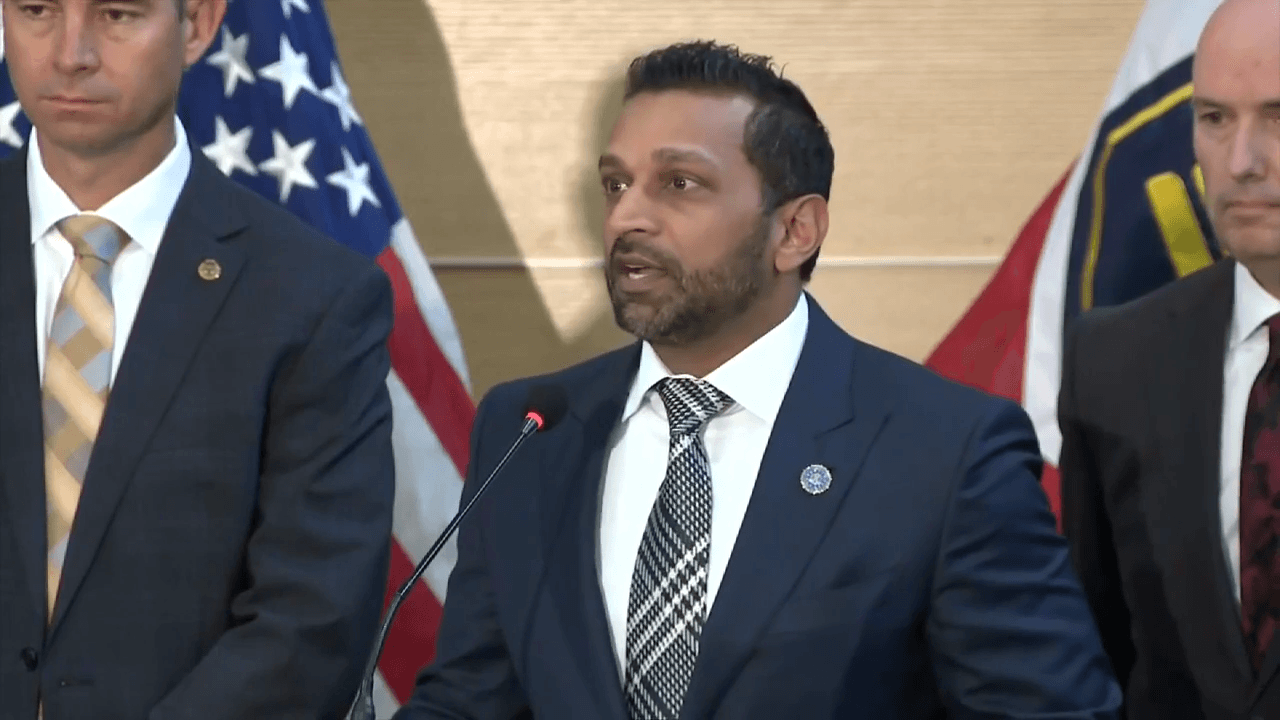
Patel sues The Atlantic
FBI Director Kash Patel filed a $250 million defamation lawsuit against The Atlantic and journalist Sarah Fitzpatrick, seeking damages after the magazine published an article that described him as having mismanaged the agency and engaged in “excessive drinking.”
The Intercept frames the suit as part of a broader pattern of conservatives using courts to pressure newsrooms, describing it as a “strategic lawsuits against public participation” effort.

The Intercept also says Patel’s case “names the publication and the writer as defendants and demands $250 million in damages,” and adds that Patel told reporters, “I’ve never been intoxicated on the job. Any one of you that wants to participate, bring it on – I’ll see you in court,” during a contentious press conference.
WSVN, citing AP, reports that Patel claimed the Atlantic article was false and a “malicious hit piece,” and that Fitzpatrick said Patel was “deeply concerned about losing his job” and that “he has good reasons to think so — including some having to do with what witnesses described to me as bouts of excessive drinking.”
In the same reporting, WSVN says the lawsuit was filed in district court in Washington, and that Patel denied the allegations and criticized the magazine for relying on anonymous sources.
The Intercept adds that Patel’s lawsuit “doesn’t appear very strong; it’s unlikely he’ll win in court,” while still emphasizing that “a legal victory isn’t necessarily the goal.”
Across the accounts, the central dispute is the Atlantic’s depiction of Patel’s conduct and the legal challenge Patel mounted in response, with multiple outlets tying the suit to the broader question of how far media scrutiny can go.
Actual malice and First Amendment
Several outlets describe why Patel’s lawsuit is difficult to win, focusing on the “actual malice” standard for public officials.
Vanity Fair says Patel’s suit “asserts that Fitzpatrick’s article is “replete with false and obviously fabricated allegations” designed to “drive him from office,” but argues that a public official faces “a nearly insurmountable challenge” because he must show The Atlantic acted with “actual malice.”

Vanity Fair explains that the burden comes from the Supreme Court’s unanimous decision in New York Times Co. vs. Sullivan in 1964, and says the ruling was designed to foster “uninhibited, robust, and wide open” debate and reporting about public figures.
MS NOW similarly emphasizes that Patel’s only chance to win is to prove the alleged defamatory statements were false, harmed his reputation, and were made with “actual malice,” requiring evidence that journalists knew statements were false or acted in “reckless disregard.”
MS NOW contrasts “actual malice” with negligence and ties the higher standard to the First Amendment, quoting that the Supreme Court held a country could “live in peace without [defamation] suits based on public discussions of public affairs and public officials,” while doubting “a country can live in freedom where its people can be made to suffer physically or financially for criticizing their government, its actions, or its officials.”
The Independent adds that Patel’s lawsuit followed a “rambling tirade against the media just days after he filed a defamation lawsuit against The Atlantic,” and includes Patel’s insistence that he is “the first one in, I’m the last one out.”
Together, the accounts depict a legal framework where Patel’s claims face a high bar, and where the debate over defamation standards is inseparable from constitutional protections for reporting on public officials.
Patel’s rant and the Times probe
Days after filing the Atlantic suit, Patel publicly attacked the media and defended his conduct, while the New York Times reported that the FBI began investigating a journalist over a story about his girlfriend.
The Independent says Patel, 46, told Fox News presenter Sean Hannity, “Absolutely not,” after Hannity asked whether there was truth to claims that Patel used the FBI because he “didn’t like a story about your girlfriend.”
The Independent reports that Patel then launched into a minute-long rant, including a claim that the Times and its reporter were “baseless,” and that Patel railed against the Times for a February report about his girlfriend’s security detail.
The Independent also says Patel told Hannity, “Me and mine are like you and President Trump, we’re as tough as they come,” and added, “We aren’t going to stand down. We aren’t going to take a knee on this one.”
In the same account, The Independent quotes the Times response, saying, “The Times's reporting brings important and concerning facts to public light, and we are confident in the accuracy of our article.”
The Independent further reports that the Times said the FBI told it that investigators were concerned about how “the aggressive reporting techniques crossed lines of stalking,” but that the bureau was not pursuing a case against the journalist, Elizabeth Williamson.
The Intercept adds that Patel’s Atlantic lawsuit is part of a broader legal strategy, describing how such suits can “apply financial pressure and ensure newsrooms think twice before publishing critical articles in the future,” even when “a legal victory isn’t necessarily the goal.”
Atlantic’s allegations and Patel’s denials
The Atlantic’s account of Patel’s behavior, as described in WSVN’s report, includes specific claims about where he was seen drinking and how his security team handled him when he was unreachable. WSVN says the Atlantic reported Patel had been spotted drinking heavily at the private club Ned’s in Washington and at the Poodle Room in Las Vegas, where he “often spends time on the weekends.” It also says six people told the magazine that briefings and meetings involving Patel had to be rescheduled for later in the day because of drinking the night before.
WSVN reports that the Atlantic said that on “multiple occasions” Patel’s security team had difficulty waking him and that at one point requested equipment designed to forcibly open a building when Patel was unreachable behind closed doors. WSVN further states that Patel’s lawsuit denied the allegations and criticized the magazine for relying on anonymous sources, while Fitzpatrick wrote that she interviewed more than two dozen people and granted them anonymity to “discuss sensitive information and private conversations.”

The lawsuit, according to WSVN, argued that “Defendants cannot evade responsibility for their malicious lies by hiding behind sham sources,” and said Patel’s lawyers asked The Atlantic for more time to respond but the magazine did not reply. WSVN also reports that the lawsuit said the magazine’s evidence was “It is among the strongest possible evidence of actual malice,” and that the Atlantic said Patel’s behavior was pivotal for Trump’s law and order team.
Broader litigation pattern and fallout
Beyond the Atlantic case, the sources place Patel’s lawsuit inside a wider landscape of litigation against media and critics, and they describe potential consequences even when suits are weak. The Intercept says SLAPP suits can “muzzle their critics” by making them “less likely to launch attacks against someone who has already proven litigious,” and it argues that plaintiffs can “bleed out defendants by dragging on court cases for as long as possible.” Vanity Fair situates Patel’s move alongside President Trump’s history, saying Trump filed his first defamation suit in 1984 against the Chicago Tribune over a review by Paul Gapp of Trump’s plans for a 150-story skyscraper in Manhattan, and that a court tossed out the suit.
Vanity Fair also says that “Over the past five years, judges have dismissed Trump’s suits against CNN, The Washington Post, journalist Bob Woodward, and The New York Times (twice),” and that Trump’s pending cases against the BBC, the Des Moines Register, and the Pulitzer Prize Board will likely meet the same fate. The Intercept adds that Patel’s case is not his first, describing “an ongoing 2019 lawsuit against Politico” and “another defamation action, against former FBI official Frank Figliuzzi for comments on MS NOW, was dismissed on Tuesday.”

WSVN reports that the White House told The Atlantic that Patel “remains a critical player on President Donald Trump’s law and order team,” and credited him for decreases in the crime rate, while also saying Trump’s team is “pleased by Patel’s willingness to go after the president’s rivals.” MS NOW warns that even a legally weak defamation suit can impose “real costs” on a media defendant, emphasizing that “First, it costs money to defend against defamation suits, even ones destined to fail,” and notes The Atlantic is “majority-owned by a company controlled by Laurene Powell Jobs” with “over 1 million subscribers.”