
KC Green Accuses Artisan AI Startup Of Stealing “This Is Fine” For Subway Ad
Key Takeaways
- KC Green accuses Artisan of stealing 'This is Fine' meme artwork for a subway ad.
- The subway ad modifies Green's meme to promote Artisan's AI tool.
- Reignites debates on intellectual property and AI-generated content.
Meme Theft Claim
KC Green, the artist behind the viral “This is fine” meme, publicly accused the AI startup Artisan of stealing his artwork for a subway advertisement, reigniting debates about intellectual property and AI-generated content.
“KC Green, the artist behind the viral ‘This is fine’ meme, has publicly accused AI startup Artisan of stealing his artwork for a new subway advertisement”
Green’s accusation centers on an ad spotted in a transit station that modifies his iconic comic to promote an AI sales tool.
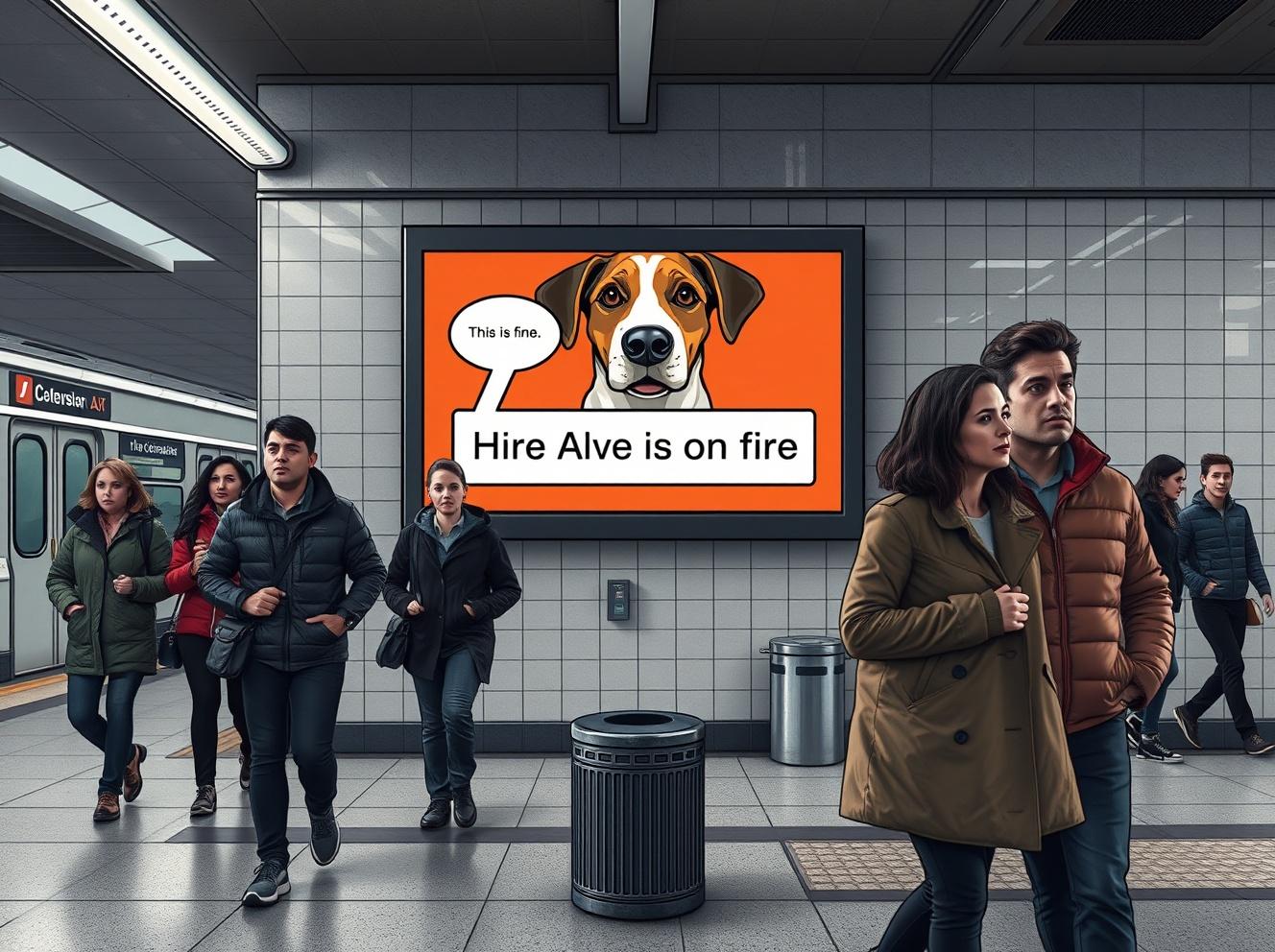
In the version described by TechCrunch, the dog still sits smiling amid flames, but the speech bubble reads, “[M]y pipeline is on fire,” and an overlaid message urges passersby to “Hire Ava the AI BDR.”
Green said in a Bluesky post that he “never agreed to its use,” and TechCrunch reported that he told followers it “has been stolen like AI steals” and that they should “please vandalize it if and when you see it.”
Bitcoin World reported that Green discovered the ad through a Bluesky post and said he is now “looking into legal representation.”
The dispute traces back to Green’s original publication of “This is fine” in 2013 on his webcomic “Gunshow,” with TechCrunch noting that “This is fine” first appeared in Green’s webcomic “Gunshow” in 2013.
Artisan, when contacted by Bitcoin World, said it “has a lot of respect for KC Green” and claimed it had scheduled a conversation with him, according to the same outlet.
What the Ad Changed
Across the coverage, the subway advertisement is described as a direct alteration of Green’s “This is fine” comic, with the flames and smiling dog retained while the text and marketing overlay are changed to fit Artisan’s product.
Bitcoin World described the ad as modifying Green’s iconic comic to promote an AI sales tool, with the dog’s speech bubble now reading, ‘[M]y pipeline is on fire,’ and a message below urging commuters to ‘Hire Ava the AI BDR.’

TechCrunch similarly reported that a Bluesky post showed an ad in a subway station featuring Green’s art, except the dog says, “[M]y pipeline is on fire,” and an overlaid message urges passersby to “Hire Ava the AI BDR.”
In the same TechCrunch account, Green said he’s “been getting more folks telling me about this” and that “it’s not anything [I] agreed to,” framing the issue as unauthorized use rather than a mere inspiration.
Bitcoin World added that Green has not licensed the meme for commercial use by AI companies, and it described the meme’s widespread recognition as a “prime target for unauthorized use.”
The dispute also ties the ad to Artisan’s broader marketing style, because TechCrunch noted that Artisan has courted controversy with billboards urging businesses to “Stop hiring humans.”
Bitcoin World likewise said that earlier in 2026 the company placed billboards telling businesses to ‘Stop hiring humans.’
Green’s Escalation and Artisan’s Reply
Green’s response moved quickly from public accusation to a legal posture, while Artisan’s replies emphasized respect and direct contact.
“You’ve seen this comic before: An anthropomorphic dog sits smiling, surrounded by flames, and says, “This is fine”
TechCrunch reported that when it sent Artisan an email asking about the ad, the company said, “We have a lot of respect for KC Green and his work, and we’re reaching out to him directly.”
In a follow-up email, TechCrunch said Artisan told it it had scheduled time to speak with him.
Bitcoin World likewise said that when contacted by the outlet, Artisan initially said it “has a lot of respect for KC Green” and was reaching out directly, and that in a follow-up the company claimed it had scheduled a conversation with him.
Green, however, told Bitcoin World he is now “looking into legal representation,” and TechCrunch reported that he will be “looking into [legal] representation, as I feel I have to.”
In TechCrunch’s account, Green said the legal process “takes the wind out of my sails” because he has to take “time out of my life to try my hand at the American court system instead of putting that back into what I am passionate about, which is drawing comics and stories.”
Green also framed the dispute as a broader message to the industry, telling TechCrunch that “These no-thought A.I. losers aren’t untouchable and memes just don’t come out of thin air.”
Legal and IP Stakes
The dispute is framed by multiple outlets as a test of how copyright law applies to specific expressions used in commercial advertising, especially when the user is an AI company.
Bitcoin World described legal experts as noting that copyright law protects specific expressions, not ideas, and it said Green’s comic is a fixed, original work that gives him legal standing.
The same outlet said proving damages from a single ad can be challenging, while also stating that some experts suggest Green may seek a licensing fee or an injunction to remove the ads.
Intellectia AI echoed the idea of escalation, stating that Green “may file a copyright infringement lawsuit against Artisan,” and it described the outcome as potentially setting a precedent for how AI companies legally use internet art.
The Tech Buzz outlet described the clash as “growing tensions between artists and AI companies over intellectual property rights,” and it asserted that “there’s nothing murky about using someone’s existing artwork in an advertisement without permission—that’s straightforward copyright infringement, AI or not.”
TechCrunch added a concrete example of prior artist action, saying that cartoonist Matt Furie sued right-wing conspiracy theory site Infowars for using his character Pepe the Frog in a poster and that Furie and Infowars eventually settled.
Within that broader context, Bitcoin World argued that Green’s situation is “distinct because Artisan directly copied his specific artwork, not just a style,” strengthening the infringement claim as described by that outlet.
Broader Industry Fallout
Beyond the immediate claim, the sources describe the episode as part of a larger struggle over creator rights and AI marketing, with Green’s public callout positioned as a signal to other artists and AI startups.
“KC Green, the artist behind the viral ‘This is fine’ meme, has publicly accused AI startup Artisan of stealing his artwork for a new subway advertisement”
Bitcoin World said the Artisan controversy “reignites debates about intellectual property and AI-generated content in 2026,” and it described the broader pattern of AI startups scraping online content, including art, to train models or create marketing materials.
It also stated that artists argue this amounts to theft, as their work is used without compensation or consent, and it referenced that in 2025 “several class-action lawsuits were filed against AI image generators, though few have reached verdicts.”
The Tech Buzz outlet framed the case as “a test case for how the AI industry will handle intellectual property as it scales,” and it tied the dispute to Artisan’s earlier billboard messaging about “Stop hiring humans.”
TechCrunch similarly described the ad as part of “an escalating war between creatives and AI companies over who owns what in the age of machine learning,” while also noting that Green is “far from the only artist to see his meme-able art used in ways he finds objectionable.”
In the same TechCrunch account, Green’s instruction to followers—“please vandalize it if and when you see it”—is presented as a tactic for creators to expose unauthorized use and pressure companies.
Taken together, the sources depict a dispute that could influence how AI companies approach advertising and how creators respond when their work is used commercially without permission.
More on Technology and Science

Tropical Storm Arthur Moves Inland Near Matagorda County, Texas, Threatening Life-Threatening Flooding
11 sources compared
G7 Leaders Discuss Ukraine, Middle East, China Supply Chains, and U.S. AI Export Controls
10 sources compared
Google Rolls Out Android 17 to Pixel Phones With Wear OS 7 Update
16 sources compared

Keir Starmer Announces U.K. Ban On Social Media For Children Under 16
12 sources compared