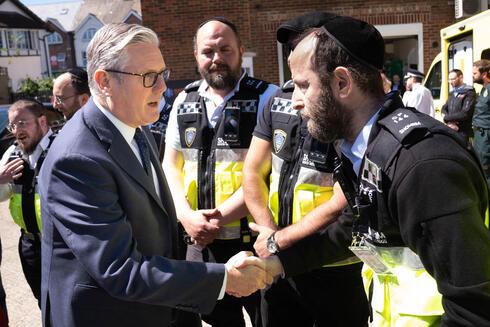
Keir Starmer Says UK Could Ban Some Pro-Palestine Marches Over “Globalise the Intifada” Chants
Key Takeaways
- Starmer says some pro-Palestinian marches could be banned.
- Chants like globalise the intifada could be prosecuted.
- Two Jewish men were stabbed in Golders Green.
Starmer’s ban threat
British Prime Minister Keir Starmer said some pro-Palestine marches in the United Kingdom could be banned or face restrictions, particularly when demonstrators chant “globalise the Intifada.”
In an interview broadcast by the BBC on Saturday, Starmer said, “I’m a big defender of freedom of expression, peaceful protests,” but added, “But when there are chants like ‘globalise the Intifada’, that’s completely off limits.”
Starmer told the BBC Radio 4 Today programme, “I think certainly the first, and I think there are instances for the latter,” when asked whether tougher policing of language or stopping protests altogether was needed.
The remarks came after Starmer earlier this week called the chant “globalise the Intifada” a case of “extreme racism” and said those who use it “should be prosecuted,” according to Al Jazeera.
The Guardian reported Starmer indicated he wanted language expressed on some protest marches subjected to “tougher action,” while also saying he would not interfere in day-to-day policing.
Starmer’s position was echoed by other outlets describing his comments as a move toward “tougher action” and “instances” where marches could be stopped altogether.
The Golders Green trigger
Starmer’s push for tougher action on pro-Palestine protests was tied in the reporting to the stabbing of two Jewish men in Golders Green, a north London suburb with a large Jewish community.
Al Jazeera said a 45-year-old British national who was born in Somalia was remanded in custody when he made his first appearance in court on Friday, accused of attempted murder, after the stabbing of two Jewish men.
The BBC similarly reported that Essa Suleiman, 45, appeared in court on Friday charged with attempted murder over the attack in Golders Green, and that the attack had been declared a terror incident by police.
WRAL described the same stabbing as “the stabbings of two Jewish men in London,” and said police called the attack an act of terrorism.
The Guardian added that Starmer’s comments came as Mark Rowley, the Metropolitan police commissioner, said a “dangerous and troubling” mix of hate crimes, terrorism and hostile states was creating a “terrifying atmosphere for British Jews.”
In the same coverage, Starmer was also described as visiting the scene of the attacks and a Jewish volunteer ambulance service on Thursday, where he was booed by some locals who accused him of not doing enough to protect them, according to Al Jazeera.
Police, threat levels, and “cumulative effect”
Alongside Starmer’s language-focused approach, the reporting emphasized the role of policing and threat assessments in shaping the government’s stance.
“British Prime Minister Keir Starmer says some pro-Palestine marches could be banned and people who use the phrase “globalise the Intifada” could be prosecuted”
The Guardian quoted Mark Rowley saying British Jews were on the “hate” list of every racist and extremist group, “whether you’re extreme left, whether you’re Islamist terrorist, whether you’re rightwing terrorist, and some hostile states as well now with some sort of Iranian-related threats.”
Rowley added, “There’s a sort of ghastly Venn diagram that they’re at the middle of,” and warned, “What troubles me is that this isn’t just about a few racist idiots, this is standing on something that is more embedded in society that isn’t being challenged.”
WRAL reported that Britain’s official terror threat level was raised from substantial to severe after Wednesday’s stabbing attack, and said severe is the second-highest on a five-point scale.
Reuters, via Internazionale, described Starmer’s rationale as the “cumulative effect” the demonstrations had on the Jewish community after the stabbing of two Jewish men in London.
In the BBC’s account, Starmer said he was concerned about the “cumulative” effect of repeated marches on the Jewish community, and he said, “Now, I accept that, which is why we intend to deal with cumulative effects.”
Opposition and civil-liberties pushback
Campaign groups and political figures criticized the idea that pro-Palestine marches should be banned, arguing that such steps would suppress legitimate protest.
Middle East Eye reported that a pro-Palestine coalition condemned Starmer for suggesting a ban on marches, with the Palestine Solidarity Campaign, Stop the War Coalition, Friends of Al-Aqsa and other groups stating on Friday night that “the right to protest is a fundamental freedom.”

The same outlet quoted the Palestine Solidarity Campaign saying, “These calls dangerously conflate Jewish people with the state of Israel and peaceful political protest with unconnected violent acts. We utterly reject both.”
Middle East Eye also included a direct rejection from Stop the War Coalition convenor Lindsey German, who told MEE: “Keir Starmer talks about banning marches and slogans, falsely claiming they increase threats of antisemitism.”
Nick Dearden, director of Global Justice Now, told MEE: “Starmer's interview this weekend is as cynical as it is dangerous,” and said, “Instead of lowering the heat and fostering unity, he is fostering division in a desperate attempt to avoid electoral defeat.”
In the BBC’s account, Green Party leader Zack Polanski said Starmer was “using the pain and fear of Jewish people to threaten further authoritarian restrictions on peaceful protest,” and said, “This would be the worst response to the attacks in Golders Green and would just produce more division when it's the job of responsible leaders to bring people together.”
Arrests over Palestine Action
While Starmer discussed potential bans and tougher action on chants, separate reporting described mass arrests tied to a specific banned organization, Palestine Action.
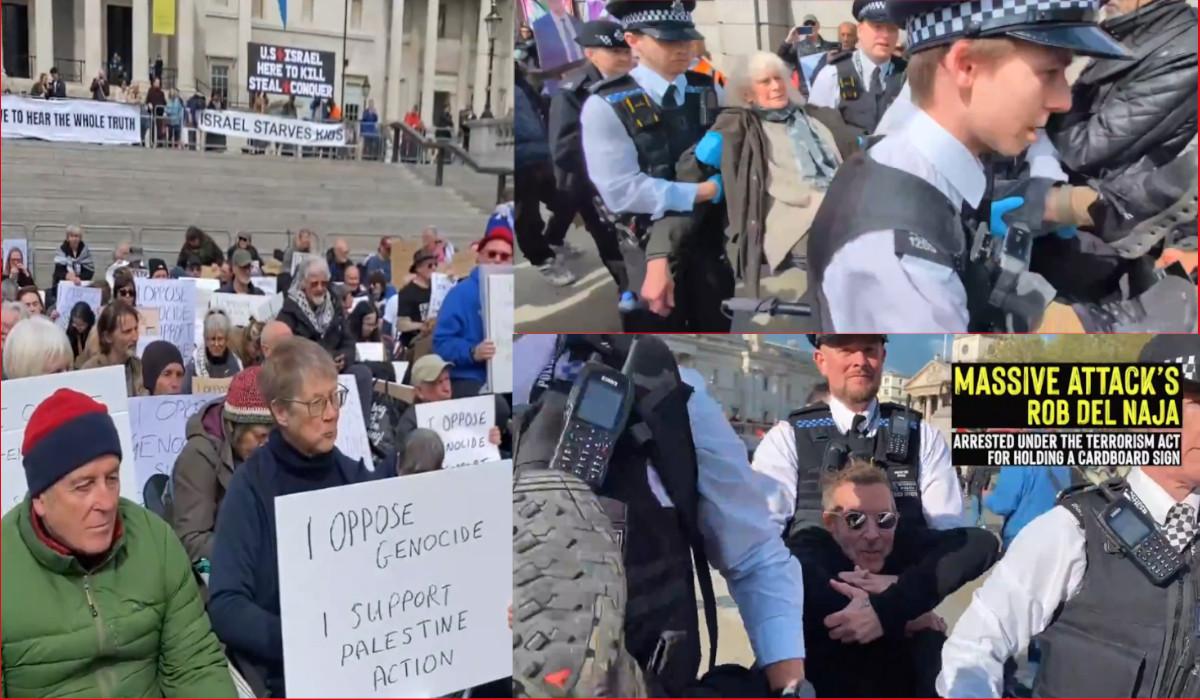
Ouest-France reported that London police arrested 523 people Saturday at a rally in support of Palestine Action, citing police, and said the group was banned last July by the government after acts of vandalism carried out by its militants, notably at an Air Force base.

The same report said hundreds gathered at noon in Trafalgar Square for a silent rally, a kind of peaceful sit-in, during which many carried the banned sign “I oppose genocide, I support Palestine Action.”
France 24 reported that more than 500 protesters supporting Palestine Action were arrested Saturday in central London during a rally aimed at lifting the ban, and said the police of London’s capital posted that a total of 523 people had been apprehended, with ages ranging from 18 to 87.
Le Monde similarly said police made 523 arrests of people aged 18 to 87, and reported that among those arrested was Robert Del Naja, the singer and member of the British group Massive Attack, who was sitting with a sign reading “I Support Palestine Action” and who was then escorted away by three officers, according to the Press Association (PA).
Le Monde also quoted Amnesty International UK on X saying, “The Metropolitan Police had then rightly said it would stop making arrests,” but that it “has today returned to its former policy, which failed: mass arrests of people brandishing signs, including today a woman aged with canes,” and Amnesty added, “this is not maintaining public order,” but “the state criminalizes dissent.”
More on Protests
Thousands Join May Day Economic Blackout Against President Donald Trump’s Policies Across U.S.
25 sources compared
Auckland Local Board Rejects Japanese “Comfort Women” Statue Proposal at Barry’s Point Reserve
10 sources compared

Protester Throws Red Liquid at Iran Exiled Crown Prince Reza Pahlavi in Berlin
25 sources compared

Wisconsin Police Fire Tear Gas And Rubber Bullets As Activists Storm Ridglan Farms
34 sources compared