Iran-Israel01 February, 20262 min read
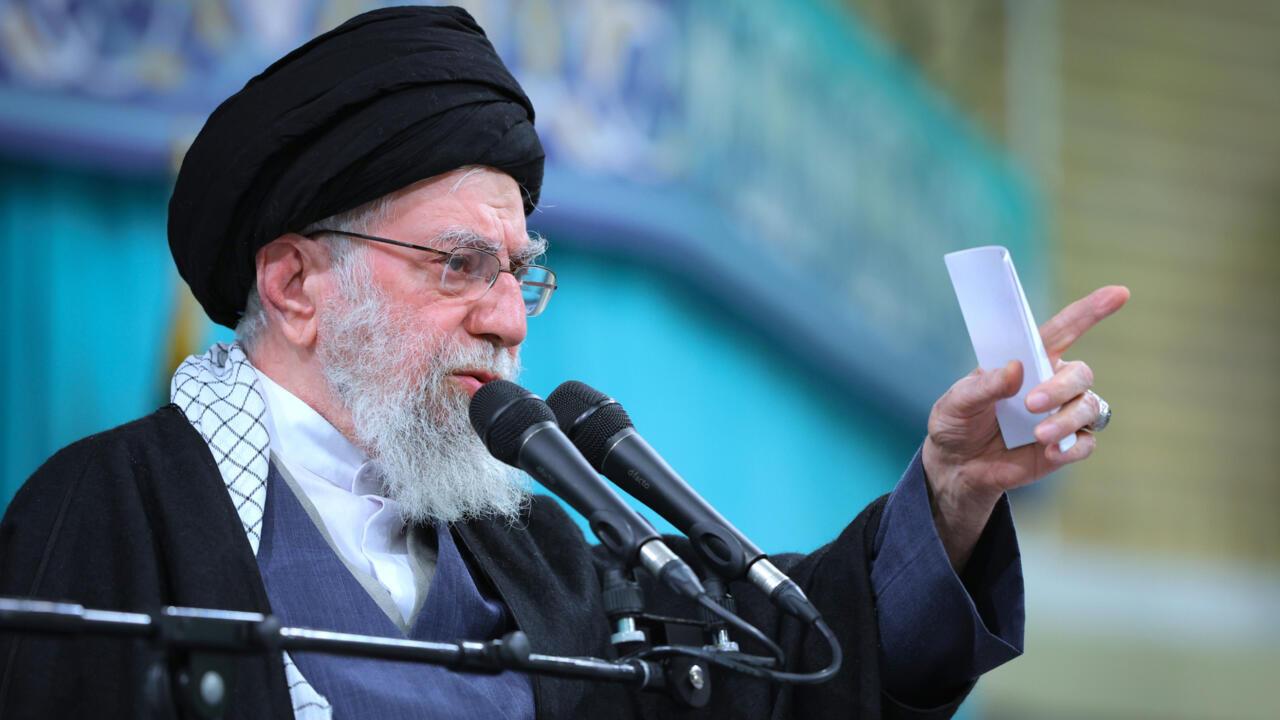
Khamenei Warns Trump Any US Attack Will Trigger Regional War
This article is an automated aggregation of coverage from news outlets. Our editorials offer in-depth analysis curated by the NewsCord team.
Khamenei warned any U.S. attack on Iran would trigger a regional war U.S. sent the USS Abraham Lincoln carrier strike group toward Iran
13 outlets told this the same way.
Outlets did split on U.S. Intercepts Iran Message Activating Sleeper Cells After U.S.-Israel Strike Kills Khamenei →
US-Iran military tensions
Iran’s supreme leader Ayatollah Ali Khamenei publicly warned that any US military strike on Iran would trigger a wider conflict, saying such an attack would lead to "a regional war." The warning came amid heightened tensions after Tehran’s violent response to nationwide protests and US threats of force. US naval assets, including the aircraft carrier USS Abraham Lincoln, were deployed to the region as Washington weighed possible strikes.
“Iran’s supreme leader Ayatollah Ali Khamenei warned that any U.S. military attack would spark a ‘regional war,’ sharply escalating tensions after President Donald Trump threatened possible action.”
Iranian officials announced exercises in and around the Strait of Hormuz. The US Central Command cautioned Iran not to threaten American forces or disrupt commercial shipping.

Military escalation and maritime risks
Military maneuvers on both sides intensified the immediate risk. Reports said US forces struck three Iranian nuclear sites during the conflict phase. Activity at some sites suggested Iran may be trying to obscure damage from satellites while salvaging what remained.
Iran announced live-fire drills in the Strait of Hormuz, a choke point for roughly one-fifth of global traded oil. The US Central Command explicitly warned against threats to American forces or disruptions to commercial shipping. Washington also sent an aircraft carrier group to the Arabian Sea, underscoring the military dimension of the standoff.

US-Iran negotiation signals
Despite escalatory rhetoric, both sides publicly signalled at least the possibility of negotiations. President Trump, while declining to confirm whether he would order further action, urged Iran to negotiate what he called a "satisfactory" deal and asserted that Iran was "seriously talking" to the US. Iran's top security official Ali Larijani wrote that "structural arrangements for negotiations are progressing," even as Supreme Leader Khamenei repeatedly ruled out direct talks and warned against U.S. aggression.
“President Trump declined to say directly whether Tehran would be emboldened if the US held back from launching strikes, saying only 'Some people think that. Some people don’t.' He urged Iran to negotiate a 'satisfactory' deal... adding that 'they are talking to us. Seriously talking to us.'”
Tehran political reactions
Domestic politics in Tehran coloured the rhetoric. Iranian parliamentarians staged a show of defiance after the EU listed the Islamic Revolutionary Guard Corps as a terrorist organisation. Speaker Mohammad Bagher Qalibaf said Iran now views all EU militaries as 'terror groups'.
Lawmakers donned Guard uniforms and chanted anti-US and anti-Israel slogans. Supreme Leader Khamenei framed recent anti-government unrest as akin to a 'coup'. That stance underscored the regime's security focus and its sensitivity to external pressure amid internal dissent.
Escalation risk assessments
Analysts and regional actors offered differing assessments of the risks. Some reports pointed to concrete military preparations and previous strikes on suspected nuclear infrastructure as evidence of a dangerous trajectory, while other coverage framed the naval movements, military meetings and diplomatic posturing as pressure meant to deter rather than the prelude to an inevitable wider war. Officials on both sides nonetheless warned that any miscalculation could rapidly broaden the confrontation.
“U.S. forces struck three Iranian nuclear sites during the war; activity at two sites suggests Iran may be trying to hide damage from satellites while salvaging what remains.”