Full Analysis Summary
Search for Nancy Guthrie
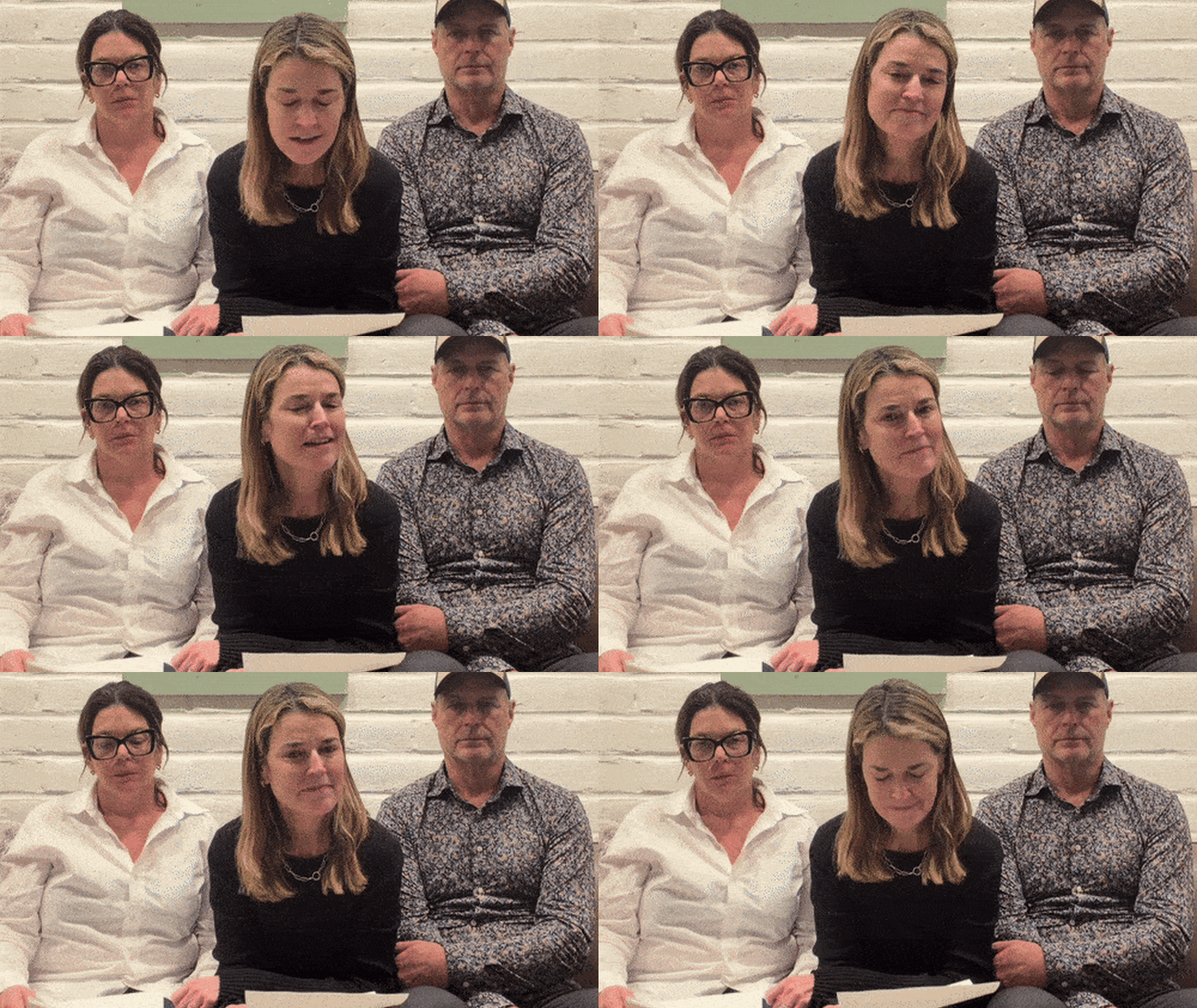
Investigators say Nancy Guthrie, 84, the mother of Today co-anchor Savannah Guthrie, was abducted from her Tucson-area home on Jan. 31.
They believe she is still alive four days later.
Relatives reported her missing the day after she was last seen being dropped off at home.
She requires daily medication and has severely limited mobility.
This account of the abduction and her medical vulnerabilities has driven an intensified search by law enforcement.
Coverage Differences
Topic Focus
SMH.au (Other): Frame centers on a single, high-profile kidnapping: detailed timeline, police and FBI actions, ransom note and urgent family appeals. | CNN (Western Mainstream): Focuses on systemic missing-persons crisis in Mexico and the use of AI tools as a response, rather than a single criminal case. | KQ2 (Local Western): Republishes and highlights the CNN story about AI initiatives and collective efforts addressing many disappearances across Mexico, not an individual abduction elsewhere.
Investigation into Guthrie's disappearance
Evidence recovered at the scene includes blood on the front porch that DNA testing confirmed came from Guthrie.
Investigators say the home’s doorbell camera was disabled and her pacemaker app was disconnected in the predawn hours when the kidnapping likely occurred.
The FBI and Pima County detectives have intensified the search, assigned homicide investigators despite there being no body, and offered a $50,000 reward as they pursue leads.
Coverage Differences
Tone/Urgency
SMH.au (Other): Urgent, emotional, law-enforcement-driven tone emphasizing immediate danger and direct appeals to kidnappers and the public. | CNN (Western Mainstream): Measured, explanatory tone focused on describing tools, programs and policy context rather than urgent appeals tied to a single case. | KQ2 (Local Western): Also adopts an explanatory, empathetic tone focused on families using new technologies to raise awareness, rather than immediate law-enforcement urgency.
Ransom demand and investigation
A ransom letter sent to media outlets set two deadlines and reportedly demanded "millions" in cryptocurrency.
The first deadline has lapsed and investigators say the letter's authenticity is under review, with no verified contact yet from whoever wrote it.
Investigators have also made one arrest in connection with an apparent impostor ransom demand.
Family members have publicly pleaded for proof that Nancy is alive and for direct communication with her captors.
Coverage Differences
Individual vs Systemic
SMH.au (Other): Narrative frames a single missing-person case (Nancy Guthrie) with granular investigative details and family impact. | CNN (Western Mainstream): Situates disappearances as a nationwide, longstanding problem in Mexico with large-scale statistics and institutional critiques. | KQ2 (Local Western): Echoes the systemic framing: emphasizes the widespread scale of disappearances and collective family efforts to respond across regions.
Investigation updates on Nancy
Key facts remain unclear and under active investigation.
Authorities have assigned homicide investigators despite the absence of a recovered body.
The ransom letter’s provenance is still being evaluated.
There has been no verified direct contact from the alleged kidnappers.
Law enforcement continues an intensified search while family members press publicly for evidence of Nancy’s condition.
Media outlets have sought further details, but per available reporting some requests to authorities have not yet been answered.
Coverage Differences
Solutions vs Investigation Detail
SMH.au (Other): Emphasizes investigative actions, forensic evidence, ransom deadlines, a monetary reward and direct police messaging to potential captors. | CNN (Western Mainstream): Details technical AI solutions (tattoo identification, document parsing, age-progression), how they work and where they are being implemented as part of broader search strategies. | KQ2 (Local Western): Highlights rapid operational adoption of AI tools in specific Mexican states and demonstrates practical use-cases (tattoo search, cross-referencing databases) rather than focusing on law enforcement forensic minutiae of a single case.