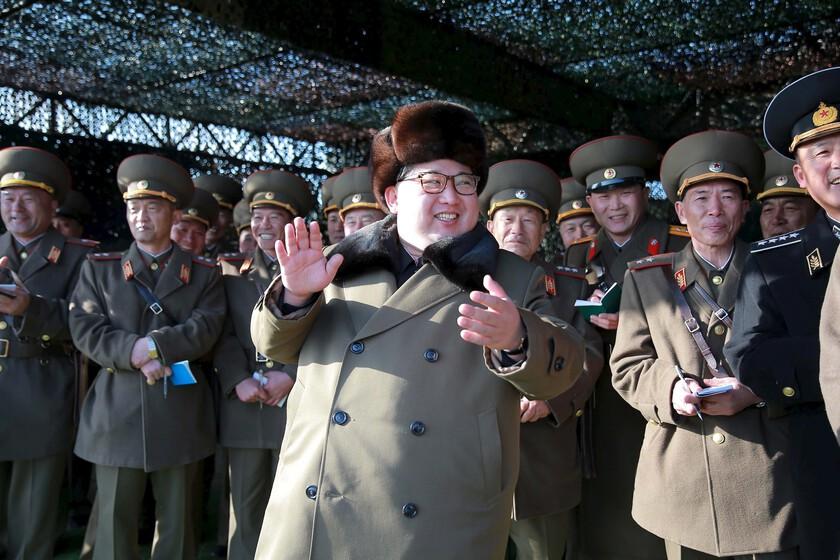
Kim Jong Un Praises North Korean Soldiers Who Self-Blasted To Avoid Capture In Kursk
Key Takeaways
- Kim Jong Un praised North Korean soldiers who self-detonated to avoid capture in Kursk.
- He called those soldiers heroes and described it as a battlefield policy.
- Reports indicate North Korea sent thousands of troops to support Russia in Ukraine's Kursk region.
Kim’s “self-blasting” praise
North Korean leader Kim Jong Un publicly praised North Korean soldiers who killed themselves by detonating grenades to avoid capture while fighting for Russia against Ukraine, confirming a long-suspected battlefield policy, according to BBC reporting.
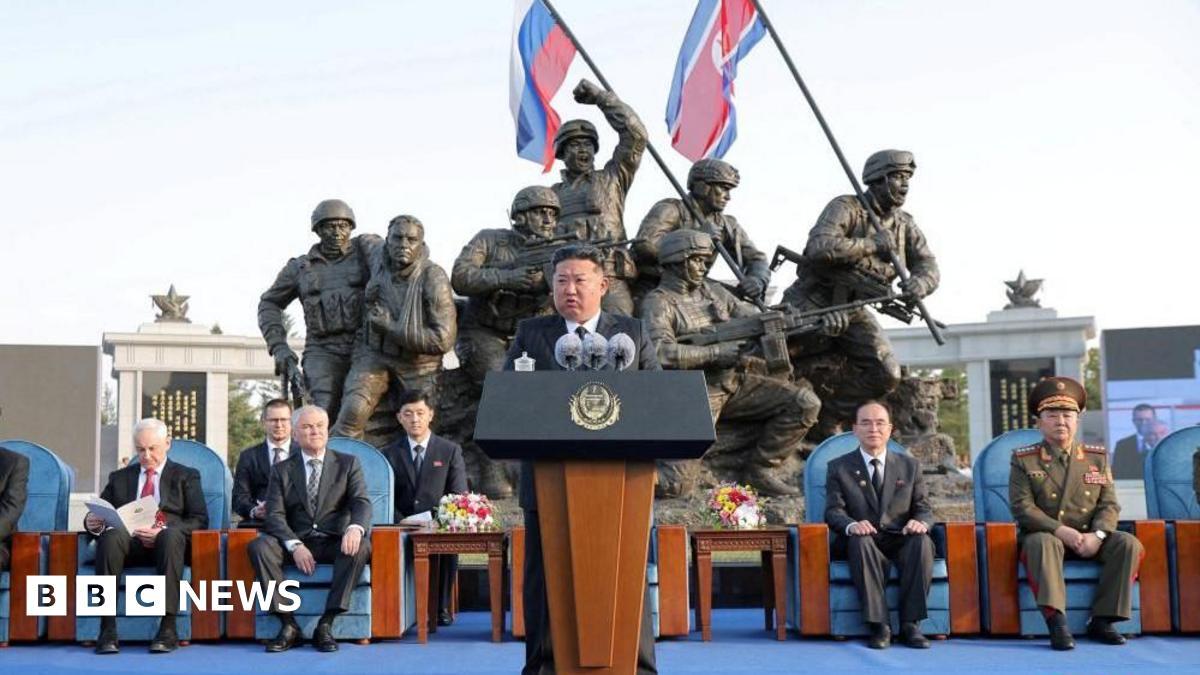
In a speech this week, Kim said those who “unhesitatingly opted for self-blasting, suicide attack, in order to defend the great honour” were “heroes,” and he added that “Their self-sacrifice expecting no compensation, and the devotion expecting no reward... This [is] the definition of the height of loyalty of our army,” as KCNA state media reported.

The BBC said Kim made the remarks in Pyongyang on Monday as he unveiled a memorial for fallen troops, and it reported that Russian Defence Minister Andrey Belousov and the speaker of Russia's parliament, Vyacheslav Volodin, attended the event.
The BBC also tied the remarks to a broader pattern of North Korean doctrine, saying that in North Korea, soldiers are taught that being captured is an act of treason.
The BBC further reported that South Korea’s National Intelligence Service said last year it found memos on deceased North Korean soldiers that point to this extreme practice.
The Guardian similarly reported that Kim praised North Korean soldiers who “blew themselves up with grenades in order to avoid capture while fighting Ukrainian forces in Russia’s western Kursk region,” and it said the remarks were made at a completion ceremony for a memorial honouring North Korean soldiers.
Across the accounts, the core claim is the same: Kim’s praise frames suicide-by-explosive tactics as loyalty and honour while fighting in Russia’s western Kursk region.
Kursk deployment and losses
The BBC reported that South Korea estimates at least 15,000 North Koreans have been sent to help Russia recapture parts of western Kursk, while it said more than 6,000 have been killed so far, and it emphasized that neither Pyongyang nor Moscow has confirmed the numbers.
It also said intelligence agencies and defectors have told it the soldiers were under Pyongyang’s orders to kill themselves rather than be taken prisoner by Ukraine.
The Guardian put the deployment figure at about 14,000 elite troops sent in 2024 and said they were sent into battle around the border town of Sudzha, which Ukrainian forces captured that summer in a surprise mini counter-invasion.
The Guardian also said that according to South Korean and Ukrainian officials, more than 6,000 North Koreans were killed in intense fighting, and it reported that two North Koreans were captured and are being held as prisoners of war in the Ukrainian capital, Kyiv.
The Guardian described how both captured men had tried to blow themselves up but had been unable to do so because of their severe injuries, and it said one expressed guilt at his failure to carry out orders.
Business Insider’s account, citing state media and a Bloomberg report, said Western and South Korean officials estimated that Pyongyang sent between 10,000 and 14,000 elite infantry to help the Kremlin retake areas of Kursk, and it described the same general casualty range by saying that by the time Russia retook Kursk in early 2025, Ukrainian and South Korean officials estimated around 6,000 North Korean soldiers were killed or wounded.
The BBC also added that Kim’s speech came as he unveiled a memorial in Pyongyang and that North Korea promised besides sending soldiers to send thousands of workers to help rebuild Kursk.
Voices: Zelenskyy, defectors, and captured POWs
The sources also connect Kim’s praise to earlier claims by Ukrainian officials and to testimony from prisoners of war.
“- Published Kim Jong Un has praised North Korean soldiers who killed themselves by detonating their grenades while fighting for Russia against Ukraine, confirming a long-suspected battlefield policy”
Business Insider quoted Ukrainian President Volodymyr Zelenskyy as saying in December 2024, “We see that Russian military personnel and North Korean supervisors are not at all interested in the survival of North Koreans,” and it added that “Everything is done in a way that makes it impossible for us to take Koreans prisoner.”
In the BBC account, South Korean broadcaster MBC aired a programme featuring two North Korean prisoners of war in Ukraine, and one prisoner said on camera, “Everyone else blew themselves up. I failed,” describing his regret at not taking his own life.
The BBC also said Seoul's National Intelligence Service found memos on deceased North Korean soldiers that point to this extreme practice, reinforcing the idea that the policy is not only anecdotal.
The Guardian described the two captured North Koreans held as prisoners of war in Kyiv and said both had tried to blow themselves up but had been unable to do so because of their severe injuries, and it reported that one expressed guilt at his failure to carry out orders.
The Guardian also included Kim’s own framing of the policy, quoting him that “It is not only the heroes who unhesitatingly chose the path of self-destruction and suicide to defend great honour, but also those who fell while charging at the forefront of assault battles,” and it added that Kim said those who survived were also patriots.
Across these accounts, the voices range from Ukrainian leadership to South Korean intelligence and broadcasters, to defectors and prisoners, and they collectively describe a battlefield system designed to prevent capture.
How outlets frame the same event
While all the accounts revolve around Kim’s praise and the Kursk battlefield context, they frame the significance differently through emphasis on confirmation, evidence, and implications.
The BBC presents Kim’s remarks as “confirming a long-suspected battlefield policy,” and it foregrounds the memorial setting in Pyongyang and the attendance of Russian officials, including Andrey Belousov and Vyacheslav Volodin.
The Guardian also says Kim’s speech “confirm[ed] the existence of the extreme battlefield policy,” but it emphasizes “Mounting evidence, including from intelligence reports and testimonies of defectors,” and it ties the policy to earlier Ukrainian observations and to the 2024 deployment around Sudzha.
Business Insider likewise treats Kim’s comments as confirmation, but it explicitly links the speech to “two grisly tactics that Ukraine said it observed in 2024,” and it uses Zelenskyy’s December 2024 quote to anchor the earlier Ukrainian claim.
The Independent asks “What is Kim Jong Un’s ‘self-destruct’ policy for North Korean soldiers in Ukraine?” and it describes Kim’s acknowledgement as coming during the inauguration of a memorial museum in Pyongyang dedicated to North Korean troops killed while fighting in Russia's war against Ukraine.
The European Conservative similarly frames the event as Kim hailing “Heroic” suicide soldiers who avoided capture, and it repeats the estimate that North Korea sent an estimated 14,000 troops to assist Russian forces in the region.
EDNEWS describes Kim’s remarks as “self-sacrifice” and says the speech “confirmed what analysts have long suspected,” while also naming the Kursk region and the grenade-detonation mechanism.
Stakes: Russia-North Korea ties
The stakes described by the sources extend beyond the battlefield tactic itself to the broader Russia–North Korea relationship and the future of the war effort.
“- Kim Jong Un said this week that his troops really were killing themselves to avoid capture in Kursk”
The Guardian reported that Pyongyang has sent “millions of artillery shells and large numbers of short-range ballistic missiles to Russia,” and it said that in return, it has received “economic and military technology assistance from Moscow,” citing South Korean intelligence assessments.
The BBC similarly said that in June 2024, Russian President Putin and Kim signed a deal pledging that their countries would help each other in the event of “aggression” against either country, and it noted that Kim hailed the treaty as the “strongest ever.”
The BBC also said that besides sending soldiers, North Korea promised to send thousands of workers to help rebuild Kursk, linking the deployment to reconstruction plans.
Business Insider added that Pyongyang’s involvement has raised concerns in the West and South Korea that its troops have gained “invaluable combat experience,” especially in drone warfare, that North Korea could use in other potential conflicts.
The Guardian also described the operational context by saying Russia’s armed forces “recaptured the Ukrainian pocket around Sudzha in spring 2025,” calling the cross-border advance “embarrassing for the Kremlin” and “the first time that foreign tanks had entered Russian territory since the second world war.”
The Independent’s account said North Korea and Russia are set to sign a new military cooperation agreement for 2027-2031, further cementing their defence ties amidst Pyongyang's ongoing missile tests and increased nuclear activities.
More on Russia
Trump Signs Executive Order Expanding Cuba Sanctions, Targeting Foreign Banks And Companies
38 sources compared
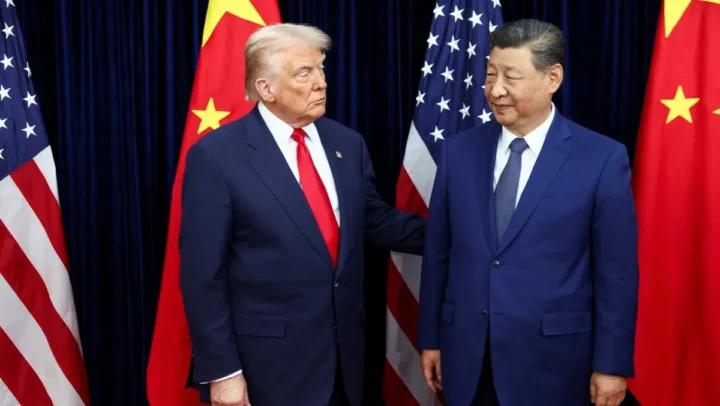
Trump And Xi Jinping Head To Beijing Summit As China Pushes Taiwan Independence Agenda
12 sources compared

Russia’s Africa Corps Withdraws From Kidal After Attacks Kill Mali Defence Minister Sadio Camara
27 sources compared
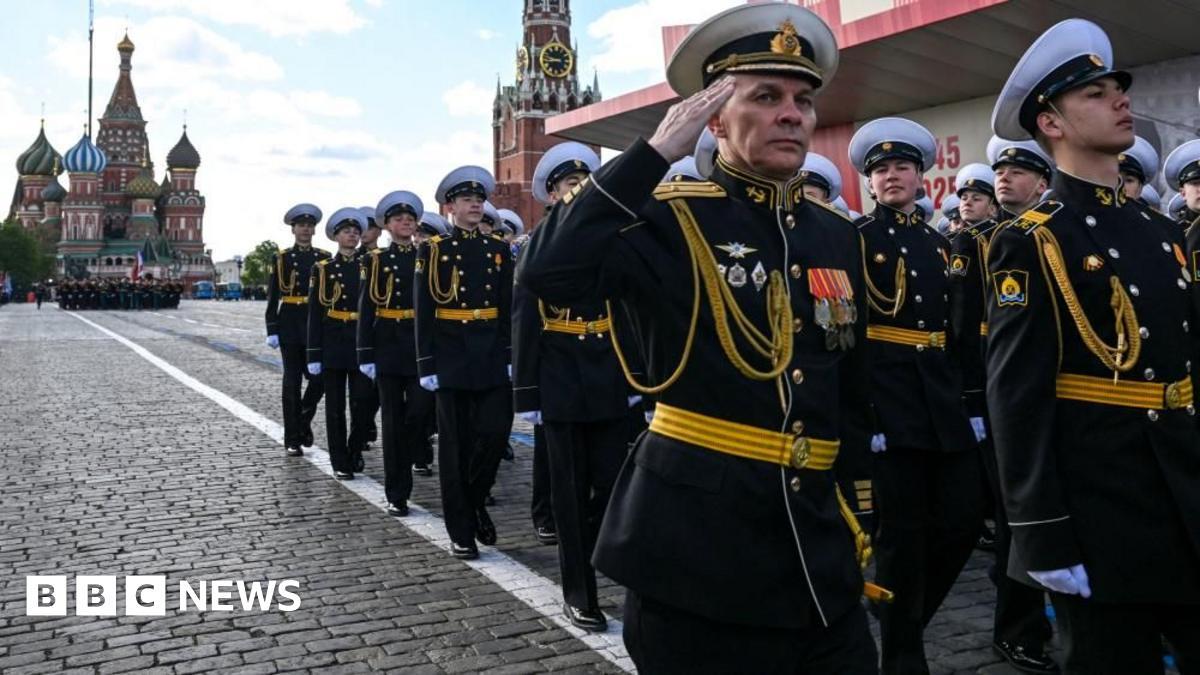
Kremlin Holds May 9 Red Square Victory Day Parade Without Military Equipment, Citing Ukrainian Terrorist Activity
17 sources compared