Full Analysis Summary
Student Suspension Over Activism
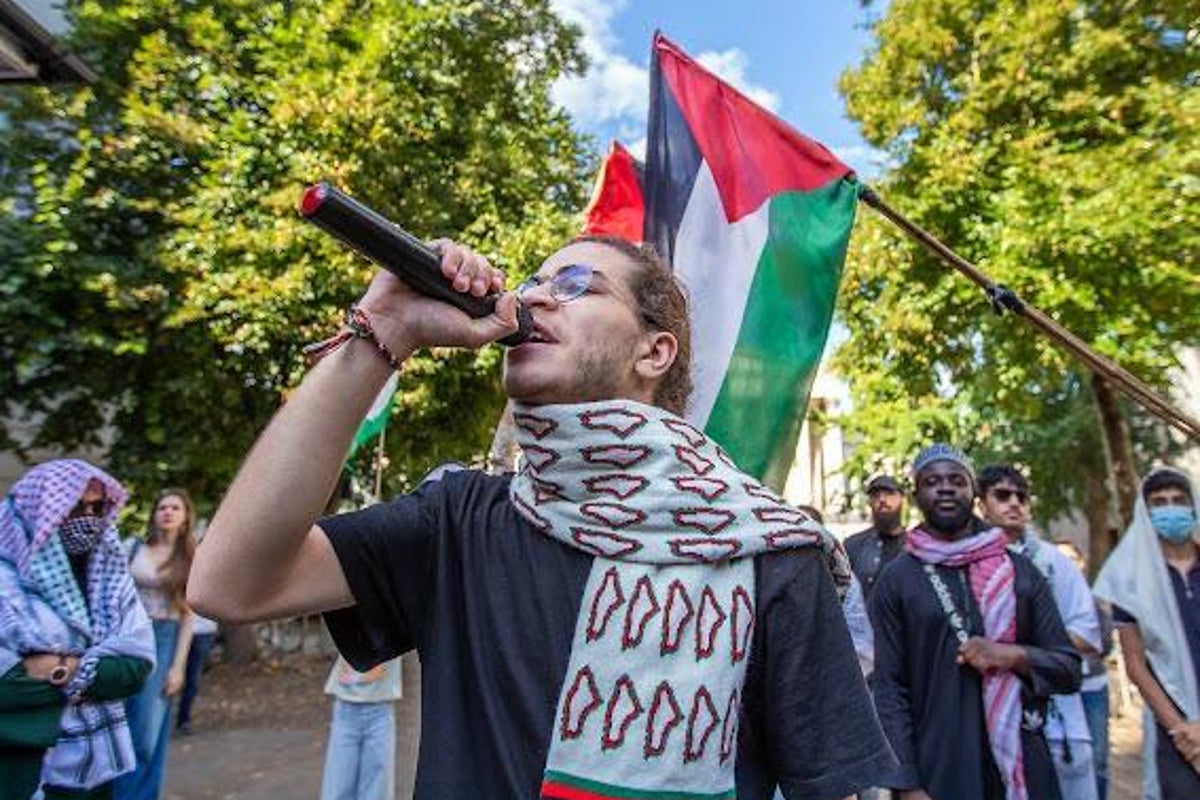
King’s College London (KCL) has indefinitely suspended 21-year-old student and pro-Palestine activist Usama Ghanem.
This suspension also ends his visa sponsorship and exposes him to deportation to Egypt.
The Independent reports that Ghanem fears for his safety if returned, stating he was previously imprisoned and tortured there for political activism.
KCL links the suspension to multiple disciplinary matters, including disrupting a university event related to his Palestine activism.
The university insists it does not discipline students for lawful protest.
Prominent critics, including Jeremy Corbyn and Greta Thunberg, accuse KCL of yielding to pressure from Zionist lobby groups and undermining free speech.
Activists warn that this sets a dangerous precedent for international students who speak up for Palestine.
Coverage Differences
narrative
The Independent (Western Mainstream) centers both the university’s denial and the critics’ claims by reporting KCL’s statement that it does not discipline lawful protest, while also reporting that figures like Jeremy Corbyn and Greta Thunberg accuse KCL of yielding to pressure from Zionist lobby groups and undermining free speech. The piece frames the story around campus discipline and visa jeopardy rather than broader geopolitical context.
missed information
No West Asian or Western Alternative sources are presented in the available material to corroborate, contest, or expand on the allegations of external pressure or the specifics of KCL’s disciplinary process, making it unclear how other media ecosystems frame the case.
Student Deportation Controversy
According to The Independent, Ghanem’s case raises urgent safety and due‑process concerns.
Deportation could return him to a country where he says he was tortured for political activism.
Critics argue that King's College London's disciplinary process effectively weaponises visa sponsorship against a pro‑Palestine student.
The Independent reports that activists warn this sets a dangerous precedent for international students who speak up about Palestine.
It also quotes critics claiming the university has bowed to pressure from pro-Israel lobby groups.
King's College London’s position, as reported, is that its actions are not a punishment for lawful protest.
This highlights a sharp dispute over whether campus rules or external political pressure are driving the outcomes.
Coverage Differences
contradiction
The Independent (Western Mainstream) reports a tension between KCL’s claim that it does not discipline lawful protest and critics’ claims that the disciplinary measures target Palestine activism and reflect pressure from Zionist lobby groups. This juxtaposition highlights an unresolved factual dispute.
missed information
The available reporting does not include detailed procedural documents from KCL’s disciplinary panels or statements from the UK Home Office about visa sponsorship termination, leaving gaps on process standards and legal thresholds.
Controversy Over KCL Free Speech
The Independent reports that the controversy is amplified by prominent public figures and campus free-speech concerns.
Jeremy Corbyn and Greta Thunberg are cited as condemning KCL’s decision, framing it as an attack on free expression under the banner of pro-Palestine advocacy and as succumbing to Zionist lobby influence.
The Independent also notes activists’ warnings about the chilling effect on international students who criticise Israel’s actions in Palestine.
KCL’s reported stance is that disciplinary measures are unrelated to lawful protest itself.
Coverage Differences
tone
The Independent (Western Mainstream) uses direct language by reporting that critics accuse KCL of bowing to Zionist lobby groups and undermining free speech, which amplifies a confrontational tone from the quoted critics. Simultaneously, it maintains institutional balance by reporting KCL’s denial regarding punishment for lawful protest.
unique/off-topic
The available coverage stays focused on UK campus discipline, visa sponsorship, and free speech, rather than expanding into casualty figures or detailed descriptions of Israeli military killings in Gaza, which some outlets might foreground when discussing pro‑Palestine activism contextually.
KCL Suspension and Deportation Risk
Without additional corroborating sources in the provided material, it remains unclear whether KCL’s actions were driven primarily by conduct violations or by external political pressure.
It is also uncertain how UK immigration authorities will treat Ghanem’s visa.
What is clear from The Independent’s reporting is that he faces deportation risk after an indefinite suspension.
He fears returning to a country where he says he was previously tortured.
The case is seen by critics as a test of campus free speech for pro-Palestine students.
Coverage Differences
ambiguity
Key facts remain unresolved in the available reporting: whether the disciplinary actions were proportionate to alleged disruptions; whether visa sponsorship termination followed a defined standard; and what role, if any, external lobbying played. The Independent presents both institutional denials and critics’ allegations without definitive resolution.