
Kona low triggers Hawaii floods as recovery begins
Key Takeaways
- Kona low continues, bringing renewed flooding across Hawaii.
- Dam at risk of failure amid widespread flooding.
- Widespread destruction leaves neighborhoods devastated and residents displaced.
Historic Storm Impact
Back-to-back kona storms have triggered unprecedented flooding across Hawaii, leaving widespread destruction in their wake as the state begins recovery efforts.
These subtropical low-pressure systems brought devastating rainfall and high winds to Oahu and Maui, creating what officials describe as the worst flooding Hawaii has seen in over 20 years.

The storms moved across the island chain after causing widespread destruction, with several mountain locations receiving 20 to 40 inches of rain during what has become Hawaii's heaviest rainstorm in two decades.
Travel Tourister reported historic rainfall totals of 46 inches, marking this as a once-per-decade natural disaster that has severely impacted the islands.
The rare occurrence of two kona storms impacting the islands within the same month, especially in the span of a week, has exacerbated the disaster's severity, according to AccuWeather Senior Meteorologist Alex Sosnowski.
Community Devastation
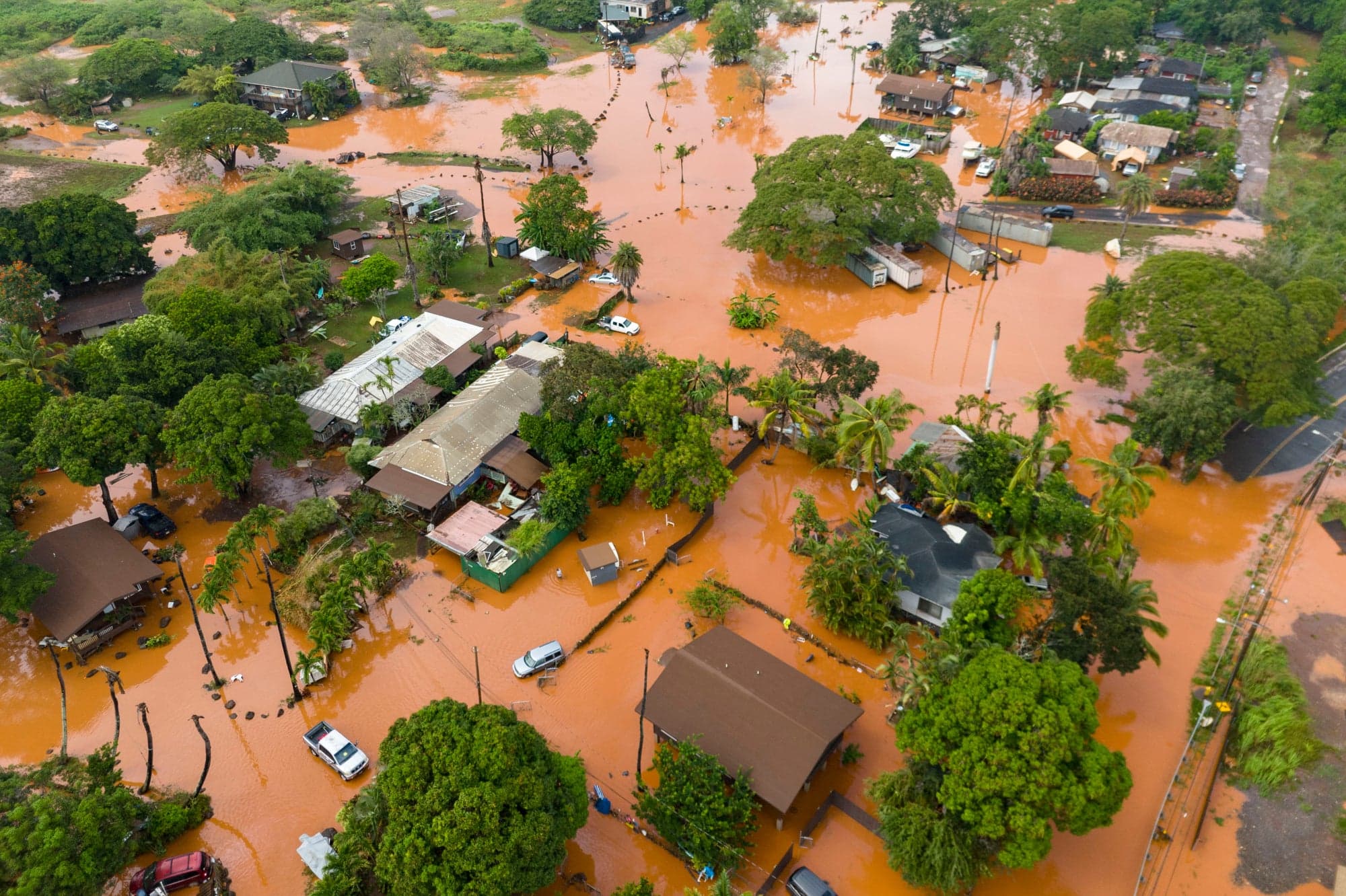
Communities across Hawaii have been devastated by the catastrophic flooding, with residents facing the loss of homes and belongings as floodwaters surged through streets with such force that locals described them as having currents.
On Oahu's North Shore, evacuation orders were issued for 5,500 people who had to flee their homes, with over 200 people rescued from the rising waters.
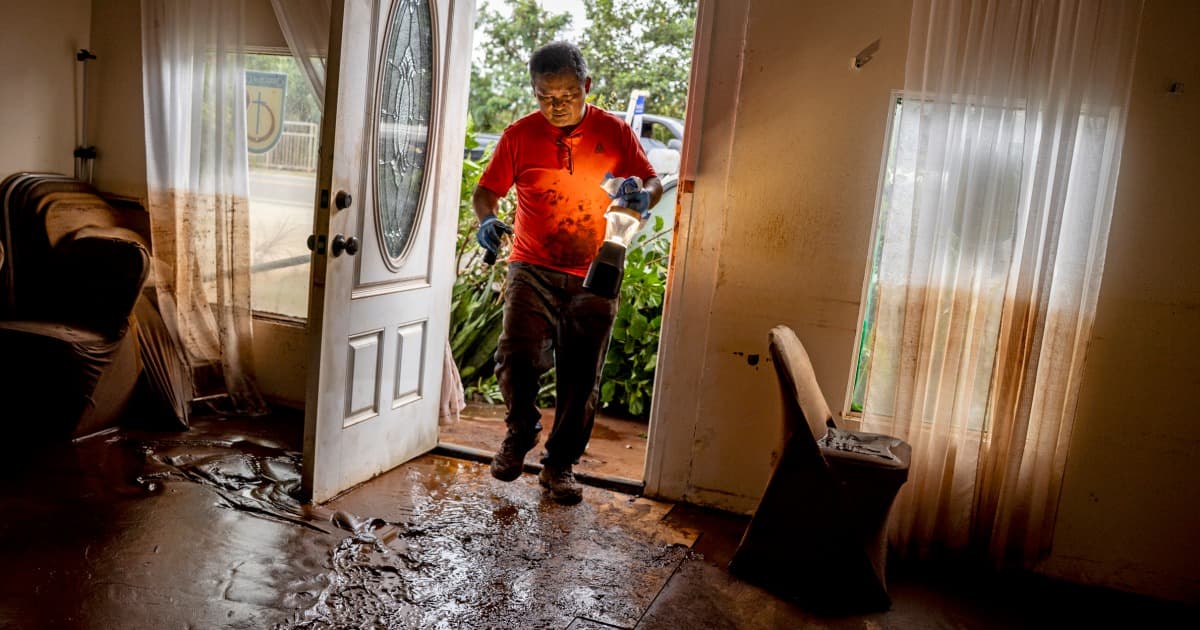
When residents returned, many found their homes completely swept away or submerged under thick mud.
Haleiwa resident Olivia Vergiels returned to find her floor and belongings covered in thick mud, stating 'My house is totally unlivable right now.'
The elderly Wahiawa dam was at risk of imminent failure, with officials warning this could result in 'probable loss of human life' as floodwaters raced through neighborhoods, reaching at least waist-high in some areas and trapping residents in their homes.
Recovery Challenges
As Hawaii begins recovery efforts, residents and authorities face significant challenges with cleanup expected to take months while flood watches and warnings remain in effect across the islands.
“The already battered Hawaiian islands may face more flooding today, with a flood watch still in effect for the Big Island and a flood advisory in Maui issued through Monday afternoon”
On the North Shore communities of Haleiwa and Waialua, locals have come together to help displaced families, with residents described as 'in the street, just shoveling out mud and pulling out soaking debris and doing whatever they can to kind of start drying things out.'
However, many areas remain without power, making recovery efforts more difficult.
Cleanup is likely to take months, according to Mac Burton, who lives in Wailua Beach and has been helping his neighbors.
He noted that 'anything that was, you know, 4 feet or below, it is just completely wiped out,' and that even when water levels recede, homes are left with 'a ton of mud.'
Wood homes that are still standing will face mold and water damage, adding to the recovery challenges.
Economic Impact
The economic impact of the devastating floods is expected to be substantial, with Hawaii Governor Josh Green estimating damages could exceed $1 billion.
The cost includes damage to numerous homes, roads, schools, airports, and a Maui hospital, with repairs to infrastructure facilities and cleanup efforts just beginning.
The tourism industry, a vital part of Hawaii's economy, has been severely affected, with Travel Tourister reporting $50-100 million in hotel losses and 60% of international tourists stranded.
The storms have also impacted Maui particularly hard, with cities like Lahaina and Kahului receiving a year's worth of rain in just a few days, causing Kahului to experience its wettest month on record with nearly 20 inches of rainfall.
The Honolulu Board of Water Supply issued a boil-water notice for North Shore residents, warning of the risks of harmful bacteria, adding to the ongoing challenges faced by affected communities.
Relief Response
Multiple organizations have mobilized to provide assistance to Hawaii residents affected by the flooding, with various relief efforts underway across the state.
The Red Cross has issued urgent calls for volunteers, stating 'If you are in Hawaii and want to help, more volunteers are needed immediately to help with sheltering and community care. No experience needed. Rapid training will be provided.'

The Hawaiian Humane Society is accepting donations of funds or supplies to help people and pets following the disaster, with wishlist items available on Amazon or for in-person drop-off.
The Salvation Army's Hawaiian & Pacific Islands Division has deployed to provide supplies, meals, and other aid to impacted residents.
The Hawaii Community Foundation's Stronger Hawai'i Fund is accepting donations to support statewide disaster preparedness, response, recovery, mitigation, and resilience efforts.
The Hawaii Farmers Union Foundation is also collecting donations to support farmers affected by the flooding, recognizing how quickly disaster can impact agricultural communities and the food system.
More on Technology and Science
UN Says 2025 Heat Will Last Thousands of Years
11 sources compared

UN Warns 2025 Heat Record Will Endure for Thousands of Years
14 sources compared
Hawaii Suffers Its Worst Floods in Over 20 Years, Prompting Thousands to Evacuate
46 sources compared

Kona Low Storms Strike Oʻahu and Maui, Hawaii Faces Worst Flooding in 20 Years
24 sources compared