Technology and Science10 April, 20232 min read
Kuwait News Unveils AI-Generated Presenter Fedha to Read Online Bulletins
This article is an automated aggregation of coverage from news outlets. Our editorials offer in-depth analysis curated by the NewsCord team.
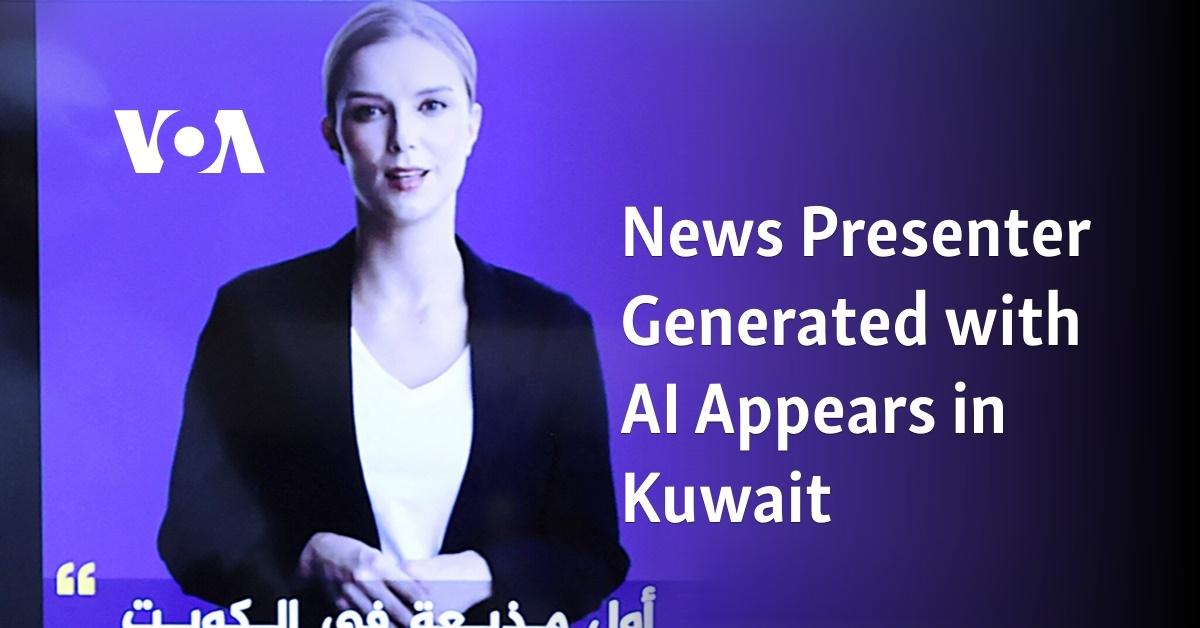
Kuwait News unveiled a virtual news presenter named Fedha generated using artificial intelligence Fedha appeared in a short Arabic video and will read online news bulletins
6 outlets told this the same way.
Kuwait AI presenter debut
Kuwait News introduced an AI-generated virtual presenter named Fedha in a 13-second Arabic video posted to its Twitter account. The outlet presented the avatar as the first presenter in Kuwait to work with artificial intelligence and asked viewers what news they prefer.
“Kuwait News has unveiled an AI-generated virtual news presenter called Fedha in a 13-second Arabic video posted to its Twitter account, the BBC reports.”
The launch was described across outlets as a trial of AI-driven broadcasting and was shared with the site's large Twitter audience. Reports highlighted the debut's short video format and the invitation for audience feedback in Arabic.

Avatar design and description
The avatar’s design and name were highlighted in all accounts. 'Fedha' (meaning 'silver') was chosen to evoke a metallic or robotic image and to reflect Kuwait’s diverse population.
Visual descriptions vary slightly between outlets: several note a light-haired woman in a black jacket, while Mobile Marketing Magazine specifically mentions blonde hair and light eyes. Despite the variations, each source links the avatar’s appearance and its name to a robotic or metallic persona.

AI news avatar test
Kuwait News deputy editor-in-chief Abdullah Boftain told multiple outlets the project is a test of AI's ability to produce new and innovative content and said the avatar could later adopt a Kuwaiti accent and read bulletins for the site.
“Abdullah Boftain, deputy editor‑in‑chief, said the project is a test of AI’s ability to provide new, innovative content; ... Boftain added the avatar may later adopt a Kuwaiti accent and read online news bulletins.”
Coverage consistently attributes these remarks to Boftain and frames the initiative as experimental, noting possible next steps such as localized speech and regular bulletin reading.
Media coverage of AI launch
Coverage diverges in tone when placing the launch in the wider debate about AI. The Guardian frames the rollout amid broader concerns, noting benefits in fields like health care but also risks such as disinformation, job losses and threats to artistic integrity.
It situates the story within Kuwait's constrained press environment by citing the country's press-freedom ranking. Other outlets (Al Jazeera, VOA, Mobile Marketing Magazine) focus more narrowly on the debut and the technical or experimental aspects, offering fewer explicit warnings or wider societal commentary.

Unclear AI news experiment
Uncertainties remain: while outlets consistently report Boftain's characterization of the initiative as an experimental test that could expand to live bulletins with a Kuwaiti accent, none of the sources provides firm operational details about timing, editorial control, how the AI is generated, or how it will be integrated into the newsroom.
“Abdullah Boftain, deputy editor‑in‑chief, said the project is a test of AI’s ability to provide new, innovative content; the name Fedha (meaning ‘silver’) and her blonde hair and light eyes were chosen to evoke the metallic/robotic idea and Kuwait’s diverse population. Boftain added the avatar may later adopt a Kuwaiti accent and read online news bulletins.”
The reporting thus establishes the project's intent and public debut but leaves open critical questions about implementation, oversight and the potential editorial or social impacts.