
Le Monde Diplomatique Details Israel’s War Crimes In Gaza, Including Attacks On Civilians
Key Takeaways
- Civilians killed by Israeli airstrikes in Gaza, including children.
- Reports describe Israeli actions as war crimes and civilian-targeting.
- Civilian casualties persist near aid centers amid fragile Gaza ceasefire.
Crimes, displacement, and bombing
A body of reporting and documentary material published by Le Monde diplomatique describes what it calls “the war crimes outlined in ‘Well-Established International Crimes’,” including “Deliberately directing attacks against the civilian population and civilian infrastructure.”
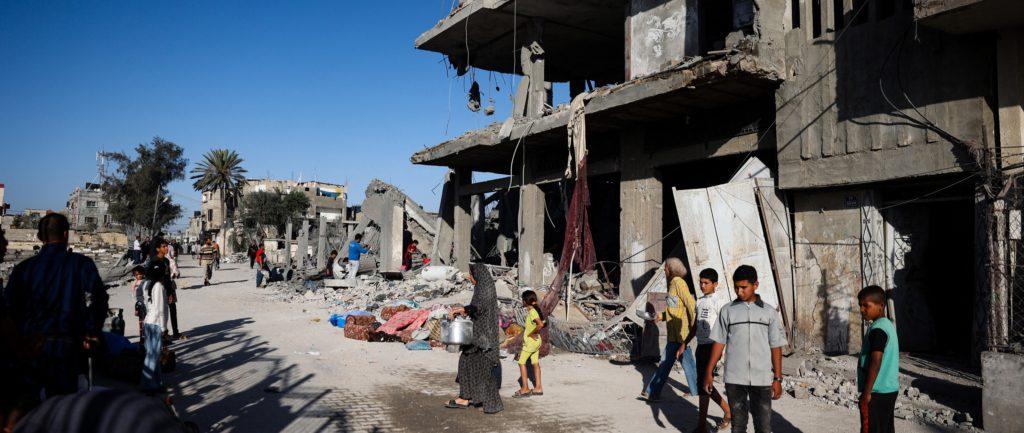
The text says Israel “forcibly displaced more than 1.8 million Palestinians inside the Gaza Strip,” and claims “destroying nearly half the buildings” while “turning the north of the Strip into an uninhabitable lunar landscape.”
It further asserts that “the Israeli army has dropped more than 25,000 tons of explosives on Gaza since October 7, the equivalent of two Hiroshima bombs.”
Le Monde diplomatique also says Israel “systematically targeted hospitals, schools, universities, mosques, churches, bakeries, and agricultural fields.”
In the same account, it cites a statement that “These indiscriminate and blind attacks were likely to cause a large number of civilian casualties in Gaza,” adding that “the authorities knew this.”
The text also frames the pattern as avoidable, stating that “On several occasions, they asked civilians to evacuate from one place to another, often within a very short time, before targeting the indicated location.”
It concludes that “These indiscriminate attacks therefore contribute to revealing an intent to destroy.”
ICC, famine, and protected persons
Le Monde diplomatique’s account also centers on famine and restrictions on humanitarian access, quoting an ICC-related passage that says “the Chamber has found reasonable grounds to believe that these two persons deliberately, and knowingly, deprived the Gaza civilian population of goods indispensable to its survival.”
It lists those goods as “food, water, medicines and medical supplies, as well as fuel and electricity,” and says the conduct lasted “from at least October 8, 2023 through May 20, 2024.”
The text adds that “The Chamber finds that, by their conduct, [Mr. Netanyahu and Mr. Galant] hindered the ability of humanitarian organizations to provide food and other essential goods to the Gaza population in need.”
It further states that “there are reasonable grounds to believe that no clear military necessity or other justification under international humanitarian law could be identified to explain the access restrictions imposed on humanitarian aid operations.”
In the same publication, Le Monde diplomatique quotes figures about killings of humanitarian personnel, saying “212 other humanitarian workers, including 130 UN personnel, 1,080 health professionals, 66 journalists and other media professionals, were killed in Gaza by Israeli strikes or gunfire.”
It also claims that “As of July 30, 2025, at least 89 children would have died of malnutrition due to restrictions on humanitarian aid by Israel and its use of hunger as a method of war.”
The text then turns to the medical system, saying “Health professionals are detained without charges and subjected to degrading treatment and torture,” and that “Medical personnel have been filmed in humiliating conditions and deprived of the right to treat patients during their detention.”
Amnesty: airstrikes on al-Maghazi and Rafah
Amnesty International’s investigation, as presented by Amnesty International, says the International Criminal Court “must open a war crimes investigation into three Israeli airstrikes that killed 44 Palestinian civilians, including 32 children, in the occupied Gaza Strip last month.”
“They are called the deadly zones”
The organization ties the cases to specific dates, stating that the first strike was “on al-Maghazi on April 16” and that the two others were “on Rafah on April 19 and 20.”
Amnesty International says the strikes “also left at least 20 injured,” and frames the evidence as showing “a broader pattern of war crimes committed by the Israeli army in the occupied Gaza Strip over the last seven months.”
It describes the al-Maghazi strike as hitting “a foosball table,” saying that on April 16 “an Israeli airstrike on the Al-Maghazi refugee camp in central Gaza killed 10 children aged four to 15, and five men aged 29 to 62.”
Amnesty International says “More than a dozen residents, mostly children, were injured,” and it reports that “The damage and fragments found match those of small precision-guided missiles and bombs dropped from Israeli drones.”
The investigation includes survivor testimony, including a description from Jaber Nader Abu Jayab, who said he “heard the strike and realized it was nearby when the street was affected,” and later “discovering his daughter Mila (four) severely injured and dying after hospital admission.”
Amnesty International also states that it “interviewed 17 survivors and witnesses,” “studied strike sites,” and “reviewed satellite imagery of the sites,” while noting that “Israel provided no specifics about the Rafah strikes and offered only general information about the al-Maghazi strike.”
Aid distribution “deadly zones”
BFM describes what it calls “the deadly zones” in Gaza, focusing on civilians killed near aid distribution centers run by the Gaza Humanitarian Foundation (GHF).
It quotes Mahmoud Al-Ghura, a father of four, saying he fears that if he goes to fetch “a bag of flour, he will be carried away in one of them,” and it adds that “Every day, people go there and die.”
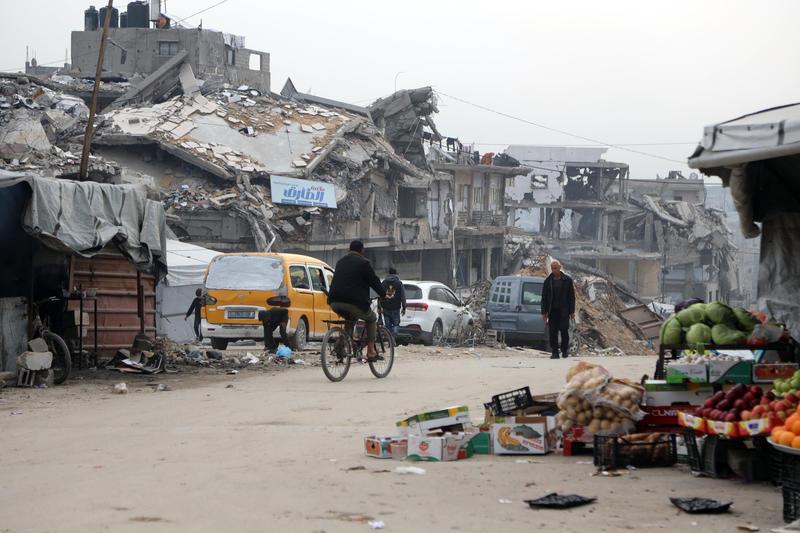
BFM says that after easing a blockade at the end of May, “Israeli authorities set up an aid distribution mechanism run by the GHF,” and it reports that “the U.S. State Department announced on Thursday it would provide $30 million.”
The article states that “Since the end of May, their aid distribution has produced chaotic scenes,” and it says that “According to the local Civil Defense, Palestinians are killed almost daily while going to fetch humanitarian aid at these distribution centers.”
BFM reports that “Since the start of the GHF distributions, at least 450 people have been killed,” and it gives specific incidents including “On Thursday, June 26, six people waiting to receive aid were killed by Israeli fire.”
It also reports that “On Tuesday, June 24, at least 46 people were killed and 150 wounded by Israeli fire near two distribution centers,” including one “near the Netzarim junction” and another “near Rafah in the south of the enclave.”
The piece includes reactions from humanitarian leadership, quoting Philippe Lazzarini saying “These distribution centers are deadly traps for civilians,” and calling the mechanism “a deadly trap, costing more lives than it saves.”
Ceasefire claims, drone deaths, and totals
L’Humanité reports that “Civil Defense of the Gaza Strip announced that Israeli bombardments had killed 12 people since dawn on Sunday,” while describing a “very fragile ceasefire in place between Israel and Hamas since October 10.”
“This unpublished text details the war crimes outlined in “Well-Established International Crimes” War Crimes 1: Deliberately directing attacks against the civilian population and civilian infrastructure”
It says the Israeli army responded to a “flagrant violation” by Hamas in the northern Gaza Strip on Sunday, February 15, and it describes strikes that “targeted at dawn a tent sheltering displaced people in the Jabalia area in northern Gaza, killing five.”
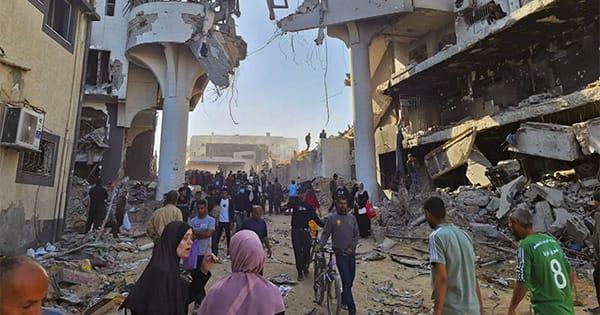
L’Humanité adds that “Another strike also killed five in Khan Younis,” and says “The al-Shifa Hospital in Gaza City (north) and Nasser Hospital in Khan Younis have confirmed that they received seven bodies.”
It includes a direct quote from AFP reporting, with Ossama Abu Askar telling AFP: “Israel does not understand what a ceasefire or a truce is. We have lived under a truce for months but they strike us, they say one thing and do another.”
The same article says the Hamas spokesman Hazem Qassem accused the army of violating the truce, stating: “Targeting displaced people in their tents is a serious violation of the ceasefire agreement.”
Le Monde.fr with AFP reports that the Gaza Civil Defense said “two Palestinian teenagers had been killed on Saturday, January 24, by an Israeli army drone,” and it specifies the strike occurred “near Kamal Adwan Hospital in Beit Lahya, in the north of the territory.”
WAFA’s report, meanwhile, says an Israeli drone targeted civilians “near al-Jalaa roundabout in the al-Ayoun area, north of Gaza City,” killing “one” Palestinian man and bringing “the total number of Palestinians killed since the ceasefire on October 11 to 833, with 2,354 injured,” while adding “767 bodies have been recovered from under the rubble.”
More on Gaza Genocide

Isaac Herzog Pushes Netanyahu Plea Deal as Attorney-General Bars Preconditions
11 sources compared

Hamas Calls Israel’s Jerusalem Demolition Notices a War Crime Targeting Palestinian Presence
10 sources compared

Israel’s Boeing KC-46 Pegasus “Gideon” Completes Maiden Test Flight in the United States
16 sources compared
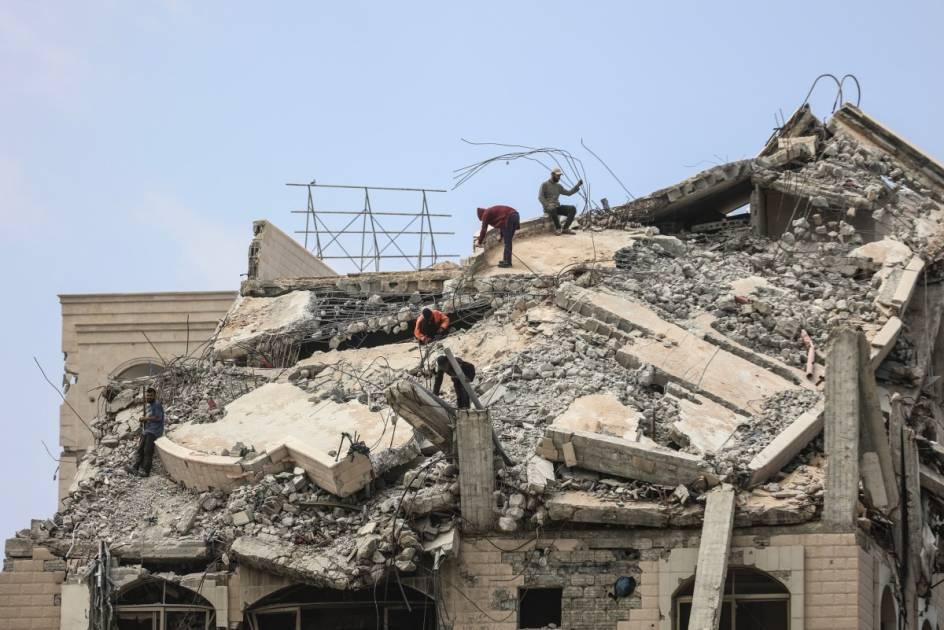
Israeli Attacks Kill Three Palestinians in Gaza, Death Toll Reaches 72,615
19 sources compared