Lebanese Army Condemns Celebration Gunfire After Lebanon Ceasefire, Warns Arrests
Key Takeaways
- Tens of thousands returned to south Beirut suburbs as ceasefire took effect.
- Israeli strikes destroyed Litani River bridges, isolating parts of southern Lebanon.
- Lebanese Army reinforced security across south and Beirut amid escalating Israeli attacks.
Ceasefire, then gunfire
A Lebanon ceasefire took effect at midnight Beirut time on Friday for a duration of ten days, but L'Orient-Le Jour reported heavy gunfire and B7 rocket fire carried out in the southern suburb of Beirut in celebration of the truce on Friday, April 17, 2026.
In the same live coverage, L'Orient-Le Jour said the Lebanese army condemned these “shots in the air using war weapons and rockets, endangering residents' lives and causing damage to public and private property,” and warned it would “pursue” the shooters and arrest them.

The Lebanese army also accused Israel of “acts of aggression” and bombardments in violation of the truce, with Hezbollah announcing it attacked Israeli soldiers in retaliation.
L'Orient-Le Jour reported that Hezbollah said it retaliated by “bombarding a gathering of Israeli soldiers near the city of Khiam” in southern Lebanon.
The ceasefire moment also brought immediate strikes: L'Orient-Le Jour said three dead were reported in Marwaniyé as strikes hit South Lebanon just as the ceasefire took effect at midnight.
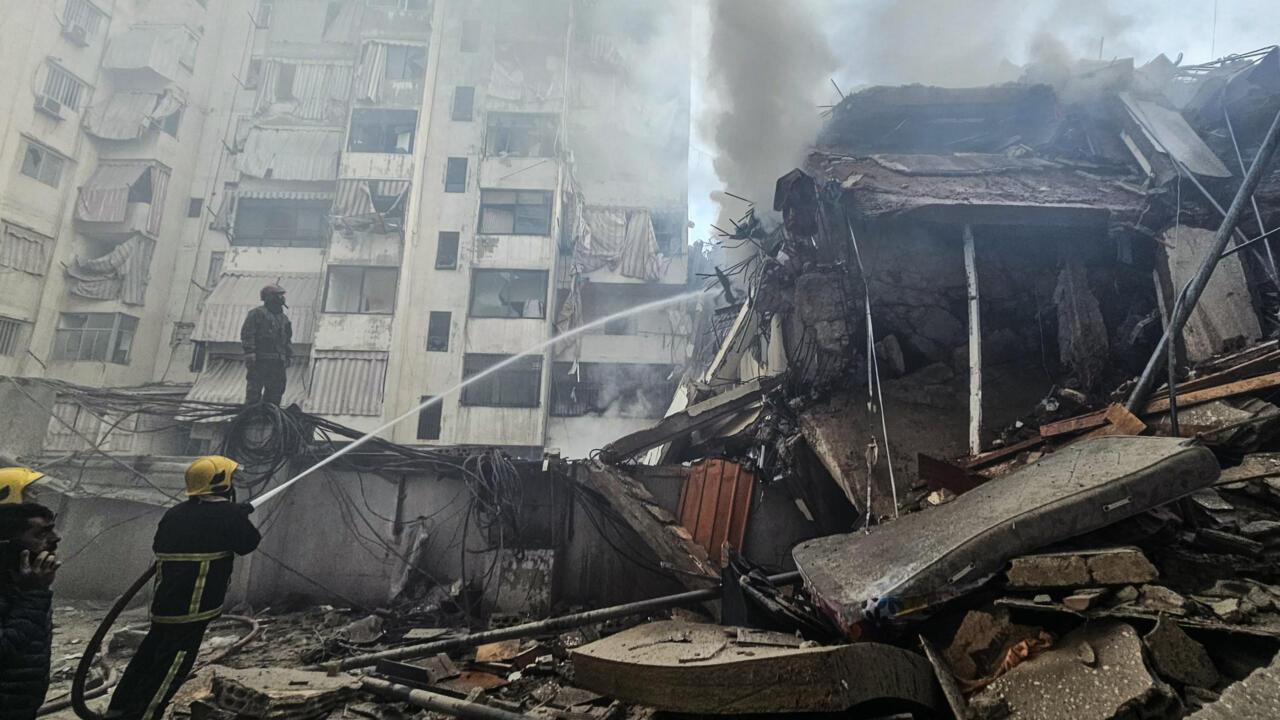
In Tyre, L'Orient-Le Jour reported rescue and clearance operations underway in the rubble of three buildings, including “one 12-story building still inhabited,” destroyed in the bombing.
The same report described a traffic jam at the destroyed Qasmiyé Bridge as hundreds of cars headed south from Sidon, with Amal Movement teams and its relief association going to the scene for rehabilitation work.
Bridges and isolation
As the ceasefire began, the battle over movement inside Lebanon sharpened around the Litani River crossings.
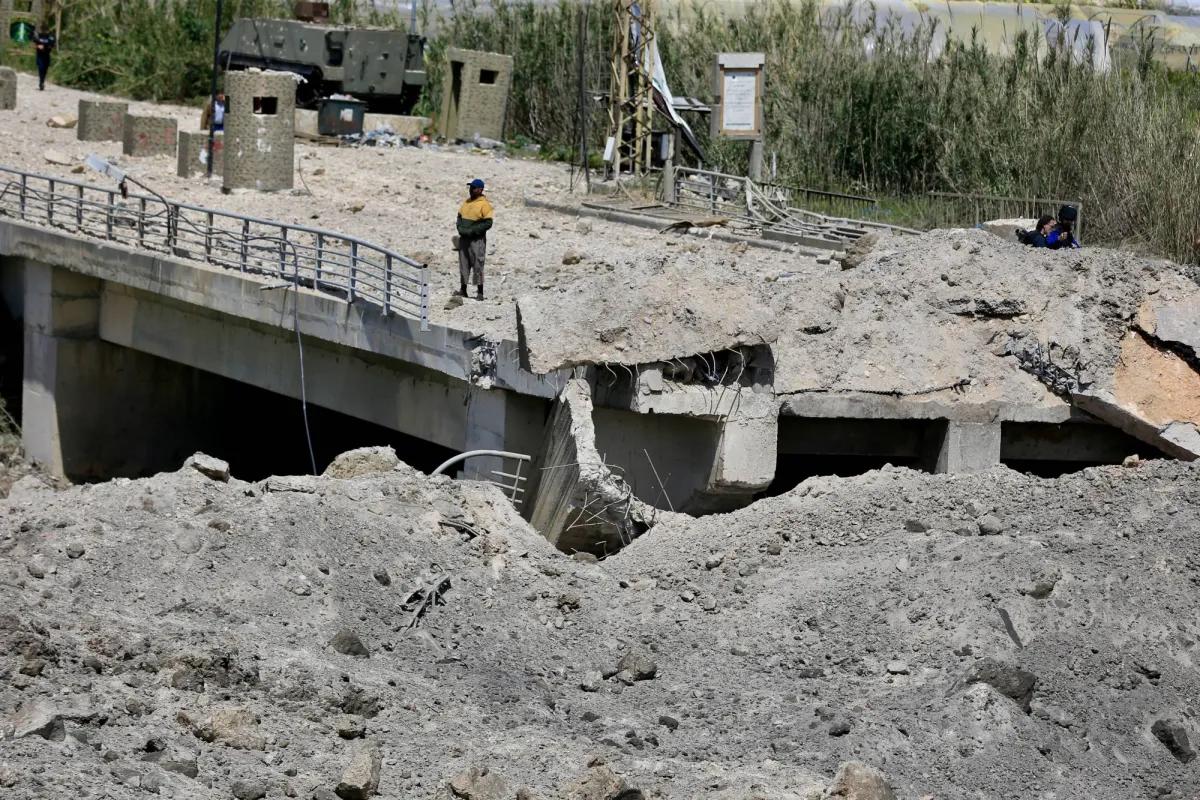
L'Orient-Le Jour said the Qasmiyé Bridge, linking Tyre to the rest of Lebanon, was bombed again by Israeli aircraft, and that southern residents were stuck in traffic at the bridge after midnight.

The Lebanese army, as quoted by Al-Sharq Al-Awsat and attributed to Agence France-Presse, said Israeli strikes that destroyed the main Qasmiya Bridge on the outskirts of Tyre “isolated the area south of the Litani River from the rest of the country.”
Al-Sharq Al-Awsat reported that the Lebanese army said the Qasmiya Maritime–Tyre Bridge was targeted and destroyed “with the aim of separating the Litani region in the south from its north and isolating it,” and that the strikes caused “one death and three injuries, including one soldier from the unit stationed on the bridge.”
It also reported that the Lebanese National News Agency said hostile air forces carried out “two successive airstrikes” targeting the Qasmiya Bridge, the remaining passage linking the Tyre area to Sidon, causing its complete destruction.
Anadolu Ajansı described the bridge as the “al-Qasmiyeh Bridge (which connects the south of the Litani River to its north)” and said partial restoration was underway after it was shelled by the Israeli army on Thursday for the second time.
Anadolu Ajansı added that “the number of destroyed bridges connecting the north and south of the Litani River rose to eight since the start of the Israeli aggression on March 2.”
France 24, citing AFP, said the Israeli military bombed “at least five of the six major bridges over the Litani River” since the start of its war with Hezbollah on March 2, and said Israel also targeted “a new bridge” connecting the south of Lebanon to the east of the country.
In the same AFP-based account, Lebanese President Joseph Aoun said these attacks represent “a dangerous escalation and a flagrant violation of Lebanon's sovereignty,” and it described fears that Israel was “emptying the southern Litani region of its inhabitants ahead of a ground offensive.”
Return, warnings, and traffic
Even as bridges were damaged and warnings were issued, Anadolu Ajansı reported that “tens of thousands of displaced people” began returning to the south and Beirut’s suburbs after the ceasefire agreement with Israel came into effect at midnight.
“From the Litani to the Zahrani, Israeli bombs, the widening of evacuation orders and the destruction of infrastructure accelerate the displacement of populations”
The Anadolu Ajansı correspondent said traffic bottlenecks were observed on roads from Beirut and Mount Lebanon toward villages and towns in the south, and that at the dawn of Friday “tens of thousands of Lebanese displaced people began returning” following the ceasefire’s entry into force.
It described dense movement from areas north of Beirut extending to its southern suburbs, with roads leading to the region “severely congested,” and said a large density of traffic was also recorded on roads from Beirut and Mount Lebanon toward southern areas, especially on the coastal road leading to Sidon and Tyre.
Anadolu Ajansı reported that convoys of vehicles bound for Tyre stretched from the al-Qasmiyeh Bridge to the town of Adloun in the Sidon District of the South Governorate, amid a continued heavy traffic jam for hours.
The report said Lebanese army troops were deployed to regulate traffic, while municipal efforts worked to rehabilitate roads, and that partial restoration of the al-Qasmiyeh Bridge was underway after it was shelled by the Israeli army on Thursday for the second time.
In parallel, Anadolu Ajansı said the Israeli army warned Lebanese not to head toward areas south of the Litani River, quoting spokesperson Avichai Adraï: “For your safety and the safety of your families, until further notice, you are asked not to move to the south of the Litani River.”
The same Anadolu Ajansı account said the Lebanese army’s leadership urged citizens to exercise caution in returning to southern regions amid reported violations of the agreement, including Israeli assaults and sporadic shelling affecting several villages.
It also stated that the ceasefire between Lebanon and Israel took effect at midnight local time for both countries at “21:00 UTC, for ten days,” and that on Thursday evening U.S. President Donald Trump announced a ceasefire in Lebanon for ten days starting from midnight Thursday/Friday Beirut and Tel Aviv time.
Anadolu Ajansı further reported that since March 2, Israel has been waging a campaign against Lebanon that left “2,196 dead, 7,185 wounded, and more than one million displaced,” according to the latest official figures.
In a separate report, L'Orient-Le Jour described southern residents stuck in traffic at the destroyed Qasmiyé Bridge after midnight, reinforcing the picture of movement constraints at the start of the truce.
Israeli control and Lebanese response
Beyond the ceasefire’s first hours, Israeli officials described continued control of southern Lebanon up to the Litani River, while Lebanese officials and allied voices framed the actions as violations and escalation.
In a report carried by Al-Sharq Al-Awsat, Israel’s Defense Minister Yisrael Katz vowed to “control” the area south of the Litani River and said the Israeli army “will continue to operate in Lebanon with full force,” adding that hundreds of thousands of residents of the region will not return to the south “until security is guaranteed for residents of northern Israel.”
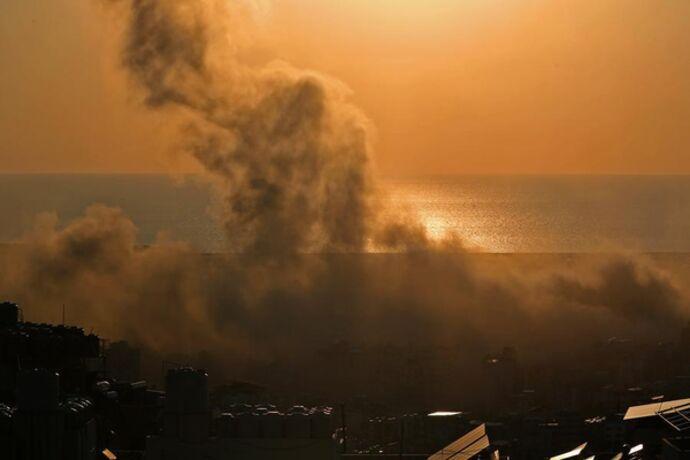
The same report said Katz had announced on Sunday that he and Israeli Prime Minister Benjamin Netanyahu ordered the army to “destroy all bridges over the Litani River immediately,” and accused the Lebanese government of having “done nothing” about disarming Hezbollah.
Al-Sharq Al-Awsat also reported that Finance Minister Bezalel Smotrich said Israel should “extend its border with Lebanon to the Litani” and argued the “military campaign in Lebanon must end in a completely different reality” with new borders at the Litani.
In response, France 24, citing AFP, quoted Lebanese President Joseph Aoun saying the bridge attacks represent “a dangerous escalation and a flagrant violation of Lebanon's sovereignty,” and described fears in Lebanon that Israel was “emptying the southern Litani region of its inhabitants ahead of a ground offensive.”
Ouest-France described Khiam as a strategic hinge town “between the south and the east,” and quoted General Khalil Gemayel saying, “Anyone attempting to advance toward the Litani in this sector is inevitably watched and targeted from Khiam.”
The same Ouest-France account said Lebanese President Joseph Aoun condemned a “collective punishment of civilians” and called it “the prelude to a ground invasion” by Israel, while also describing a feared “5- to 6-kilometer-wide buffer zone inside Lebanon.”
Meanwhile, QNA reported that Lebanese Army Commander General Rudolf Heikal said the army is operating under “extremely difficult conditions” amid escalation of Israeli attacks, and stressed that the leadership’s aim is “preserving Lebanon, ensuring its unity, and safeguarding the military institution.”
QNA also said Heikal described redeployment in the border area and re-centring units within the South Litani sector as part of broader measures, and that the army’s plan hinges on compelling Israel to stop attacks and violations of sovereignty and stability.
In a separate report, Naharnet said a Lebanese military official told Al-Jazeera that the Lebanese Army had returned to “20 positions south of the Litani River” that it evacuated last month, and said Israeli forces were targeting the Lebanese Army during operations to rescue citizens in border areas.
Human toll and displacement
While the ceasefire was announced for ten days, multiple reports described ongoing displacement and lethal attacks that continued to reshape daily life in southern Lebanon and around Beirut.
“The Israeli army announced that it had bombed on Friday morning, March 13, a strategic bridge over the Litani River in southern Lebanon”
L'Humanité wrote that “They redraw the map”: Southern Lebanon is emptied of its population under Israeli bombardments, describing “From the Litani to the Zahrani” as Israeli bombs, evacuation orders, and infrastructure destruction accelerate displacement.

In that account, rescuers and residents described a war of attrition, and Hassan, a butcher and rescuer with the Al-Rissala Association for Health Aid, told the paper: “When we go out on a mission to evacuate the wounded or recover bodies, the Israeli army bombs right beside us.”
L'Humanité said that on Tuesday at 1 p.m., two rescuers from Nabatieh were killed in a direct strike, and that “Here, even ambulances no longer protect,” adding that interventions sometimes involved “double strikes” aimed at those who came to aid first victims.
The report also included testimony from Abbas, who said, “Six rockets... fired from our home,” and ended with the line “So that we do not return home.”
Ouest-France described the fighting around Khiam as close-quarters battles that “have driven some residents to flee, while others are caught in the fighting,” and said the capture of Khiam “will not come without fierce fighting.”
It also stated that the Israeli army currently occupies “barely 20 percent of Khiam’s south” and that Hezbollah replies with “anti-tank rockets, swift attacks, and ambushes,” often forcing Israeli forces to retreat.
L'Orient-Le Jour, meanwhile, said the Hezbollah-Israel conflict toll released by the Ministry of Health stood at “2,196 dead and 7,185 wounded since March 2,” and described rescue operations in Tyre after strikes destroyed buildings including a “12-story building still inhabited.”
Anadolu Ajansı said since March 2 Israel’s campaign left “2,196 dead, 7,185 wounded, and more than one million displaced,” and described tens of thousands returning amid warnings.
France 24, citing AFP, said the offensive has “killed more than a thousand and displaced more than a million,” and described how bridges destruction trapped those south of the Litani unless they took longer routes via Hasbaya.
More on Lebanon
Israeli Attacks Kill At Least 28 In Southern Lebanon Despite U.S.-Mediated Ceasefire
25 sources compared

US Embassy Urges Joseph Aoun To Meet Benjamin Netanyahu During Lebanon Ceasefire
13 sources compared

Trump Says Lebanon-Israel Direct Talks Will Start Within Two Weeks
18 sources compared
Trump Urges Netanyahu To Limit Lebanon Strikes To Surgical Actions As Ceasefire Falters
14 sources compared