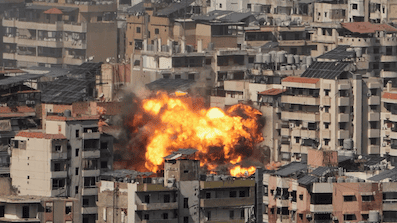
Lebanese Cabinet Bans Hezbollah's Military Activity, Orders Handover of Weapons
Key Takeaways
- Lebanon pledged to disarm Hezbollah under U.N. Security Council Resolution 1701
- Lebanon signed a Cessation of Hostilities in November 2024 but stalled disarmament for 15 months
- Lebanese cabinet banned Hezbollah's military activity, but Israel resumed operations against it
No cabinet report found
I cannot find reporting of a Lebanese cabinet decision to ban Hezbollah’s military activity or order a formal handover of weapons in the materials provided.
“To end its devastating war with Israel, Lebanon pledged to disarm Hezbollah under U”
The single supplied article from Middle East Transparent focuses instead on the Lebanese Armed Forces’ operational weaknesses and its strained relationship with Hezbollah, describing how "the Lebanese Armed Forces groped blindly when confronting Hezbollah, often relying on scraps of intelligence funneled to it by Israel" and noting how "serious efforts only began about a year ago" to build intelligence networks.
The article does not cite any cabinet declaration or a weapons-handover order; it concentrates on institutional fragility and political constraints within Lebanon.
LAF capacity limits
The supplied reporting emphasizes the Lebanese Armed Forces’ (LAF) material and intelligence shortcomings rather than a governmental crackdown on Hezbollah.
Middle East Transparent depicts LAF logistics as rudimentary — "troops in the field frequently beg civilians for drinking water or scraps of food, knocking on doors wherever they deploy" — and argues the army is "dangerously exposed against a far better-armed Hezbollah."
This framing implies that even if a cabinet order existed, the LAF would face severe practical limits in enforcing any unilateral disarmament of Hezbollah.
Hezbollah influence explained
The article highlights Hezbollah’s entrenched intelligence and political influence, which the author presents as a central obstacle to state efforts to control the militia’s arms.
“To end its devastating war with Israel, Lebanon pledged to disarm Hezbollah under U”
Middle East Transparent says "Hezbollah maintains its own formidable intelligence apparatus, relentlessly monitoring the Lebanese military, profiling each officer and gauging his stance toward the so-called 'resistance,'" and describes how officers deemed sympathetic are rewarded with promotions.
It further claims that Lebanese public signals — for example, the Armed Forces’ social media posts condemning Israel before US visits — function as ritual demonstrations of loyalty to Hezbollah, illustrating how dense political surveillance and co-option complicate any cabinet mandate to disarm the group.
Political barriers to disarmament
Beyond institutional limits, the piece situates the problem in Lebanon’s fractured sectarian politics and recent history, suggesting that political consensus is a prerequisite for compelling Hezbollah to disarm — a consensus the country lacks.
Middle East Transparent recalls the 2005 Cedar Revolution as proof that Lebanon could isolate armed actors when broad domestic and international backing existed, but it argues that Hezbollah fractured that coalition by co-opting Michel Aoun’s bloc.
Lebanon’s sectarian system "frames every confrontation not as state versus militia, but as other sects versus Shia," which entrenches paralysis, and the author concludes that the state’s inability to directly engage the Shia community outside Hezbollah channels undermines any plausible cabinet-enforced weapons handover.
More on Lebanon

Hezbollah Fires 200 Rockets at Israel From Lebanon
17 sources compared
Israel Pounds Tehran With Airstrikes
12 sources compared

Israel Bombs Central Beirut, Targeting Hezbollah Infrastructure
14 sources compared

Unidentified Attacker Plants Explosive at U.S. Embassy Entrance in Oslo; Oslo Police Investigate Possible Terrorism
12 sources compared