Asia08 February, 20263 min read
Liberal Democratic Party Wins Landslide, Secures Two-Thirds Supermajority
Sanae Takaichi's Liberal Democratic Party won a landslide in the snap general election Ruling coalition won a two-thirds supermajority in the 465-seat House of Representatives

13 outlets told this the same way.
Outlets did split on Avalanche Strikes Himlung Himal Base Camp In Nepal, At Least 10 Missing →
Japan lower-house election results
Exit polls and early returns showed the ruling Liberal Democratic Party (LDP) sweeping to a landslide victory in Japan's lower-house election. NHK and other outlets projected the LDP at roughly 274–328 seats, with the LDP-led coalition potentially taking more than 300 of the 465 seats. Multiple outlets described the numbers in similar ranges.
“Exit polls from NHK projected a landslide for the conservative Liberal Democratic Party (LDP) in Japan’s lower‑house election, giving it 274–328 of 465 seats; with junior partner the Japan Innovation Party the coalition could total about 302–366 seats (a majority is 233).”
The Guardian and Nikkei quoted NHK exit-poll ranges that put the LDP well above the 233 seats needed for a simple majority. NBC and Al Jazeera reported coalition totals that could reach the 302–366 range or "more than 300" seats. The Japan News and Greenock Telegraph described the outcome as a landslide that could yield a single-party majority or even a two-thirds supermajority, giving the LDP and its partners control of the lower house.
Reasons for LDP surge
Analysts and party figures attributed the LDP’s surge to Prime Minister Sanae Takaichi’s personal popularity and a platform combining growth measures, tax relief and a tougher security posture. Several outlets noted a burst of youthful enthusiasm dubbed "Sanamania" that bolstered the party. Coverage also underlined Takaichi’s pledges on fiscal stimulus, a temporary food-tax suspension and higher defence spending.
The Japan News cited LDP figures crediting voter support for Takaichi’s "responsible proactive" fiscal policy and stronger defence and diplomacy. Al Jazeera and NBC underscored the tax and defence pledges and the role of younger voters. Nikkei and The Guardian reported that voters’ appeals to stability, immigration control and female representation also drove the result.

Implications of LDP supermajority
A two-thirds supermajority would have major policy consequences, allowing the LDP to begin constitutional revision procedures, increase defence spending, and press a more assertive security stance. Outlets reported that at least 310 seats are needed to start formal constitutional change and that a large parliamentary advantage would also ease the passage of budgets. Coverage diverged on likely policy direction and risks.
“The Liberal Democratic Party would need at least 310 seats — a two-thirds majority — to begin constitutional revision before a national referendum.”
The Greenock Telegraph warned this scope could enable a right-leaning agenda with stricter rules on foreigners and stronger anti-espionage laws that critics say could erode civil rights. Al Jazeera and China Daily emphasized deeper US-Japan ties and easier passage of budgets and security measures, while ABP Live explicitly noted the 310-seat threshold needed to begin constitutional revision.
Opposition election outlook
The opposition picture was mixed and, in many accounts, bleak. A newly formed Centrist Reform Alliance (CRA), created from the Constitutional Democratic Party and Komeito, appeared likely to lose a substantial number of the 167 seats its members previously held. CRA co‑leader Yoshihiko Noda said he was prepared to step down.
At the same time, smaller parties such as Sanseito and Team Mirai were projected to gain seats, with Nikkei and The Japan News reporting local successes and ambitions. Several outlets stressed that the opposition’s fragmentation helped the LDP. China Daily and The Guardian noted the coalition would still be a minority in the upper chamber, preserving some legislative limits.

Election weather and turnout
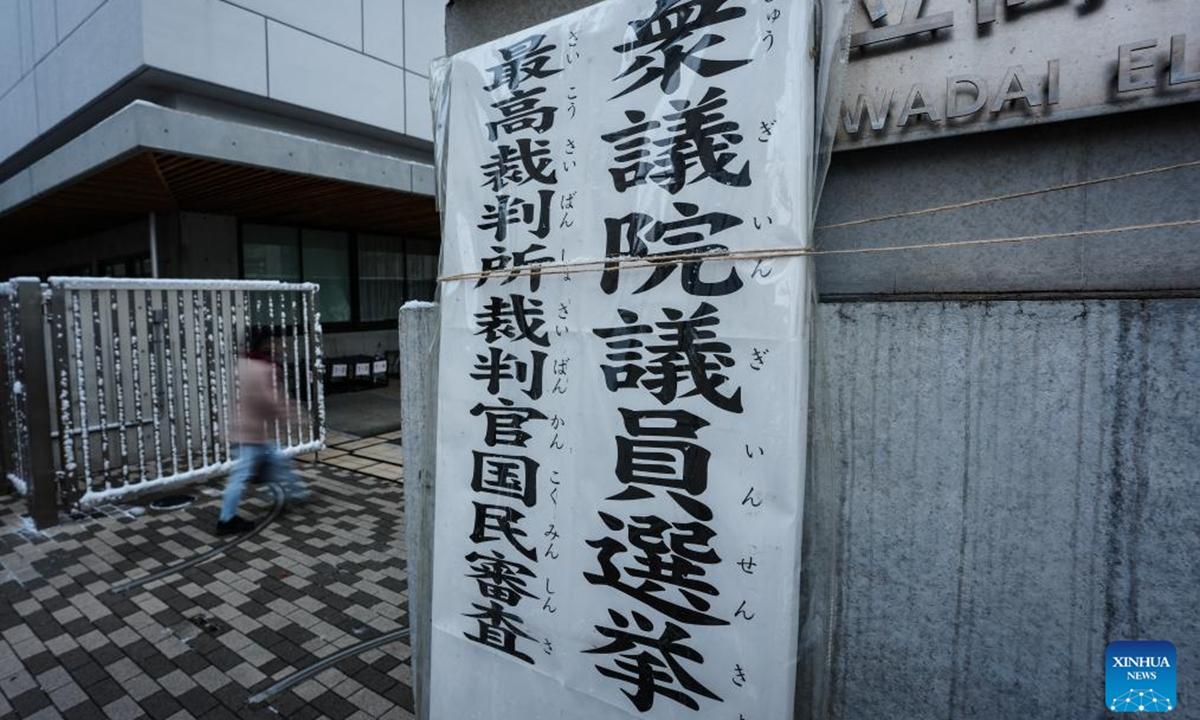
Coverage highlighted that the rare mid‑winter election took place amid severe snowfall that canceled flights and disrupted transport, and that early turnout figures were well below previous votes with record early voting contrasted by low participation on election day. The Guardian and Nikkei provided stark figures and detailed reporting on blizzard‑level conditions and low turnout, while Al Jazeera and NBC noted the snowfall could depress turnout but was not expected to change the overall outcome. Several sources combined practical notes on the vote’s conduct with analysis suggesting the LDP’s momentum and a divided opposition likely made the weather a secondary factor.
“The election was held in severe winter conditions—the first mid‑winter vote in 35 years—bringing blizzard‑level weather that canceled flights, disrupted trains, and dumped over 2 meters of snow in parts of Niigata. Turnout was low (about 21.6% with four hours left)...”