Full Analysis Summary
Lula and Trump call
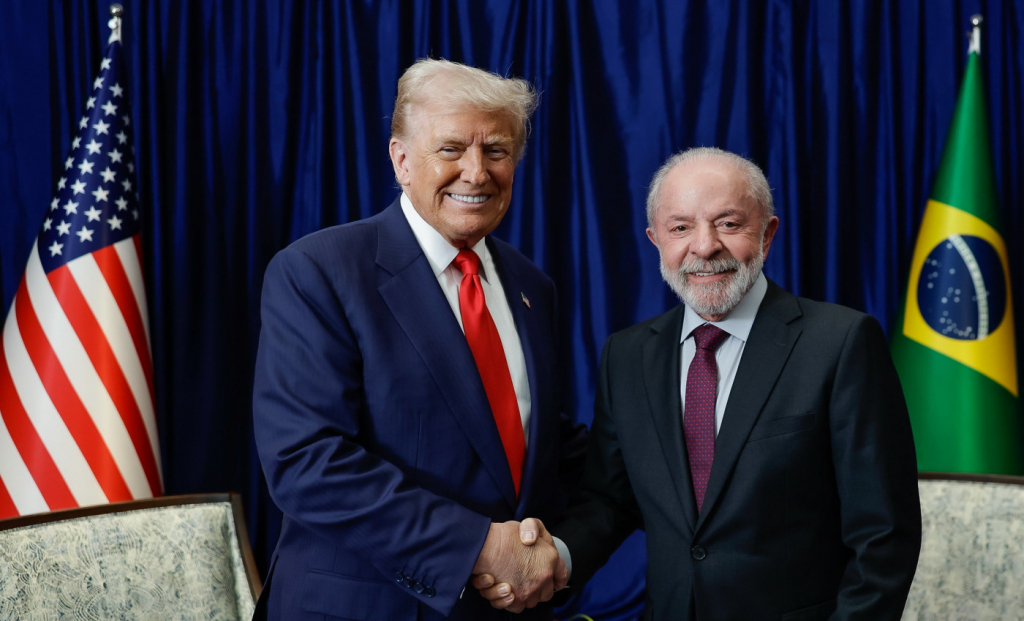
Brazilian President Luiz Inácio Lula da Silva said at a Brasília press conference that U.S. President Donald Trump became his friend after a brief conversation, portraying their exchange as conciliatory and personal.
Lula described them as two 80-year-old men and insisted there was no reason for conflict, saying explicitly no shots, no weapons, no bombs on the Brazilian coast.
He framed the wider region as a zone of peace and presented the phone calls as part of a de‑escalation posture.
Coverage Differences
Tone / Emphasis
Both sources report Lula’s comment that Trump 'became my friend,' but lnginnorthernbc.ca (Other) foregrounds Lula’s colorful quotes—'two 80-year-old men' and 'no shots, no weapons, no bombs on the Brazilian coast'—emphasizing his personal framing and explicit anti‑military language, while Folha de S.Paulo (Latin American) reports the friendship line and his expectation that 'their problems [will] be resolved' with less emphasis on the quoted visual language. The difference reflects lnginnorthernbc.ca highlighting vivid direct quotes and Folha situating the comments within broader diplomatic expectations.
Lula on Venezuela diplomacy
On Venezuela, both outlets report Lula urged negotiation and dialogue rather than military action.
He told reporters he had spoken for about 40 minutes with Nicolás Maduro and about 40 minutes with Trump, offering himself as a mediator and warning the situation would not be 'solved by shooting'.
Lula also suggested critics or foreign actors have not clearly stated their goals in Venezuela, speculating their interests might include oil or critical minerals.
Coverage Differences
Narrative detail / Framing
Folha de S.Paulo (Latin American) emphasizes Lula’s mediation offer and his explicit argument for negotiation—'negotiation and dialogue rather than military action'—and reports his critique that 'no one has clearly stated what they want from Venezuela,' noting possible interests in oil or minerals. lnginnorthernbc.ca (Other) reports the same calls and timings and frames the region as a 'zone of peace,' but gives more direct play to Lula’s anti‑military slogan 'no shots, no weapons, no bombs on the Brazilian coast,' underlining the rejection of force more vividly. Both report the same facts but with differing emphases: Folha centers mediation and motives; lnginnorthernbc emphasizes declarative anti‑war language.
Tone and sourcing
The two pieces differ subtly in tone and context.
Folha frames Lula’s comments as part of a broader diplomatic push and an expectation that problems will be resolved, underlining his availability to mediate.
lnginnorthernbc.ca foregrounds Lula’s vivid quotes and his categorical rejection of military escalation—'no shots, no weapons, no bombs on the Brazilian coast'—which gives that reporting a more declarative, anti-conflict tone.
Both accounts rely on Lula’s quotes and reported timings of the calls rather than independent transcripts, leaving the specifics of the conversations unclear.
Coverage Differences
Tone
Folha de S.Paulo (Latin American) takes a diplomatic‑process tone—reporting Lula 'expects their problems to be resolved'—while lnginnorthernbc.ca (Other) adopts a more declarative anti‑war tone by highlighting direct quotes like 'no shots, no weapons, no bombs on the Brazilian coast.' Both report the same events but prioritize different rhetorical elements from Lula’s remarks.
Brazil mediation evidence gaps
Both reports present similar implications for Brazil's foreign policy, depicting Lula as a potential broker who advocates dialogue and regional peace rather than force.
Both sources cite the reported 40-minute calls with Maduro and Trump as evidence that Lula engaged substantively.
Neither report provides transcripts or third-party confirmation of the conversations' content, leaving open questions about what concrete steps, if any, follow from his offers to mediate.
Coverage Differences
Missed information
Both sources report call lengths and Lula's statements but omit independent verification or detailed content; Folha de S.Paulo (Latin American) stresses mediation and motives in Venezuela, while lnginnorthernbc.ca (Other) emphasizes the peace slogan and the friendship framing. The omission of call transcripts or responses from Trump or Maduro is common to both reports.
Comparing media reports
Both lnginnorthernbc.ca (Other) and Folha de S.Paulo (Latin American) report Lula’s depiction of a friendly relationship with Trump and his emphasis on dialogue over force in Venezuela.
Their differences lie mainly in emphasis and tone: lnginnorthernbc.ca highlights vivid anti‑war language and personable anecdotes, while Folha emphasizes diplomatic intent and mediation.
Both outlets leave substantive details of the conversations unspecified.
Coverage Differences
Summary / Tone contrast
The two sources converge on the facts Lula presented (friendship with Trump, calls with Maduro and Trump, opposition to military action) but differ in what they emphasize: lnginnorthernbc.ca (Other) amplifies Lula's quotable, anti‑military rhetoric and the 'zone of peace' framing, whereas Folha de S.Paulo (Latin American) contextualizes those remarks within an expected diplomatic process and mediation offer.