Full Analysis Summary
Hatami on adversaries' invincibility
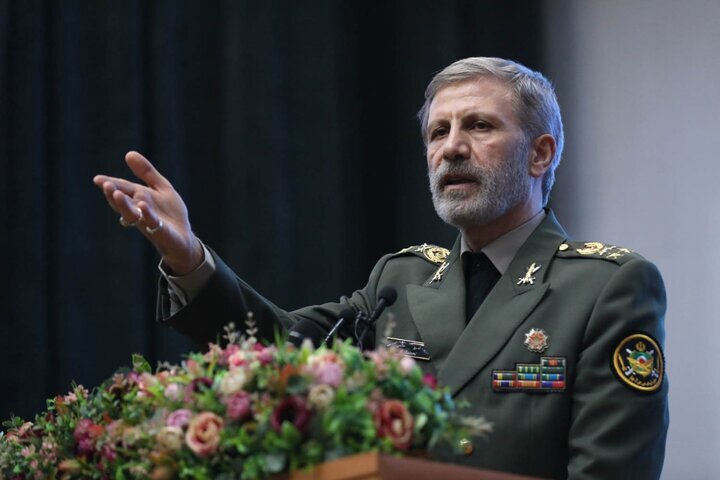
Major General Amir Hatami, Iran’s Army chief, publicly rejected assertions that Tehran’s adversaries are 'invincible', telling graduates such claims are false and citing historical US withdrawals as evidence the enemy can be defeated.
Mehr News Agency and PressTV both quote Hatami saying he dismissed claims that adversaries are unbeatable and referenced US failures in Vietnam, Afghanistan and Iraq.
PressTV additionally reports Hatami cited last June’s Iranian retaliation, including IRGC missile strikes against al-Udeid Air Base, as proof Iran can strike sensitive US and allied targets.
Tehran Times likewise reports Hatami’s central claim at a university ceremony that enemies’ invincibility is a lie but places more emphasis on domestic unrest when recounting his remarks.
Coverage Differences
Tone
All three West Asian sources present Hatami’s rejection of enemy “invincibility,” but they emphasize different supporting evidence: Mehr News Agency highlights a broad 'hybrid war' framing and the need for awareness and command guidance; PressTV stresses recent US regional military buildup and Iran’s capability to hit sensitive bases, while Tehran Times focuses on linking the claim to recent domestic unrest and security responses. Each source reports Hatami’s statements rather than presenting independent analysis.
Hatami warns of hybrid war
Hatami framed the present threat as a "hybrid war" waged on political, economic, social, military, psychological and cognitive fronts, warning that rivals seek to wear Iran down through "strategic attrition."
Mehr News Agency explicitly uses the term "hybrid war" and quotes Hatami stressing the need for "awareness of enemy objectives and clear command guidance" as essential to effective resistance.
PressTV echoes the exhaustion argument, accusing Washington of trying to "weaken and exhaust Iran" while reporting that "millions" stand ready to defend the homeland.
Coverage Differences
Narrative Framing
Mehr News Agency foregrounds the conceptual framing of a 'hybrid war' and emphasizes command and cognitive preparedness; PressTV frames the same theme as part of a U.S. policy of exhaustion and highlights popular readiness ('millions' ready to defend Iran); Tehran Times, while noting the danger, situates the threat within a narrative that connects foreign-backed interference to specific incidents of domestic unrest. All sources attribute these characterizations to Hatami.
Security reporting on unrest
Tehran Times provides the most detailed domestic security context, reporting that Hatami linked the enemy’s attempts at 'strategic attrition' to late‑December 2025 unrest.
The paper says the unrest was hijacked by 'foreign‑trained operatives and mercenaries,' led to vandalism and terror, and 'killed about 200 security personnel and hundreds of civilians.'
The Tehran Times piece further reports rapid security responses: arrests, seizures of weapons, and a description by Hatami and some analysts of the episode as a foreign‑backed 'quasi‑coup.'
Mehr News Agency and PressTV mention security and resolve but do not provide the same casualty or arrest figures.
Coverage Differences
Unique Coverage
Tehran Times includes specific casualty figures and an account of arrests and seized weapons, labeling the events a 'quasi‑coup.' Mehr News Agency and PressTV omit those detailed numbers and the 'quasi‑coup' framing, focusing instead on strategic messaging and regional military dynamics. The Tehran Times report uses more concrete domestic incident detail whereas the others emphasize broader military and strategic claims reported from Hatami.
Media coverage of Hatami remarks
PressTV emphasizes the external and military dimensions of Hatami’s remarks, noting a recent US regional military buildup—"two aircraft carriers, warplanes and missile systems"—that Hatami said adversaries used to overestimate their strength and highlighting his citation of past US withdrawals as precedent for eventual failure of such interventions.
PressTV also records Hatami’s reference to Iran’s capability to hit sensitive targets, pointing to the IRGC missile strikes last June as an example.
Mehr News Agency references US failures and the pledge to defend sovereignty.
Tehran Times mentions the June confrontation but centers its reporting on the domestic unrest narrative.
Coverage Differences
Emphasis
PressTV gives greater emphasis to military events and regional power projection (noting carriers and missile strikes) and frames Hatami’s statements in a regional military context; Mehr News Agency emphasizes hybrid war and leadership preparedness; Tehran Times emphasizes domestic unrest and state security responses. Each outlet reports Hatami’s words but selects different elements to foreground.
Hatami's pledge coverage
Across all three outlets, Hatami's closing vow—that the armed forces would defend Iran's sovereignty and honor the legacy of martyrs 'to the last breath' or 'until our last breath'—is presented as a firm pledge of continued resistance.
Mehr News Agency quotes the pledge using the phrasing 'to the last breath'.
PressTV uses 'until our last breath'.
Tehran Times echoes the vow while condemning foreign interference and recounting the security response to unrest.
The collective coverage shows consistency in the core message while differing in what each source chooses to emphasize.
Coverage Differences
Consistency vs Focus
All three sources consistently report Hatami’s vow to defend Iran 'to the last breath' or 'until our last breath,' but they differ in focus: Mehr News Agency foregrounds the pledge and hybrid‑war framing, PressTV foregrounds regional military context and Iran’s demonstrated strike capability, and Tehran Times foregrounds domestic unrest and security measures. Each source cites Hatami’s words rather than asserting independent conclusions.