Full Analysis Summary
Guinea presidential election
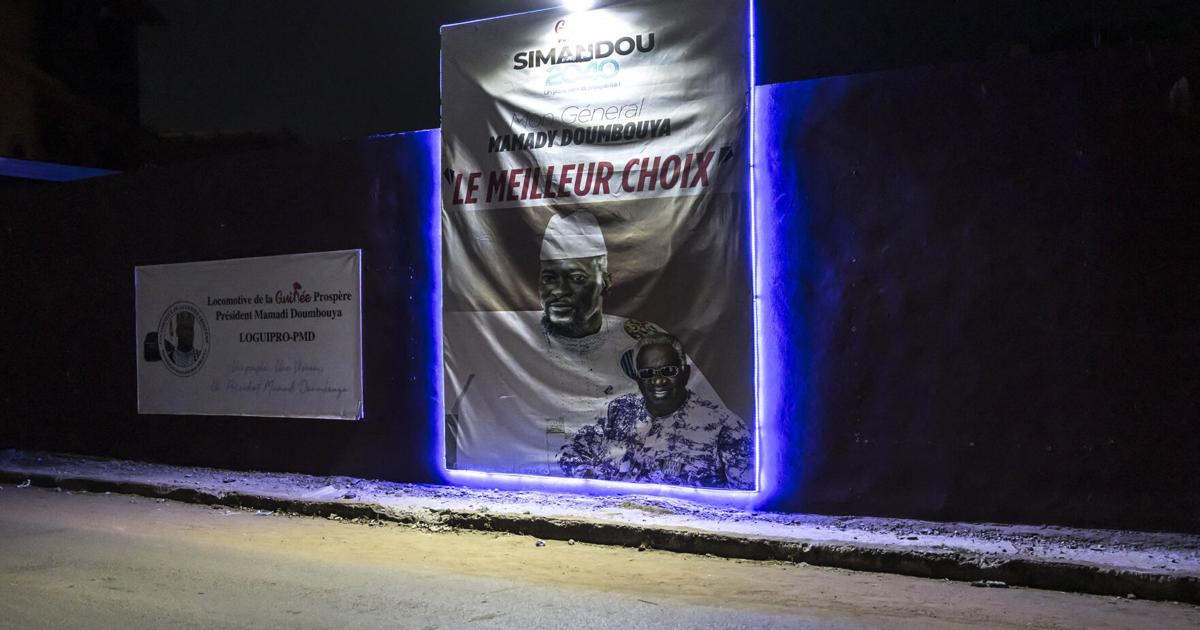
Mamady Doumbouya has been declared the winner of Guinea’s presidential vote held Dec. 28.
Official provisional tallies present the result as a landslide, giving the junta leader roughly 86.7% of votes counted so far.
This is the country’s first election since his 2021 coup and marks a dominant victory.
Multiple reports cited the General Directorate of Elections’ figures and noted the result as a consolidation of his power following the 2021 seizure of authority.
Coverage Differences
Tone and emphasis
The Daily Gazette (Local Western) and South China Morning Post (Asian) foreground the official numerical landslide — citing 86.7% or 86.72% — and present Doumbouya’s win as decisive, whereas Le Monde.fr (Western Mainstream) focuses on opposition denunciations and a wider context of contestation, reporting that opposition groups called the vote a sham and cited boycotts. The Daily Gazette and SCMP therefore accentuate the scale of victory in neutral/administrative terms, while Le Monde.fr frames the result within allegations of illegitimacy. This reflects differing emphases across source_type rather than contradictory raw vote figures.
Guinea election coverage
Le Monde.fr emphasizes a crackdown on dissent since Doumbouya’s coup, reporting that the president-turned-candidate has restricted civil liberties, banned protests, and pushed opponents into exile or arrest.
It also notes a recent referendum that rewrote the constitution to allow junta members to run and to extend presidential terms.
That political context underpins Le Monde.fr's reporting of opposition allegations of irregularities.
By contrast, other outlets focus more narrowly on election mechanics and outcomes, without listing alleged abuses in the same paragraph.
Coverage Differences
Narrative and context
Le Monde.fr (Western Mainstream) explicitly situates the election inside a pattern of repression — citing bans on protests, exile and arrests and a constitutional referendum that allowed junta members to stand — while The Daily Gazette (Local Western) mentions the barring of prominent opposition figures but pairs the result with campaign themes such as infrastructure projects. The South China Morning Post (Asian) notes the sidelining of major rivals in reporting the incomplete results but gives less detailed background on civil liberties than Le Monde.fr. The sources therefore vary in how much pre-election repression and constitutional change they present as central to understanding the result.
Reported election irregularities
Opposition candidates and groups, per available reporting, described significant irregularities.
Le Monde.fr records claims that agents were denied access to counting centers and accusations of 'electoral banditry' and voter pressure from figures such as Abdoulaye Yero Baldé and Faya Millimono.
The Daily Gazette reports that key opposition figures were barred from standing and that U.N. commentary and accusations of intimidation and enforced disappearances have raised questions about credibility.
The South China Morning Post states the win 'sidelined major rivals,' reflecting the practical effect of barred or weakened opponents on the contest.
Coverage Differences
Specific allegations vs. procedural reporting
Le Monde.fr (Western Mainstream) relays specific allegations by named candidates — for example that agents were denied access to counting centers and accusations of “electoral banditry” — whereas The Daily Gazette (Local Western) summarizes the broader criticism (barred figures, U.N. concern about a “climate of fear”), and the South China Morning Post (Asian) describes the outcome’s effect — that it “sidelin[ed] major rivals.” Le Monde.fr therefore provides the most detailed catalogue of candidate claims; other sources emphasize systemic exclusions or the numerical outcome.
Differences in media coverage
Coverage also diverges on turnout, campaign themes and domestic priorities.
The Daily Gazette reports turnout at 81% from about 6.7 million registered voters and highlights Doumbouya's campaign on major infrastructure and a national development plan tied to the Simandou iron-ore project.
Le Monde.fr foregrounds claims of a boycott and mass abstention reported by opposition groups.
The South China Morning Post provides the incomplete vote percentage but does not give the turnout figure in the available excerpt.
This shows a gap in what each source emphasizes or had access to at publication.
Coverage Differences
Conflicting/missing data and emphasis
The Daily Gazette (Local Western) gives a specific turnout figure of 81% and details on Doumbouya’s campaign themes (infrastructure, Simandou project), whereas Le Monde.fr (Western Mainstream) reports that the National Front for the Defence of the Constitution said a “huge majority” boycotted the election — a direct challenge to the high-turnout claim. The South China Morning Post (Asian) reports the high vote share for Doumbouya but in the provided excerpt does not state turnout, illustrating differing data points and emphases across sources.
Guinea election aftermath
What comes next is partly procedural and partly political.
The Daily Gazette notes Guinea's Supreme Court must validate the provisional results, while other outlets report incomplete tabulations from the electoral authority and emphasise the political effects of sidelined rivals and constitutional changes that permitted Doumbouya's candidacy.
Taken together, the differing emphases — official tallies and projected validation on one hand, and allegations of sham voting, bans on opponents and a constitutional reset on the other — indicate both an apparent consolidation of Doumbouya's rule and serious contestation about the legitimacy of how that consolidation was achieved.
Coverage Differences
Procedural vs. legitimacy framing
The Daily Gazette (Local Western) mentions the formal next step — Supreme Court validation of provisional results — and frames the situation in procedural terms, whereas Le Monde.fr (Western Mainstream) stresses the legitimacy debate born of the referendum and bans on prominent opposition figures; the South China Morning Post (Asian) reports incomplete official results and the sidelining of rivals, sitting between procedural reporting and outcome-focused description. Combined, these differences show an institutional focus in some outlets and a rights-and-legitimacy focus in others.