Marco Rubio Deploys U.S. Search-And-Rescue Teams After Venezuela Earthquakes Kill At Least 164
Key Takeaways
- U.S. deploys search-and-rescue teams and coordinates relief for Venezuela after twin quakes.
- Death toll cited between 164 and 188, with hundreds wounded or injured.
- Twin earthquakes of magnitude 7.2 and 7.5 struck Venezuela, causing widespread destruction.
Twin quakes hit Venezuela
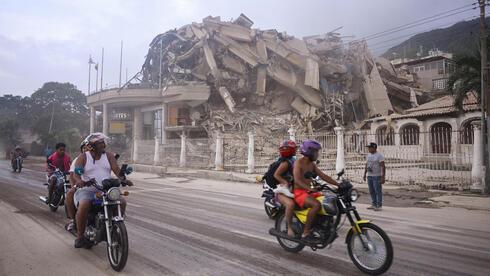
Back-to-back earthquakes struck Venezuela on Wednesday evening, with the first hitting at 6:04 p.m. local time as a magnitude 7.2 quake and the second following 39 seconds later as a magnitude 7.5 quake.
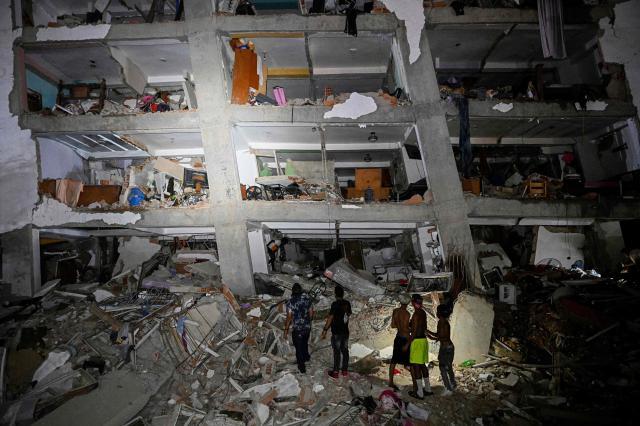
“LA GUAIRA, Venezuela -- Venezuelans searched for survivors beneath collapsed buildings Thursday and rescue teams raced to northern areas rocked by a pair of powerful earthquakes that officials say killed at least 188 people and left more than 200 trapped”
The tremors killed at least 164 people and injured nearly 1,000, according to the South China Morning Post, while the Intercept reported at least 188 people killed and at least 1,520 injured.

In Caracas and the coastal region of La Guaira, the BBC said the shaking damaged or completely collapsed buildings and that the country’s main international airport was closed due to serious damage, as interim President Delcy Rodríguez said.
U.S. Secretary of State Marco Rubio said Washington was deploying search-and-rescue teams, military logistics and humanitarian help after the quakes, and the South China Morning Post reported the United States announced US$150 million in help for Venezuela.
Orlando J. Perez, a political scientist at the University of North Texas at Dallas, said the earthquake was “the first real test of whether the post-January relationship has institutional depth beyond oil,” framing the disaster as a stress test for Washington’s post-Maduro strategy.
Aid pledges and political friction
As rescue teams raced to northern areas hardest hit, President Donald Trump said in a Truth Social post, “The U.S.A. stands ready, willing, and able to help! I have instructed all agencies of our government to get ready to move quickly,” after the earthquakes.
The Intercept reported that a U.S. government official told it Trump’s offer “doesn’t go far enough since Venezuela is now a U.S. “vassal state.”
The Task & Purpose reported that U.S. Southern Command said “Our joint forces are moving quickly to bring the unmatched airlift, logistics, and lifesaving capabilities of the U.S. military to help save lives,” while noting the statement did not say whether U.S. troops would be sent to Venezuela.
In Caracas, interim President Delcy Rodríguez said the Simón Bolívar International Airport in Caracas was closed due to damage, and the Council on Foreign Relations said the first seventy-two hours are when survival rates are highest.
The Council on Foreign Relations also quoted Secretary of State Marco Rubio saying the United States is deploying search and rescue teams to Venezuela, adding that Trump has “made a full commitment to being supportive of Venezuela.”
Sanctions, logistics, and what’s next
Al Jazeera reported that Venezuela declared a state of emergency after the earthquakes, and it framed the central question as how sanctions could affect aid operations for a country that has “historically languished under crippling sanctions imposed by Washington.”
“Venezuela has declared a state of emergency after powerful back-to-back earthquakes collapsed buildings in cities that included the capital, Caracas, killing at least 164 people and wounding close to 1,000”
Sarah Schiffling, deputy director of Finland’s HUMLOG Institute, said one concern was that “that aid will not be able to reach those in need,” while another was that “this disaster will be used by the US to gain more influence in Venezuela.”
The Intercept said the letter being circulated by Venezuelan American organizations argues U.S. aid “must match the scale of the harm the United States has played a role in creating,” and it urged “provide immediate, massive humanitarian assistance with no political conditions attached.”
In parallel, the Council on Foreign Relations said the United States should deploy life-saving teams in the immediate hours after a sudden onset disaster, and it described the stakes for U.S. response actors as the world watching whether the State Department retains operational capability formerly housed at USAID.
The BBC added that the USGS estimated a 44% chance of more than 10,000 deaths, and it said the first quake was 20.3km below the surface and the second at a depth of just 10km, increasing the likelihood of damage on the surface.
More on South America

Venezuelan Girl Fabiana Blanco Survived 32 Hours Under Caraballeda Quake Rubble
11 sources compared
World Food Programme Ramps Up Food Aid After Venezuela Earthquakes Kill 3,535
15 sources compared

Delcy Rodriguez Defends Venezuela Earthquake Response After 3,342 Deaths
15 sources compared
Venezuela Twin Earthquakes Kill 3,535, Injure 16,740, Government Figures Say
24 sources compared